The High-Stakes Primetime Emmy Race: A Collision of Politics, Satire, and Industry Flux

The Primetime Emmy Awards have long served as a mirror to the television landscape, but as the industry approaches the September 14 ceremony, the mirror reflects a medium in the midst of a volatile, high-stakes transformation. This year, the Television Academy is set to distribute 23 awards across marquee categories—comedy, drama, limited series, and variety—while honoring the unsung heroes of the craft in the Creative Arts ceremonies held a week prior.
However, beneath the veneer of Hollywood celebration lies a landscape defined by shifting rulebooks, corporate consolidation, and a political climate that has turned late-night television into a battleground. As the industry grapples with the merging of the "variety" categories, the stage is set for a historic clash between titans: Stephen Colbert, Jimmy Kimmel, John Oliver, and the perennial juggernaut, Saturday Night Live.
The Mechanics of Change: Navigating a Shifting Rulebook
The Television Academy is notorious for its ever-evolving regulations, and this year is no exception. The most significant administrative adjustment involves a restriction on guest actor eligibility. Under the new policy, performers are barred from receiving a guest actor nomination for a role in which they were previously recognized as a lead or supporting nominee.
The immediate impact of this rule was felt by Jon Hamm, who was disqualified for his guest appearance on Apple’s The Morning Show. Because Hamm had previously secured a supporting actor nomination for the same role in 2024, the streamer’s attempt to submit him as a guest was invalidated. While Hamm remains eligible for other accolades, the incident underscores the Academy’s intent to enforce stricter boundaries around character classification. This move follows historical precedents, such as the controversy surrounding Claire Foy’s 2021 win for a brief, guest-level return to The Crown, a performance that challenged the spirit of the "guest" category given her previous win for the same role.
A Chronology of the Variety Category: From Mismatch to Merger
The variety series category has arguably the most turbulent history in the Emmy canon. Established in 1951, the category has spent decades oscillating between consolidation and division.
- 1950s–1970s: The early years saw a mix of variety, sketch, and talk, leading to the brief 1970s split that separated talk shows like The Tonight Show with Johnny Carson from sketch heavyweights like The Carol Burnett Show.
- 1975–2014: A period of "mismatched" competition. For nearly forty years, the Academy lumped vastly different formats into one category. This resulted in bizarre historical footnotes, such as the 1995 win for Jay Leno over MTV Unplugged, or the 1996 defeat of Muppets Tonight by Dennis Miller Live.
- 2015–2022: A deliberate pivot. The Academy split the category into "Variety Talk" and "Variety Sketch." This era saw the rise of Inside Amy Schumer and Key & Peele, followed by a dominant six-year streak for Saturday Night Live. During this time, Last Week Tonight with John Oliver redefined the "Talk" category with seven consecutive wins.
- 2023–Present: The "Great Consolidation." The Academy moved Last Week Tonight into the scripted variety category, only to reverse course this year by merging the categories entirely. The result is a brutal, winner-takes-all showdown that forces talk show hosts to compete directly against sketch titans.
Industry Volatility: The End of an Era for The Late Show
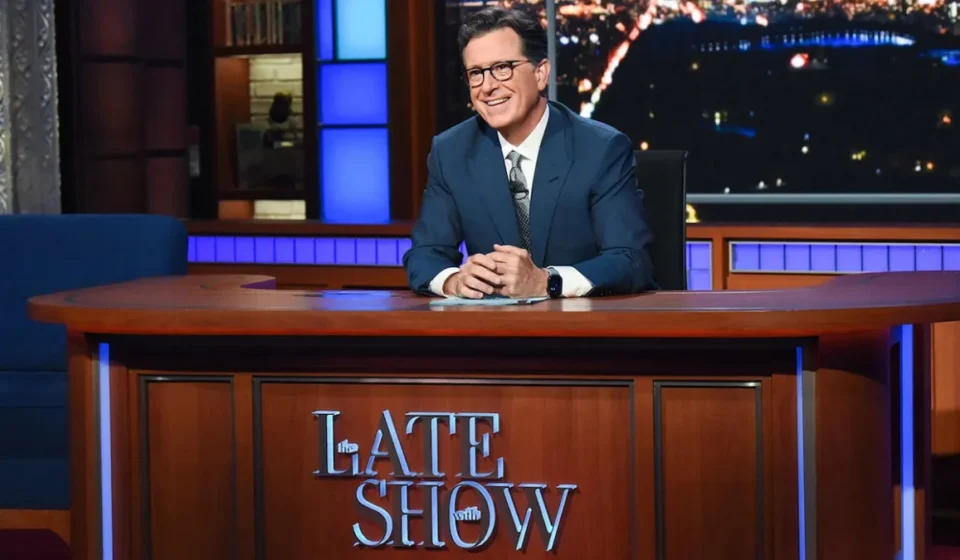
Perhaps no story looms larger over this year’s Emmy discourse than the abrupt cancellation of Stephen Colbert’s The Late Show. After 33 years as a CBS staple, the franchise aired its final episode on May 21. The cancellation followed Paramount’s acquisition by Skydance Media, led by David Ellison.
While the official corporate narrative cited a $40 million annual loss, industry insiders and critics have been quick to point to a more political motivation. Colbert’s tenure was marked by a relentless, sharp-edged critique of the Trump administration, and speculation persists that the network’s decision was influenced by the friendly relationship between the new ownership and the current executive branch.
Colbert, an 11-time Emmy winner, exited the stage with a final season that served as a meta-commentary on his own termination. Having won his first talk series Emmy just last September, his nomination this year carries the weight of a swan song—a final opportunity for voters to honor one of the most significant voices in political satire.
The Kimmel Fiasco and the Power of Public Sentiment
If Colbert’s exit was a slow-motion institutional collapse, Jimmy Kimmel’s recent experience was a volatile explosion. On September 17, Jimmy Kimmel Live! was pulled from the airwaves following intense pressure from the Trump administration and FCC Chairman Brendan Carr, triggered by a monologue regarding Charlie Kirk.
The threats from affiliates under the Nexstar and Sinclair umbrellas created a period of existential uncertainty for the show. Yet, the subsequent public outcry was unprecedented. When Kimmel returned to the air on September 23, he did so with a series-record 6.26 million viewers. The moment became a litmus test for the role of late-night hosts in the modern era, proving that in a polarized environment, the audience—not just the network—holds the power to keep a show alive.
Supporting Data: The Contenders
The competition this year is defined by a blend of legacy and survival.
- The Late Show with Stephen Colbert: Viewed by many as the sentimental favorite and a potential vehicle for a political statement by the Academy.
- Jimmy Kimmel Live!: A 12-year nominee that has yet to claim the top prize. Its recent public battle against censorship has galvanized its base, potentially pushing it to the front of the pack.
- Last Week Tonight with John Oliver: The "unbeatable" incumbent. Despite the category shift, Oliver’s track record in the scripted variety category and his consistency make him the statistical favorite.
- Saturday Night Live: Celebrating its 51st season, SNL has pivoted from political timeliness to the surreal. With the successful launch of SNL UK, creator Lorne Michaels remains an immovable object in the comedy landscape.
- The Daily Show: With Jon Stewart back at the desk on Mondays, the show remains a powerhouse of influence. Its ability to navigate a multi-host format while maintaining its satirical edge makes it a lock for a nomination.
Implications: The Emmy as a Political Instrument
The 2026 Emmy ceremony is poised to be more than a celebration of television; it is expected to be an act of defiance. For a largely liberal-leaning Academy, the ballot serves as a megaphone. The nominations represent a clear choice: will the industry reward the stability of John Oliver, or will it rally behind the hosts who faced the most direct pressure from the current administration?
Beyond the awards, the implications for the industry are profound. The merger of the variety categories suggests an Academy that is struggling to define what "variety" even means in an age of TikTok clips, social media virality, and 24-hour news cycles. Furthermore, the vulnerability shown by titans like Colbert and Kimmel has signaled to every late-night production that their tenure is no longer guaranteed by tradition or viewership alone.
As the industry gathers on September 14, the focus will not just be on who takes home the trophy, but on the message that the Academy sends to Washington. Whether through a heartfelt tribute to a canceled show or a victory for a host who survived a political firestorm, the night promises to be one of the most consequential in the history of the medium. Expect the discourse to continue well after the curtain falls—and, as noted by observers, expect a reaction from the White House via Truth Social before the night is through. The Primetime Emmys have always been political, but in 2026, the stakes have never felt more personal.