Beyond the Borders of History: MoreThan Films Acquires Venice-Bound Period Epic ‘Les Indes’

In a significant acquisition ahead of the 81st Venice International Film Festival, Barcelona-based sales powerhouse MoreThan Films has secured the international rights to Les Indes (The Indies). This highly anticipated period road movie, which marks the feature directorial debut of Pauline Julier and Nicolas Chapoulier, is set to hold its world premiere in the prestigious Giornate Degli Autori (Venice Days) sidebar.
The deal positions Les Indes as a major contender for critical attention this festival season, blending historical rigor with a contemporary thematic lens. By acquiring a project that navigates the intersection of 17th-century geopolitics and the existential anxieties of the modern era, MoreThan Films continues its trajectory of championing bold, auteur-driven arthouse cinema.
A Journey Through the Crucible of Modernity: The Plot
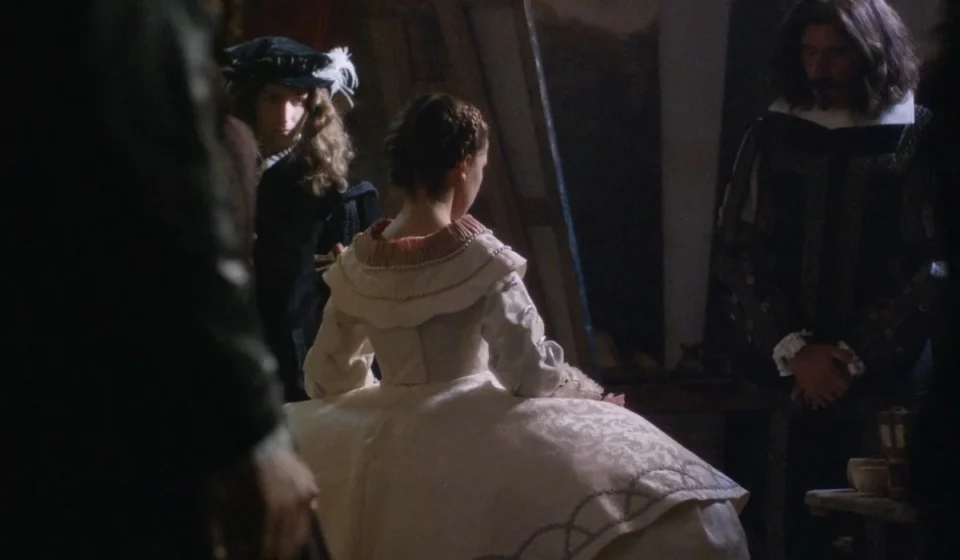
Inspired by true events, Les Indes is a sweeping odyssey set in 1652—a year defined by the fragile peace between a crumbling Spanish Empire and a rising France. The narrative follows Alejandro (played by Théo Urtubey), a young Spanish nobleman tasked with a high-stakes diplomatic mission. Accompanied by two French soldiers, portrayed by Raphaël Thiéry and Lazare Minoungou, Alejandro is entrusted with the transport of a portrait of the Infanta of Spain, Maria Theresa (daughter of King Philip IV).
The goal is to deliver this image to the young King of France, Louis XIV, as a symbol of a strategic marital alliance designed to stabilize a continent ravaged by incessant war and domestic uprisings. However, the film is far from a standard historical pageant. As the trio traverses a Europe undergoing a violent, tectonic shift, the "road movie" elements take precedence over courtly intrigue. The protagonists must navigate landscapes scarred by conflict, encountering the displaced, the disillusioned, and the heralds of a new world order.
Historical Context and Artistic Intent
To understand the gravity of Les Indes, one must look at the specific historical juncture in which Julier and Chapoulier have placed their characters. The mid-17th century represents a liminal space where the medieval mindset—defined by theology, feudalism, and local superstition—clashed violently with the dawn of rationalism, mercantilism, and the scientific revolution.
"It is the 17th century: the medieval era is fading in the face of the rise of science, rationalism, and commerce," the directors noted in a joint statement. "The world is no longer merely to be explored—it is to be conquered. Galileo opens new horizons, while mercantilism lays the foundations of capitalism. In this context, popular uprisings erupt under the pressure of taxation and poverty. It is along these roads, marked by tensions between the old world and the new order, that Les Indes unfolds."
The filmmakers suggest that the portrait of the Infanta serves as more than a physical object; it is a symbol of the "image-based power" that would come to define the absolute monarchies of the later 17th century. By grounding the story in the physical hardship of a long, arduous journey, the film invites viewers to witness the erosion of old power structures through the eyes of those forced to move through the margins of society.
Production Pedigree and Co-Production Dynamics
Les Indes is the result of a formidable partnership between two of Europe’s most respected production houses: Spain’s Lastor Media and Switzerland’s Alina Film.
Lastor Media, known for their critical success with Carla Simón’s Golden Bear-winning Alcarràs, brings a depth of experience in managing stories that balance intimate human stakes with broader socio-political environments. Alina Film, fresh off the success of The Currents, maintains a reputation for supporting visually daring and meditative cinema.
The project’s path to the screen was bolstered by its selection for the ECAM Forum co-production market in Madrid earlier this year, where its "work in progress" presentation signaled a clear market potential. Furthermore, the film has already secured local distribution in Switzerland via Sister Distribution, a testament to the strong support the film has garnered within its home territories even before its festival debut.
Official Responses and Strategic Vision
For MoreThan Films, the acquisition is a strategic move to solidify their footprint in the international arthouse market. Queralt Pons Serra, managing partner of the company, expressed deep enthusiasm for the project’s thematic depth.
"’Les Indes’ captivated us with its ability to transform a historical episode into a deeply contemporary reflection on power, images, and our relationship with the natural world," said Pons Serra. "Rather than simply reconstructing the past, the film uses history as a lens through which to examine the origins of the world we inhabit today. With its bold visual language and meditative storytelling, Pauline Julier and Nicolas Chapoulier have crafted a singular cinematic journey—a work that challenges, rewards, and stays with you long after the screening."
Lidia Damatto, fellow managing partner at MoreThan Films, emphasized that this acquisition serves to strengthen existing relationships. "’Les Indes’ marks our second collaboration with Alina Film. We worked together on the Locarno breakout hit Hanami in 2024, directed by Denise Fernandes and produced by Eugenia Mumenthaler and David Epiney. We’re very happy to continue to work with producers who not only consistently deliver fantastic projects every year, but who also share our collaborative working philosophy and market approach for arthouse films."
The Broader Implications for European Cinema
The acquisition of Les Indes speaks to a wider trend in contemporary European film: the resurgence of the "historical road movie" as a vehicle for modern commentary. By stripping away the gloss often associated with period dramas, films like Les Indes aim to reveal the "guts" of history—the hunger, the dust, the political maneuvering, and the fear of the unknown that defined previous centuries.
This approach allows the film to engage with contemporary issues such as the rise of populist movements, the global climate crisis, and the obsession with digital image-making, all through the mirror of the 1650s. The choice to premiere in the Giornate Degli Autori—a section of the Venice Film Festival dedicated to independent, high-concept, and original filmmaking—suggests that the industry expects the film to be a conversation starter.
As the film moves from the festival circuit to broader commercial release, its success will likely depend on its ability to bridge the gap between high-concept intellectualism and the visceral, sensory experience of a journey across a changing continent. If the reception at the ECAM Forum is any indication, Julier and Chapoulier have succeeded in creating a work that is not only a historical document but a profound meditation on the trajectory of Western civilization.
Conclusion: A New Chapter for the Filmmakers
For first-time feature directors Pauline Julier and Nicolas Chapoulier, the acquisition by MoreThan Films is a major milestone. Securing international representation before a major festival premiere is the gold standard for independent filmmakers, providing the necessary infrastructure to ensure the film reaches audiences beyond its domestic borders.
As the industry prepares for the Venice Film Festival, all eyes will be on the screening of Les Indes. It is a film that asks us to consider how the tensions of 1652—the birth of the modern, the rise of the image, and the struggle of the common man—continue to ripple through our own, equally turbulent era. Whether it achieves the same level of critical acclaim as the previous collaborations of its production partners remains to be seen, but the trajectory of the film suggests it will be a significant contribution to the landscape of 2024/2025 European cinema.