
The landscape of modern romance is often described as a paradox. If one were to believe the trending cultural analyses of the moment, Generation Z is simultaneously more socially progressive and more sexually conservative than the Millennials and Gen-Xers who preceded them. They navigate a world of "situationships," "soft launching," and digital-first intimacy. Yet, despite this radical shift in how young people connect, the cinematic portrayal of Zoomer love remains curiously tethered to the past.
Joey Power’s latest feature, Love Language, serves as a fascinating case study in this cultural lag. While the film attempts to dress itself in the trappings of modern youth culture—complete with queer nuptials and the occasional cocaine joke—it remains firmly in the "nostalgic thrall" of the 1990s romantic comedy. Starring Chloë Grace Moretz and Anthony Ramos, the film is a polished, "perma-autumnal" tribute to the genre’s golden age, proving that while technology changes, the cinematic mating ritual remains largely traditional.
Main Facts: A Modern Premise with Vintage Bones
Love Language centers on Louisa (Chloë Grace Moretz), a writer whose professional aspirations have stalled. Once considered a literary prodigy, Louisa is now "perennially blocked," a condition exacerbated by her own recent romantic failure—a broken engagement that has left her cynical and emotionally guarded.
The film’s central conceit is a clever twist on the gig economy: Louisa stumbles into a lucrative side hustle ghostwriting wedding vows for others. It is a profession that requires her to articulate the deep, sentimental feelings of strangers while she remains unable to process her own. This setup creates a "romantic quadrangle" involving her best friend Tilda (Billie Lourd), a sexy and straightforward newcomer named Dash (Anthony Ramos), and a ghost from her past, Warren (Manny Jacinto), who is currently engaged to the wealthy and enigmatic Olivia (Isabel May).
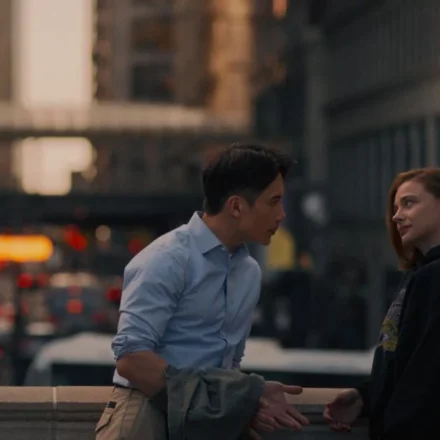
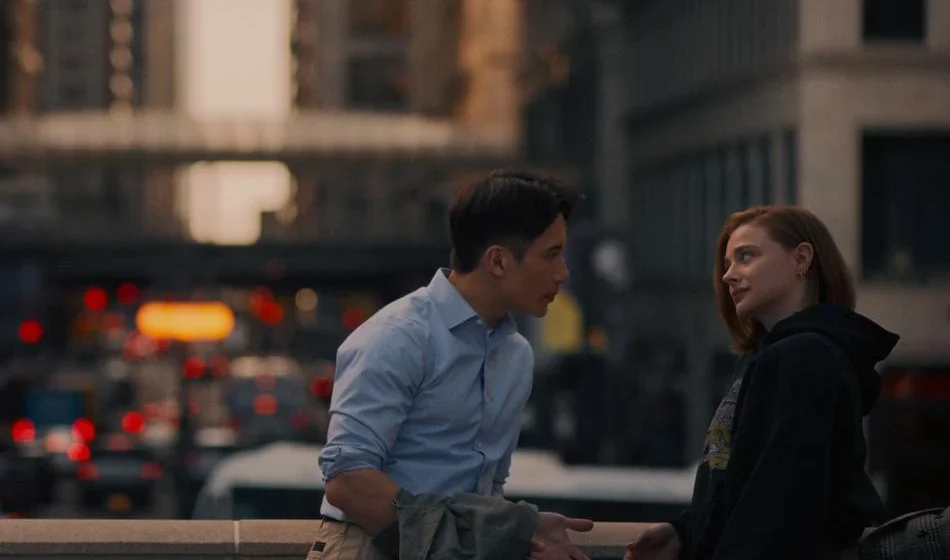
Directed by Joey Power—who previously explored the intersection of illness and intimacy in the 2018 drama After Everything—Love Language is a film that prioritizes "comfort watch" aesthetics over narrative innovation. Set against a beautifully shot, warm-toned Chicago, the film utilizes the city not just as a backdrop, but as a character, echoing the urban romanticism of 90s classics like While You Were Sleeping or My Best Friend’s Wedding.
Chronology: From Heartbreak to the Altar
The narrative trajectory of Love Language follows a classic three-act structure, beginning with the aftermath of Louisa’s personal collapse.
Act I: The Accidental Entrepreneur
The film opens with Louisa at a low point. Her own wedding was called off, leaving her with a drawer full of unused, heartfelt prose. When her best friend Tilda (played with characteristic wit by Billie Lourd) expresses anxiety over writing her own vows, Louisa offers a cynical solution: she repurposes her own aborted wedding speech.
The result is what the film describes as "Hallmark meets Rupi Kaur"—a blend of sentimental platitudes and modern, minimalist poetry. The vows are a sensation at the wedding, and Louisa soon finds herself besieged by requests from other couples. This act establishes the film’s central irony: the woman least likely to believe in "happily ever after" is the one selling it to the highest bidder.
Act II: The Complication of the Past
The plot thickens when Louisa is commissioned by Olivia, a wealthy socialite, to write the vows for her upcoming wedding to Warren. The complication? Warren was Louisa’s "one who got away" during their college years.
As Louisa spends time with the couple to "research" their love story, she is forced to confront the feelings she thought she had buried. Simultaneously, she begins a casual relationship with Dash, a cousin of Tilda’s. Dash is the antithesis of Louisa’s typical "type"—he is blunt, emotionally available, and played by Anthony Ramos with a "drawling, sincerely beguiling" charisma that threatens to upstage the film’s central conflict.
Act III: The Crisis of Expression
As the wedding date for Olivia and Warren approaches, Louisa finds herself unable to write. The "vow-writing" business, which began as a cynical exercise in recycling old emotions, becomes a mirror for her own indecision. The film builds toward a climax that utilizes every trope in the rom-com handbook—from the realization of true feelings to the high-stakes intervention—eventually forcing Louisa to choose between the safety of her past and the unpredictability of a new future with Dash.
Supporting Data: Casting, Chemistry, and Aesthetic Choices
The success of Love Language rests heavily on its ensemble, though critics note an imbalance in the character development.
The Ramos Factor
The standout performance belongs to Anthony Ramos. Handed a character that could have easily been a one-dimensional "fuckboi with a nesting impulse," Ramos crafts a personality that feels grounded in reality. His chemistry with Moretz is the film’s strongest asset; in his presence, Moretz’s Louisa becomes "livelier and more limber." Ramos brings a soul-baring quality to Dash that makes him a far more compelling romantic prospect than the relatively safe and less charismatic Warren.
The Protagonist’s Dilemma
Chloë Grace Moretz navigates Louisa’s "neuroses and delusions" with capability. She does not shy away from the character’s less likable traits, such as her selfishness and tendency toward self-pity. However, the script’s reliance on allusions to other movies—rather than specific character textures—leaves Louisa feeling somewhat "floatily conceived." Her life as a work-from-home copywriter and her friendships (including a supporting turn by Lukas Gage as a "gay lothario turned broody plot device") lack the granular detail that would make her world feel entirely lived-in.
Visual and Tonal Palette
Visually, the film is a triumph of "vibe." The cinematography leans into "perma-autumnal" tones, bathing Chicago in gold and amber. This aesthetic choice reinforces the film’s nostalgic intent. It is a movie that wants to be watched under a blanket with a hot drink, prioritizing atmosphere over the "comedy" half of the romantic-comedy equation. While the premise offers ample potential for wit, the film often settles for being "cozily, even sentimentally romantic."
Official Responses and Critical Reception
While official studio statements emphasize the film’s "relatability" for the Gen-Z demographic, critical reception has been more measured.
The consensus suggests that while Love Language is a "palatable, attractively assembled film," it suffers from a lack of comedic bite. Critics have noted that Power’s direction, while competent, fails to fully exploit the humor inherent in a woman ghostwriting the most intimate moments of people’s lives.
Industry analysts have pointed out that the film’s reliance on 90s tropes—the klutzy meet-cutes, the gay best friend, the airport scene—is a deliberate move to court an audience that finds comfort in the familiar. In an era of "prestige TV" and subverted genres, Love Language is a "comfort watch" for under-30s that should, in turn, be a "comfort to their elders" because it suggests that, despite Tinder and TikTok, the core of human romance hasn’t changed that much.
Implications: The Future of the Genre
The existence of Love Language raises important questions about the state of the contemporary romantic comedy.
1. The Persistence of the Template
The film’s adherence to 90s templates suggests that the "mainstream portrayal of Zoomer romance" has yet to find its own unique visual or narrative language. By updating old tropes with "queer marriage and cocaine jokes" rather than reinventing the structure, the industry seems to be betting on the idea that the "90s aesthetic" is the permanent peak of the genre.
2. The Representational Gap
While the film includes queer characters and a diverse cast, the emotional stakes remain remarkably traditional. This highlights a gap between the "new dating politics" of Gen-Z—which are often more complex and less binary—and the simplified "romantic quadrangle" presented on screen. Love Language is "pleasant and undemanding" precisely because it is so recognizable, but it leaves a void for a film that truly defines the generational shift in how young people love.
3. The Return of the Mid-Budget Rom-Com
Finally, the production of Love Language signals a continued interest in the mid-budget, star-driven romantic comedy. After a decade where the genre seemed relegated to low-budget streaming fodder, the casting of established stars like Moretz and rising powerhouses like Ramos suggests a reinvestment in the "palatable" theatrical or premium streaming experience.
In conclusion, Love Language is a beautifully wrapped gift for fans of the genre. It provides the warmth, the Chicago scenery, and the magnetic performances (particularly from Ramos) that audiences crave. However, as the credits roll, one cannot help but wonder when a "more generationally defining" film will arrive—one that speaks the actual love language of the 2020s, rather than just translating the dialects of the past.