The Resurrection of Britpop: How ‘Oasis: Don’t Look Back in Anger’ Captures a Cultural Healing

The world has felt distinctly off-kilter since that humid, tension-filled night in Paris in 2009. When Liam and Noel Gallagher’s volatile, long-simmering sibling rivalry finally reached its breaking point, shattering the monolith that was Oasis, it felt to many like the final curtain call for the optimism of the 1990s. For years, the band’s dissolution served as a grim cultural barometer, a shorthand for the loss of a certain kind of communal joy. In the latest concert documentary from directors Will Lovelace and Dylan Southern, Oasis: Don’t Look Back in Anger, the filmmakers open with a montage of the world’s subsequent descent into chaos: cataclysmic wildfires, the January 6th insurrection, and the surreal, awkward political theater of the mid-2010s.
While it is objectively absurd to pin global instability on the breakup of a Manchester rock band, the film makes a surprisingly compelling case that the return of Oasis in 2025 has acted as a necessary, if temporary, balm for a bruised collective psyche. As the band reunites for a triumphant global tour, Oasis: Don’t Look Back in Anger serves not just as a concert film, but as a testament to the power of secular music to mend fractured spirits.
A Chronology of Conflict and Reconciliation
The narrative arc of the film is deceptively simple, eschewing the standard "rock-doc" tropes of VH1-style sensationalism. Lovelace and Southern, working from a screenplay by Steven Knight, bypass the need for extensive historical retrospectives. They assume, correctly, that the audience already understands the gravity of the Gallagher brothers’ fallout.
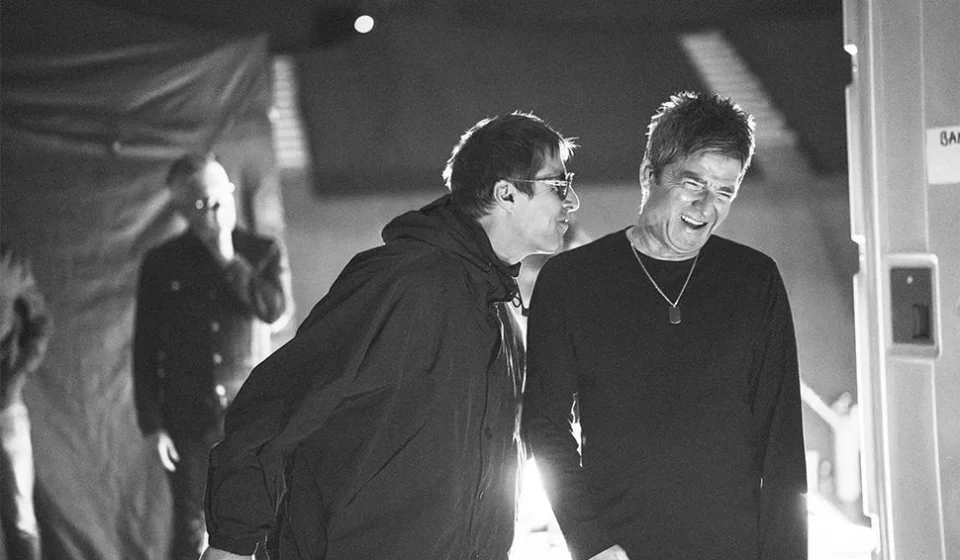
The documentary’s most anticipated segment—the first meeting between Liam and Noel in over 15 years—is perhaps its most subversive. Viewers expecting a cinematic explosion of rage or a tearful, therapy-laden breakthrough will find themselves staring at something far more grounded and, ultimately, more profound. There is no mediation, no forced apologies, and no performative vulnerability. Liam simply walks into the rehearsal space, offers a dry critique of a drum kit component he deems "stupid," and immediately picks up his mic.
This detente is the film’s silent heartbeat. The brothers do not explicitly discuss their years of vitriol; they instead navigate their reconciliation through the work itself. By the time they sit for a rare, joint talking-head interview toward the film’s climax, the tension has evaporated, replaced by a working relationship that feels earned rather than manufactured.
The Cinematography of Communion
To capture the scale of this reunion, Lovelace and Southern employed a "murderer’s row" of cinematographic talent, including Oscar-winner Lol Crowley (The Brutalist) and nominee James Laxton (Moonlight). By deploying these high-caliber visual storytellers into the crowd, the film transcends the typical concert stage-view.
The result is a visual study of the "Oasis effect." The cameras focus heavily on the audience—men and women who shed their societal inhibitions to weep, dance, and belt out lyrics in a state of near-religious fervor. There is a distinct, recurring motif in the film: men, often in middle age, finding a safe harbor to express deep emotion. In an era often described as suffering from a "male loneliness crisis," the sight of thousands of men in the crowd finding communion through the band’s anthemic catalogue is one of the documentary’s most touching subplots.

While the film occasionally falls into a repetitive schematic pattern—alternating between stadium-wide shots of light shows and intimate close-ups of fans—it succeeds in capturing the "we" and "us" ethos that the Gallaghers have always claimed as their own. It is not about the rock stars on the altar; it is about the thousands of individuals finding a shared language for their survivor’s guilt, their joy, and their collective hope.
The Sociopolitical Implications of the Reunion
The fervor at the opening concert in Cardiff served as a litmus test for the tour’s success. It was not mere fandom; it was a phenomenon akin to a secular revival. Police briefs at the time noted the lack of traditional football-style hooliganism, despite the high-octane environment, suggesting that the audience was there for something more transcendent than a typical gig.
The film posits that the 1990s represented a zenith of peace and prosperity that the modern world has been trying to reclaim ever since. When Oasis plays, they are not just performing hits; they are effectively conducting a ritual of remembrance for a more hopeful era. This is the "first-person plural" experience that Knight’s screenplay underscores throughout the film. Whether it is the Manchester crowd processing long-standing grief or a global audience singing "Wonderwall" in unison, the documentary highlights how music can function as a bridge across the divides of a polarized age.
Official Responses and Industry Reception
The documentary, which premiered at the 2026 Venice Film Festival to critical acclaim, has been praised for its refusal to dwell on the "why" of the band’s past. By choosing to "shut up and play the hits," the directors respect the audience’s intelligence and the band’s legacy.
"This is not a documentary about the dissolution of a family," noted one critic following the Venice screening. "It is a documentary about the restoration of a cultural heartbeat."
Walt Disney Studios Motion Pictures, which secured the rights to the film, has positioned it as a major theatrical event. The decision to release it on September 11, 2026, is a deliberate nod to the film’s themes of looking forward in hope. Industry analysts predict that the film will perform well not just with hardcore Oasis devotees, but with a broader demographic hungry for stories of reconciliation and grace.
Critiques and Analytical Balance
Despite its emotional resonance, the film is not without its flaws. The mid-section of the documentary, which leans heavily into the concert-footage-heavy format, may test the patience of viewers who are not deeply invested in the band’s entire discography. The edit from George Cragg and Martina Zamolo, while technically proficient, occasionally flattens the unique energy of different tour stops into a homogeneous, repetitive loop.

However, these structural issues are minor compared to the film’s broader achievement. Lovelace and Southern have managed to capture a rare, genuine moment of humanity in a landscape defined by tribalism. They do not belabor the point or over-analyze the Gallagher brothers’ psychology; they simply show that when two people with irreconcilable differences choose to step into the same room and work, the result can be a transformative experience for everyone involved.
Conclusion: Don’t Look Back in Anger
Oasis: Don’t Look Back in Anger is a film that ultimately lives up to its titular promise. It is an invitation to stop ruminating on the past—the breakups, the missed opportunities, and the political disappointments—and to focus on the immediate, tangible power of shared experience.
As the final notes of the tour fade and the house lights come up on the final stadium, the film leaves the viewer with a sense of quiet, understated optimism. In an age where it is so easy to look backward with resentment, the Gallagher brothers have provided a blueprint for moving forward. If the world can’t quite be fixed by a rock band, it can at least be made a little more bearable, a little more human, and a little more hopeful. The message is clear: stop looking back in anger, and start looking forward to the future.
Grade: B
‘Oasis: Don’t Look Back in Anger’ premieres in theaters on Friday, September 11, 2026.