The Evolution of the Digital Myth: Aaron Sorkin on the Making of ‘The Social Reckoning’

In the pantheon of 21st-century cinema, few films have etched themselves into the cultural consciousness as indelibly as David Fincher’s 2010 masterpiece, The Social Network. Often dubbed the "Citizen Kane" of the millennial generation, the film served as a cold, clinical autopsy of the birth of modern social media, documenting how a cohort of ambitious, morally ambiguous young men fundamentally altered the architecture of human connection.
Now, over a decade later, screenwriter Aaron Sorkin is returning to the digital battlefield with The Social Reckoning. While fans initially hoped for a reunion between Sorkin and Fincher, the project has evolved into something distinct—a narrative that seeks to explore the darker, more volatile era of Facebook between 2018 and 2021. In a recent appearance on the Filmmaker Toolkit podcast, Sorkin pulled back the curtain on the creative tensions, personal growth, and industry realities that have defined the transition from his 2010 success to this new, pointed critique of Silicon Valley.
A Legacy of Unexpected Success
When The Social Network first arrived, few expected it to become the titan it eventually became. Sorkin himself admits that the film’s massive box office performance, critical acclaim, and awards-season sweep surpassed all original projections. "It did surprise me," Sorkin told the Toolkit podcast. "But I had a great time making it, and I thought [director] David Fincher hit it out of the park."
The film’s efficacy was widely attributed to the "chocolate-and-peanut butter" collision of Sorkin’s earnest, rhythmic idealism and Fincher’s clinical, detached cynicism. This unique friction created a portrait of Mark Zuckerberg that was both sympathetic and deeply unsettling. As society grappled with the unintended consequences of the platforms that emerged from that era, the demand for a follow-up grew. However, the path to The Social Reckoning proved to be as complex as the subject matter itself.

Chronology: From Directorial Debut to ‘The Social Reckoning’
The history of Sorkin’s directorial career is inextricably linked to his relationship with Fincher. In 2009, during the pre-production of The Social Network, producers Scott Rudin and Amy Pascal actively lobbied for Sorkin to take the helm.
"I had never raised my hand and said, ‘Uh, could I try?’" Sorkin recalled. "I’ve never asked to direct anything. They had decided that I should direct it." Nervous at the prospect of overseeing such a high-profile project, Sorkin devised a fail-safe: he would send the script to David Fincher, convinced the acclaimed director would decline. "I said, ‘OK, listen, let’s just send the script to David Fincher, he’s going to pass, he passes on everything, and if he passes, I’ll direct it.’"
Within hours, the plan was upended. Fincher responded with an immediate, enthusiastic commitment, asking to meet to begin work. This collaboration redefined Sorkin’s career. By the time Sorkin began drafting The Social Reckoning, he naturally sent the script to his old mentor. However, the stars did not align for a reunion. Fincher was locked into an exclusive deal with Netflix, currently preoccupied with his own project, The Further Misadventures of Cliff Booth. Furthermore, Sorkin was driven by a sense of urgency, fearing that a delayed release would miss the cultural zeitgeist surrounding the fallout of the midterm elections.
The Director "In the Aggregate"
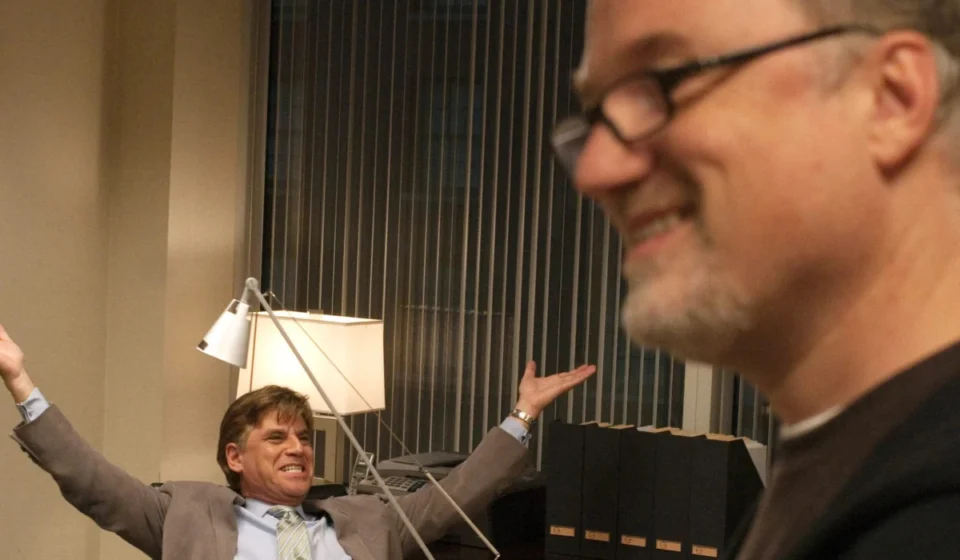
A central theme in Sorkin’s recent reflections is the realization that he cannot simply "be" David Fincher. Watching the master at work on the set of The Social Network—such as the famous sequence involving a mime used to provide precise, ambient light on a Cambridge street—taught Sorkin that Fincher’s eye is singular.

"There’s a limit to how much someone like me can learn from someone like David just by watching," Sorkin noted. "It would be like me watching Baryshnikov, and then being able to dance—just watching him isn’t going to do the trick."
Instead, Sorkin has adopted a strategy reminiscent of the "Moneyball" philosophy he famously scripted. Just as Billy Beane sought to replace a star player by aggregating the contributions of multiple individuals, Sorkin builds his "director" by assembling the right team. By hiring cinematographer Jeff Cronenweth—the visual architect behind both The Social Network and Fight Club—Sorkin attempts to recreate the technical precision of the Fincher era, ensuring that his dialogue-heavy scenes maintain a dynamic, cinematic rhythm.
Official Responses and Character Shifts
One of the most significant hurdles in developing The Social Reckoning was the casting of Mark Zuckerberg. Sorkin initially assumed Jesse Eisenberg would reprise the role, but extensive conversations revealed that the actor had moved on. Eisenberg’s experience in the wake of the original film—frequently accosted by fans quoting the "I’m CEO, bitch" line—had left a lingering, personal impact.
The search for a new lead culminated in the casting of Jeremy Strong. Sorkin notes that while one might view this as a sequel, he maintains a firm distinction. "It’s not a sequel," Sorkin stated. "It’s another movie about Facebook, written by the same writer… It would be as if Henry Hill showed up in Casino."

For Sorkin, the shift in his own perspective on Zuckerberg is perhaps the most notable development. In 2010, Sorkin was willing to offer the Facebook CEO the benefit of the doubt, even expressing admiration for his philanthropic efforts in the Newark school system. That nuance, however, has vanished. Influenced by the whistleblowing accounts of Frances Haugen and the investigative reporting of figures like Jeff Horwitz, Sorkin’s stance has hardened.
The Implications: A New Era of Responsibility
The Social Reckoning is not merely a film; it is a diagnostic tool for a nation struggling with the consequences of algorithmic radicalization. Sorkin’s pivot from empathetic observer to critical storyteller signals a broader shift in how Hollywood is beginning to view the architects of Big Tech.
The film addresses the rise of extremism, hyperpartisanship, and the systemic divisiveness that has become the hallmark of the platform’s recent history. Sorkin acknowledges that he no longer feels the need to "go easy" on the subject. There is a palpable shift in his tone—a newfound hardness that he admits is "almost Fincher-esque."
As the project moves toward production, the implications for the industry are clear: the era of the "tech genius" narrative is being systematically dismantled. By revisiting the world he helped build, Sorkin is forcing a confrontation with the reality of what that world has become.

"This is really dangerous what’s going on," Sorkin warned. By placing the focus squarely on the societal impact rather than the individual ego of the founder, The Social Reckoning aims to be a definitive statement on the last decade of digital decline. Whether the audience will find the same intellectual and emotional resonance in this new iteration remains to be seen, but for Sorkin, the necessity of telling this story has finally outweighed his past hesitations.
The partnership with Fincher may have been the catalyst for his journey as a filmmaker, but in The Social Reckoning, Sorkin is stepping out from the shadow of that collaboration to offer his own, unvarnished verdict on the digital age.