The Enduring Resonance of ‘Hadestown’: From Vermont Workshop to Global Cinematic Event

When Hadestown first premiered at Broadway’s Walter Kerr Theater in April 2019, the cultural climate was, to put it mildly, volatile. Almost every review of the production highlighted the uncanny, almost haunting resonance of its Act One closer, "Why We Build the Wall." In the context of Anaïs Mitchell’s folk-opera adaptation of Greek mythology, the song is a chilling display of authoritarian consolidation, sung by Hades—the God of the Underworld—to justify his subjugation of the dead.
Yet, in 2019, the imagery of a wall separating the desperate from the privileged felt inextricably linked to the fervor of modern American political discourse. Seven years later, the musical arrives on the silver screen, proving that while its political parallels may have shifted, the show’s core message—the necessity of hope in a decaying world—has only grown more poignant.
A Mythic Genesis: The Long Road to the Stage
The journey of Hadestown is a testament to the "scrappy underdog" narrative that theater lovers crave. Long before it became a Tony-winning behemoth, the project began as a humble 2006 workshop in small Vermont regional theaters. Anaïs Mitchell, a singer-songwriter with a penchant for folk storytelling, crafted the initial vision, which evolved into a 2010 concept album.
The transition from a concert-style concept record to a full-blown Broadway production was a decade-long endeavor, spearheaded by director Rachel Chavkin. Together, they fused the austerity of ancient Greek tragedy with the sweltering, brassy aesthetic of 1930s New Orleans jazz. By the time it reached the Great White Way, the show had matured into a sophisticated, sung-through masterpiece about love, scarcity, and the cost of survival. It eventually swept the 2019 Tony Awards, securing eight wins including Best Musical, and established a commercial footprint that expanded to London’s West End and multiple national tours.

Cinematic Translation: Bringing the Underworld Home
Now, Hadestown is reaching an even wider audience through a new filmed recording, compiled from three live performances of the West End production. The film, which recently premiered at the Tribeca Film Festival and is set for a wide release on July 24, serves as a bridge between the immediacy of live theater and the permanence of cinema.
Directed for the screen by Brett Sullivan, the film is a masterclass in minimalist adaptation. Sullivan avoids the temptation to over-produce or cut away to distracting angles. Instead, he maintains a respectful distance, occasionally zooming in to capture the micro-expressions of the performers—a luxury rarely afforded to those sitting in the back of a proscenium theater. The result is a sharp, handsome translation that allows audiences to witness the intimacy of a production that often feels like a "tiny jazz performance blown up as large as it can possibly be."
The Anatomy of an Industrial Hellscape
Central to the success of the stage production—and its cinematic iteration—is the work of designer Rachel Hauck. The set, an unchanging, ominous concert hall, utilizes minimal lighting and a central rotating stage piece to transform a bare floor into an industrial hellscape. Chavkin’s direction thrives on this constraint, forcing the audience to focus on the human element amidst the cold, mechanical structure of Hades’ domain.
The film captures the band—an essential character in itself—positioned on the side of the stage, offering viewers a front-row seat to the fusion of modern Broadway sound and New Orleans brass. For a show that relies so heavily on the live atmosphere of a jazz club, the recording manages to capture enough of the raw, acoustic energy to remind audiences why the musical remains a staple of modern theater.

Character Dynamics: Gods, Mortals, and the Fates
The narrative remains anchored by two primary couples, though their impact varies in execution. Reeve Carney and Eva Noblezada, who have been a couple since the original Broadway run and married last year, inhabit the roles of Orpheus and Eurydice with a palpable chemistry.
However, critics have noted that while the pair is undeniably charming, their characters occasionally fall into the "drippy" tropes of wide-eyed musical theater leads. Carney’s Orpheus acts more as a thematic vessel for the show’s idealism than a fully fleshed-out protagonist, though his vocal performance—particularly in the indie-folk ballad "Wait for Me"—remains a standout. Noblezada’s Eurydice is afforded more grit, but the true emotional weight of the production rests on the shoulders of the show’s "older" generation.
The Power of the Antagonists
The conflict between Hades and Persephone provides the show’s most combustible moments. Patrick Page, who reprises his role with a voice that seems to vibrate the very earth, portrays Hades as a slick, Henry Ford-esque tycoon. His bass register, paired with an icy demeanor, provides a terrifying portrait of isolationist power. Opposite him, Amber Gray’s Persephone is a revelation. Drawing inspiration from the weary, sharp-witted elegance of Eartha Kitt, Gray portrays a woman trapped in a loveless marriage of convenience, finding solace in alcohol and the dwindling remnants of spring.
The standoff between these two during the song "How Long?"—a blistering, emotionally charged confrontation—serves as the production’s centerpiece. On screen, the close-ups of these two veterans create an intensity that feels almost voyeuristic, grounding the mythological stakes in human, broken reality.

The Role of the Herald: André de Shields
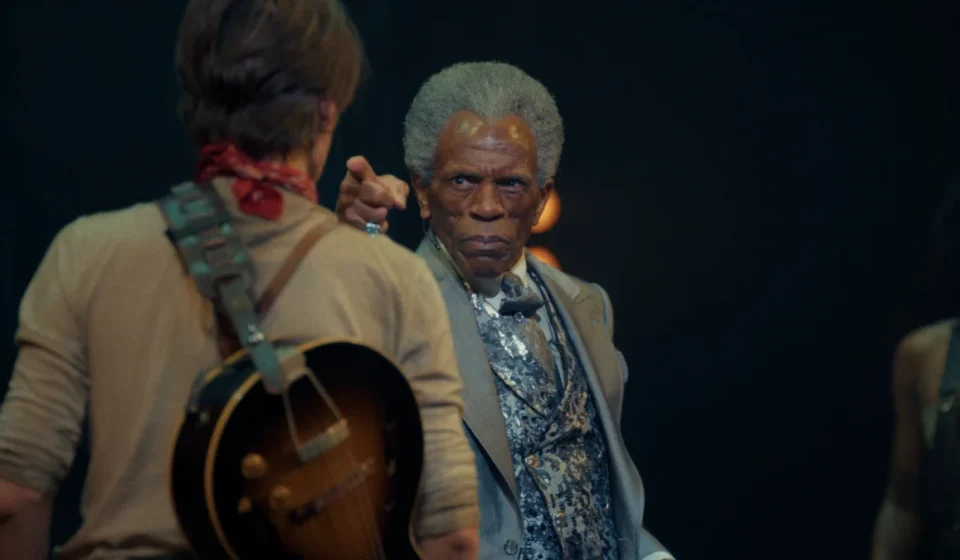
At 80 years old, André de Shields continues to command the stage as Hermes, the God of Heralds. Serving as the master of ceremonies, his performance is a masterclass in "silky smooth" stage presence. Clad in a mercury-colored suit, he guides the audience through the beats of the tragedy with a sly, knowing confidence. His presence acts as an anchor, ensuring that even when the central romance feels fragile, the show itself never loses its sense of purpose or pacing.
Implications: A Sad Song That Never Ends
The enduring popularity of Hadestown in 2026, seven years after its debut, speaks to its fundamental optimism. The show’s finale, in which Hermes leads the company in retelling the tragic tale, is not merely a meta-commentary on the nature of theater—it is a manifesto of hope.
The message is clear: even in a world that is "hardscrabble" and bleak, where a deal with the devil seems like the only logical response to starvation, the act of singing, of remembering, and of building community is a revolutionary one.
While "Why We Build the Wall" continues to echo in the halls of modern political reality, Hadestown offers a reprieve from that reality. It acknowledges the sorrow of the world, but it refuses to let that sorrow be the final note. As the film makes its way into theaters this July, it invites a new generation to see that, despite the tragedy of the myth, the act of telling the story is, in itself, a victory.

Production Data Summary
| Category | Details |
|---|---|
| Film Release Date | July 24, 2026 |
| Director (Film) | Brett Sullivan |
| Original Broadway Debut | April 2019 |
| Key Cast Members | Patrick Page, Amber Gray, André de Shields, Reeve Carney, Eva Noblezada |
| Awards (2019) | 8 Tony Awards (including Best Musical) |
| Source Material | Greek Mythology / Anaïs Mitchell’s 2010 Album |
Final Thoughts: A Grade B+ Experience
While the film cannot perfectly replicate the electricity of sitting in a crowded theater, it provides an invaluable archival service. It preserves a specific moment in time for a cast that has defined these roles for a generation. It is a technically proficient, emotionally resonant piece of work that succeeds in its primary goal: ensuring that the "sad song" of Orpheus and Eurydice continues to be heard.
For those who have yet to experience the industrial beauty of Hadestown, or for those who simply wish to revisit the Underworld with the clarity of a high-definition lens, this cinematic event is a must-watch. As the final notes fade, the message remains as urgent as ever: we tell the story not because we can change the outcome, but because we must try.