The End of the Grind: Foundry Unveils SmartRoto, a Paradigm Shift for VFX Compositors

Rotoscoping—the painstaking, frame-by-frame process of isolating subjects from a background—has long been the "tax" paid by visual effects artists. It is a task characterized by extreme precision, repetitive labor, and the kind of tedious endurance that often defines the difference between an entry-level compositor and a seasoned veteran. For decades, the industry has sought a "magic bullet" to automate this chore, yet most attempts have failed to balance pixel-perfect accuracy with the editorial control that professional artists demand.
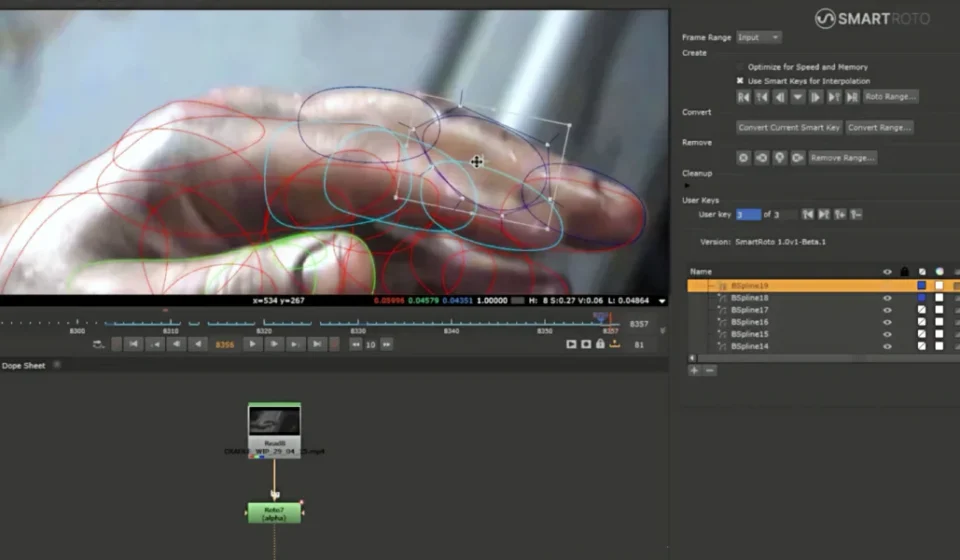
Today, Foundry has officially unveiled SmartRoto, a new AI-powered plugin for the Nuke family (Nuke, NukeX, Nuke Studio, and Nuke Indie). Rather than attempting to replace the artist with a "black box" solution, SmartRoto aims to fundamentally accelerate the keyframing workflow. By integrating machine learning directly into the spline-based pipeline, Foundry has created a tool that respects the artist’s intuition while offloading the heavy lifting of temporal animation.
The Philosophy of "Human-in-the-Loop" AI
The first hurdle in understanding SmartRoto is recalibrating expectations. In an era where generative AI often promises instant, one-click results, SmartRoto takes a refreshingly conservative, professional stance. It is not an automated matting tool that attempts to guess a silhouette from a segmentation mask; it is an acceleration engine for the traditional roto process.
"This isn’t the magic bullet," explains Adam Cherbetji, Foundry’s Director of Product for AI Research. "It doesn’t do the full spline creation for you; it’s about accelerating the keyframing process. There is so much artist intuition that goes into the breakdown of the subject into smaller shapes. While that is somewhat time-consuming, the really time-consuming part is the keyframing. That is where we focused."
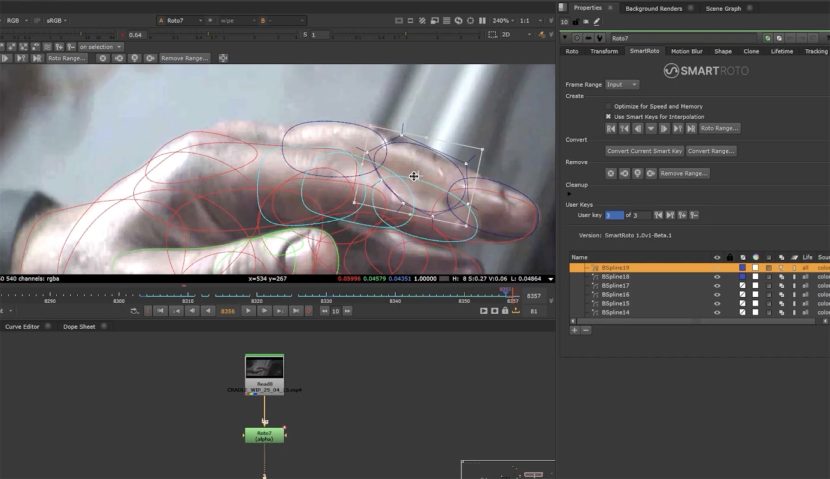
In practice, the workflow remains familiar to any veteran compositor. An artist breaks down a subject into sensible, articulated splines on a clean, clear frame. Once those shapes are defined, the artist places a few keyframes, and SmartRoto propagates those shapes across the sequence. The model intelligently moves, animates, and deforms the splines, allowing the artist to step back and act as a director rather than a manual laborer.
A Two-Tier System: User Keys vs. Smart Keys
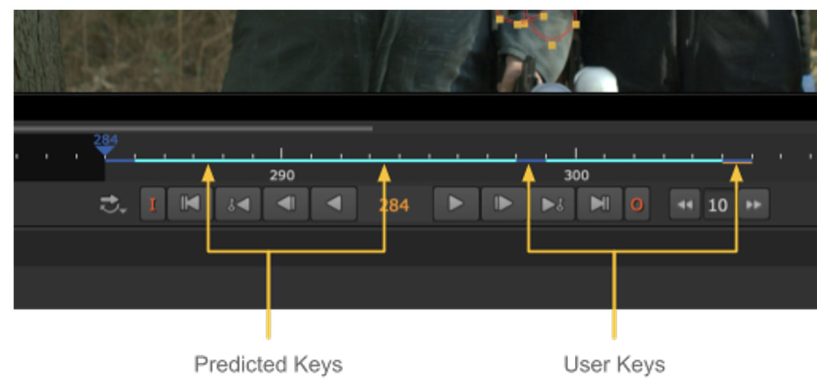
The backbone of SmartRoto is a hierarchical approach to keyframing. The system distinguishes between "Smart Keys" and "User Keys," a distinction that ensures the AI never compromises the artist’s creative intent.
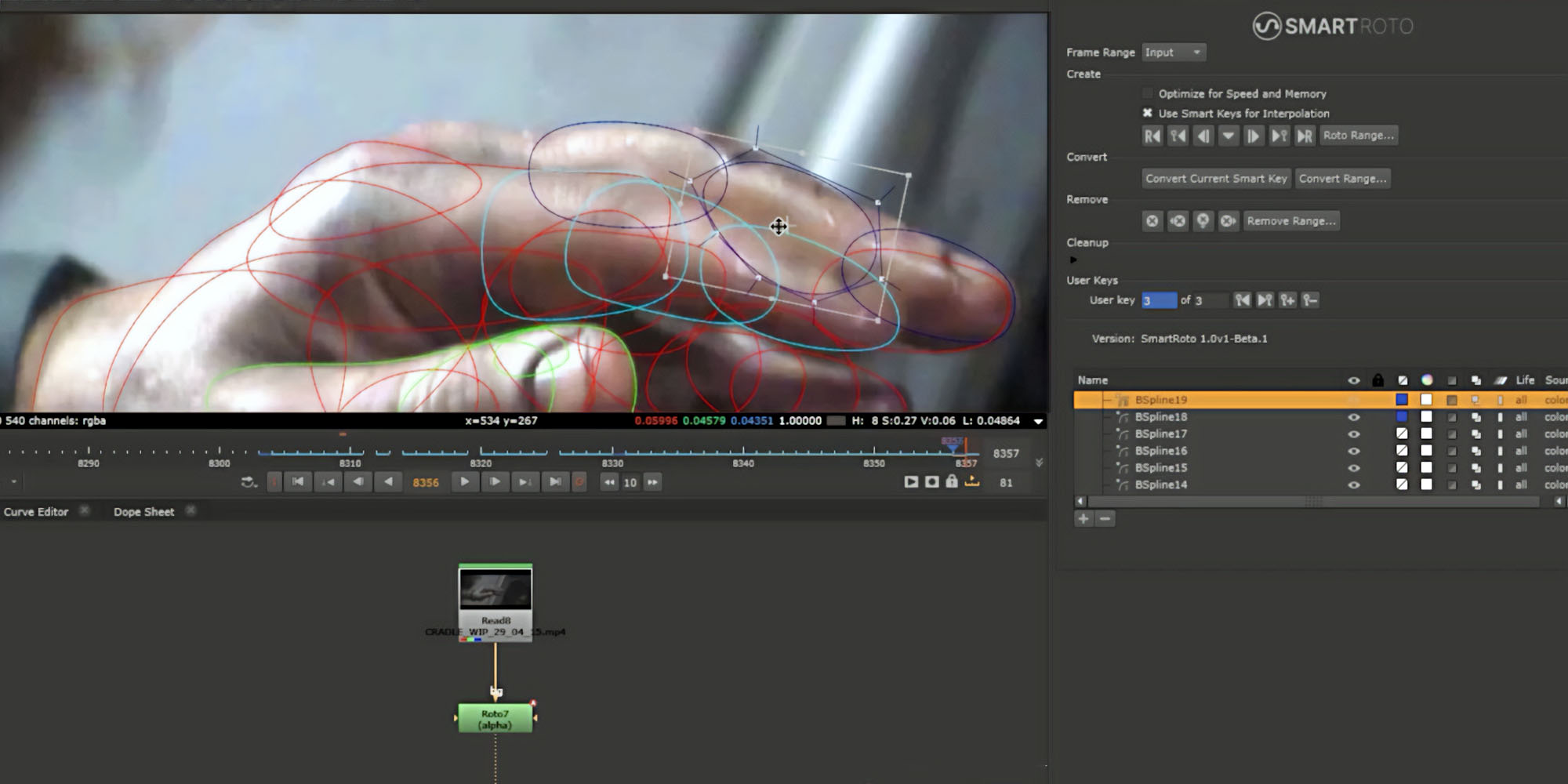
- User Keys: These are the artist-defined anchor points. When an artist positions a spline on a specific frame, the system treats it as "gospel." These keys are immutable, protected from being overwritten by the AI, and serve as the ground truth for the model’s calculations.
- Smart Keys: These are the AI-predicted frames. As the model propagates shapes across a sequence, it generates a dense series of keyframes to ensure smooth motion.
This workflow allows for a highly iterative process. An artist can establish their extremes, and if the AI’s prediction deviates—perhaps due to complex motion or partial occlusion—the artist simply corrects the spline. That correction automatically becomes a new "User Key," which the model then uses to re-calculate the surrounding frames. There is no scenario where the artist must "fight" the software or start from scratch; they simply guide the AI, refining the results until the motion is perfect.
Why Optical Flow and Segmentation Failed
Foundry’s research into SmartRoto has been a long-term endeavor, spanning years of trial and error. The team was clear from the outset that standard industry solutions were insufficient for the level of precision required in high-end VFX.
"Not optical flow, that’s been tried," says Cherbetji. "It was the first thing we attempted. Optical flow breaks down at the edge, and that is exactly where you need the precision."
Similarly, the team dismissed the current trend of using standard image-based segmentation models (like those popularized by SAM). "A lot of the solutions we’ve seen in the market so far are using a segmentation model and drawing a spline around that. We don’t think that’s fit for purpose," he notes.
Instead, SmartRoto operates by latching onto image features and propagating the splines themselves. Because the system remains entirely spline-based, it maintains subpixel accuracy. By avoiding the conversion to raster masks, SmartRoto ensures that the output is always compatible with existing compositing pipelines, including traditional motion blur rendering.
A Four-Year Journey: From Research to Production
The development of SmartRoto is the culmination of more than four years of intensive internal R&D, though the company’s exploration into AI-assisted rotoscoping began as far back as six or seven years ago in collaboration with academic partners like the University of Bath and DNEG.
The current model was built and trained from scratch using proprietary datasets. Crucially, the training footage consists of high-quality, real-world motion picture assets, annotated with professional-grade roto. Foundry has emphasized that the model is fully commercially safe and runs entirely locally. In an industry where studio security is paramount, the fact that no data is transmitted to the cloud is a significant selling point.
The hardware requirements are surprisingly modest. Depending on the resolution and the number of splines, the system typically requires around 8GB of VRAM. While high-resolution sequences with massive amounts of geometry will naturally demand more resources, it is a far cry from the massive compute requirements of general-purpose foundation models.
Validation: The "Two-Weeks" Test
To ensure the tool was ready for the rigors of a professional pipeline, Foundry conducted a blind study with professional roto artists. Over the course of two weeks, participants performed rotoscoping on a variety of shots using both vanilla Nuke and the SmartRoto-enabled version.
The results were compelling. By the second week, artists were consistently completing tasks up to four times faster than with manual methods. While Cherbetji remains cautious about promising a universal "4x speedup"—acknowledging that production environments vary—the consensus was clear: the tool was consistently twice as fast, and more importantly, the qualitative feedback was overwhelmingly positive. Beta testers, including renowned compositor Benjamin Bratt, noted that the system felt intuitive and, crucially, didn’t force them to abandon their established professional habits.
The Broader Landscape of AI Rotoscoping
Foundry is not the only player in this race. The challenge of automated roto is a "holy grail" for the VFX industry, and several companies and researchers are closing in on the solution.
Kognat, led by Sam Hodge, has already garnered significant attention for its AI-assisted tools. Meanwhile, the SIGGRAPH research community continues to push the envelope with projects like RotoShop, which attempts to bridge the gap between raster segmentation masks and vector-based splines.
What distinguishes SmartRoto in this competitive landscape is its commitment to the spline as the final deliverable. Whether through direct propagation or fitting vectors to masks, the industry consensus is firm: the future of roto is not a bitmap matte, but a manipulatable, subpixel-accurate spline. By focusing on how artists actually work—rather than trying to replace them—Foundry has positioned SmartRoto as a tool that feels like a natural evolution of the craft.
Implications for the VFX Pipeline
The release of SmartRoto represents more than just a new plugin; it reflects a shift in how studios approach technical debt. For years, the "roto grind" has been a barrier to creativity, forcing artists to spend hours on manual tasks that could be better spent on final grading, integration, or creative compositing.
By offloading the most tedious aspects of the job to an AI that understands the logic of a spline, Foundry is effectively raising the floor for productivity. For small boutiques and indie studios using Nuke Indie, this could be transformative, allowing them to take on more complex shots that were previously cost-prohibitive. For large-scale facilities, it offers a way to streamline their internal roto pipelines, potentially reducing the massive overhead associated with global, multi-site production.
As SmartRoto rolls out to the wider user base, the true test will be in the diversity of production scenarios—from extreme motion blur to complex, multi-layered characters. But if the initial reception is any indication, the "grind" of rotoscoping may soon be a thing of the past, leaving artists free to focus on what they do best: creating visual magic.
SmartRoto is available now via annual subscription for US$499, with both node-locked and floating licenses available for integration into any Nuke-based workflow.