Unlocking the Magic: BSX Records Debuts the Long-Awaited Soundtrack for ‘Young Harry Houdini’

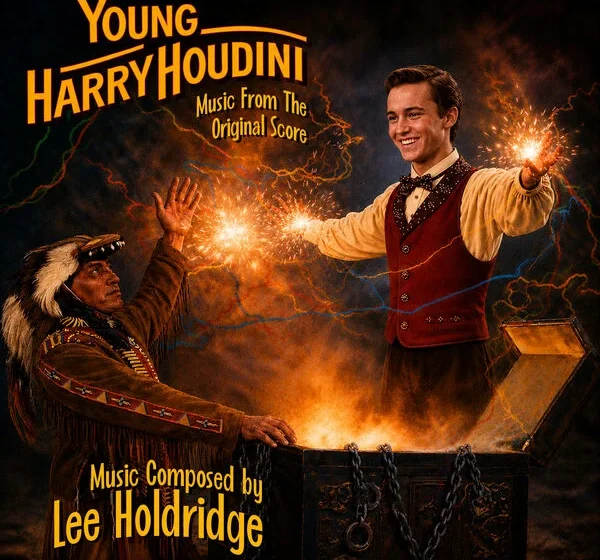
For nearly four decades, the musical landscape of the 1987 television film Young Harry Houdini remained a "lost" artifact of the golden age of made-for-TV movies. Fans of Emmy Award-winning composer Lee Holdridge have long clamored for an official release of his evocative, adventurous score. That silence has finally been broken. BSX Records has officially released the first-ever soundtrack album for the film, offering a comprehensive look at the orchestral tapestry that helped define the early life of the world’s most famous escape artist.
The Main Facts: A Long-Overdue Release
The soundtrack, which captures the whimsical yet perilous atmosphere of James Orr’s 1987 production, is now available to the public. Initially released digitally via the BSX Records official website last month, the score is now widely accessible across major streaming platforms and digital retailers, including Amazon.
The release marks a significant milestone for soundtrack collectors. Young Harry Houdini, which originally premiered as part of the prestigious The Magical World of Disney on NBC, has maintained a cult following among fans of 80s nostalgia. The score, composed and conducted by the legendary Lee Holdridge, is widely regarded as one of his more adventurous works, blending the sense of wonder associated with early Americana with the tension and mystery inherent in Houdini’s lifelong pursuit of the impossible.
Chronology: From 1987 to 2026
To understand the significance of this release, one must look back at the historical context of the film itself.
The Original Production (1987)
In 1987, the television landscape was dominated by high-concept family dramas. Young Harry Houdini, directed and co-written by James Orr, was a high-profile project for NBC. The film boasted a formidable cast, featuring a young Wil Wheaton as the titular character, alongside industry stalwarts such as Jeffrey DeMunn, Kerri Green, Roy Dotrice, Barry Corbin, and the iconic José Ferrer. The narrative followed the formative years of Erik Weisz, the boy who would become Harry Houdini, exploring the intersection of his burgeoning magical talent and his turbulent childhood.
The Scoring Sessions
Lee Holdridge, already a heavyweight in the industry thanks to his work on Splash, The Beastmaster, and Mr. Mom, was tapped to provide the musical backbone of the film. Holdridge’s approach was rooted in the symphonic traditions of Hollywood’s past, utilizing a lush, thematic style that underscored the film’s adventurous tone. For decades, the tapes of these sessions remained in the vaults, inaccessible to the public, existing only in the background of a 1987 television broadcast.
The Restoration and Release (2026)
In 2026, the archival team at BSX Records initiated a project to preserve and distribute the score. The restoration process involved sourcing high-quality masters to ensure that Holdridge’s intricate arrangements—which range from the delicate, whimsical "Lessons In Imagination" to the high-stakes tension of "The Chinese Water Torture Trick"—could be heard with modern clarity.
Supporting Data: An In-Depth Tracklist Analysis
The album provides an expansive look at the narrative arc of the film through music. The following tracklist serves as a roadmap of the film’s emotional journey:
- Opening Titles (0:44) – A brief, punchy introduction that sets the stage for the mystery to come.
- The Chinese Water Torture Trick (4:38) – A masterclass in suspense, building the rhythmic tension synonymous with Houdini’s most famous ordeal.
- The Most Fantastic Story / Race to See the Great Merlin / Harry Watches the Great Merlin (4:42) – A suite that encapsulates the protagonist’s early inspiration.
- Harry Hops a Train Out of Appleton (3:34) – An adventurous, fast-paced track capturing the spirit of youth and wanderlust.
- Harry Picks Lance’s Handcuffs / Foot Chase / Harry and Lance Say Goodbye / On the Road With Grimaldi (3:38) – A complex medley covering the film’s shift toward more mature themes.
- Campfire Chat / The Wolf and the Bear / Calpernia Crying (6:08) – One of the score’s more atmospheric and emotionally resonant pieces.
- Altering the Trick / Dangling Over a Cliff / The Story of the Chosen One / The Rattlesnake (6:08) – A high-octane sequence reflecting the physical dangers Houdini faced.
- Lessons In Imagination (A-The Mountains / B-Flight / C-The Village) (7:26) – A triumphant, expansive track that highlights Holdridge’s mastery of thematic development.
- Choose the Right Path / Flashback Montage / It All Seemed So Real / Ending (5:39) – The emotional climax of the soundtrack.
- End Credits (0:52) – A final, nostalgic bow.
- Caillope Source (4:13) – A delightful period-specific addition that provides a sense of the traveling circus atmosphere inherent in the era.
Official Responses and Perspectives
The release of the Young Harry Houdini soundtrack has been met with quiet excitement within the film music community. While BSX Records has not issued a formal press conference, their decision to catalog and release such a niche work speaks to a broader industry trend: the "archival push."
Film historians note that this release serves as an essential bridge for those studying the mid-80s transition in television production. Composer Lee Holdridge has previously spoken about his preference for "story-first" scoring, where the music serves the narrative rhythm rather than just acting as background filler. In the context of Young Harry Houdini, the music does not merely accompany the film; it acts as an emotional narrator, guiding the audience through the psychological evolution of a child prodigy.
Collectors who have already accessed the digital release have praised the restoration quality. On various enthusiast forums, the consensus is that the score holds up remarkably well against contemporary orchestral works, proving that Holdridge’s ability to weave whimsy with high-stakes tension remains a standard for the industry.
Implications: The Legacy of Television Scores
The release of this soundtrack has several implications for the future of archival film music:
1. The Preservation of "Lost" Scores
For years, the music composed for television movies of the 1980s was treated as ephemeral. By digitizing and releasing scores like Young Harry Houdini, labels like BSX Records are preventing these compositions from falling into permanent obscurity. This sets a precedent for other labels to scour the archives of networks like NBC, ABC, and CBS for similar treasures.
2. Validating the Television Composer
Historically, the prestige of film music was tied to the theatrical release. However, composers like Lee Holdridge, who worked prolifically in both film and television, often produced their most interesting thematic work for the small screen. This release serves to highlight the sophistication of television scoring during a period when the medium was finding its own cinematic identity.
3. A New Generation of Listeners
With the rise of streaming, soundtracks are no longer tethered to the physical film. Listeners can now engage with Holdridge’s work without needing to track down a decades-old television broadcast. This accessibility allows a new generation of listeners to appreciate the structural complexity of 80s film music, potentially sparking interest in the film itself.
4. Commercial Viability of Niche Releases
The success of this release will likely inform future projects for BSX Records. If the digital performance of Young Harry Houdini proves strong, it confirms that there is a sustainable, if specialized, market for high-quality restoration of television soundtracks. It signals to rights holders that there is value in the past, provided it is curated with respect and technical expertise.
Conclusion
The release of the Young Harry Houdini soundtrack is more than just a trip down memory lane; it is a vital act of musical preservation. By making Lee Holdridge’s 1987 score available to the public, BSX Records has ensured that the magical, adventurous spirit of the film will continue to live on in the ears of its audience. Whether one is a devoted fan of the film or simply an admirer of fine orchestral composition, this soundtrack stands as a testament to the power of a well-told story and the music that brings it to life.
As we look back at the trajectory of Young Harry Houdini, we are reminded that even in the world of television, true craftsmanship is timeless. Houdini himself famously said, "My life is a constant struggle for the impossible." In the case of this long-lost score, the "impossible" has finally been achieved, and the music has been liberated from the vault at last.