
Editor’s Note: This review was originally published on May 16, 2026, during the 2026 Cannes Film Festival. Neon will release the film in theaters on Friday, November 13, 2026.
In the sweltering, humid final weekend of August 1986, the Queens, New York, landscape is a study in quiet, suburban desperation. Upwardly mobile Jewish families crowd into country club pools, clinging to the fading vestiges of summer, oblivious to the tectonic shifts occurring in the wider world. In less than two months, the Mets will secure a World Series title that, in hindsight, serves as the final, golden sunset of an era. But for Irwin Pearl, a soft-spoken, nebbishy engineer played with haunting vulnerability by Miles Teller, this historical context is irrelevant. He is a man trapped in the mundane, unaware that his life is currently perched on the precipice of an irreversible, tragic descent.
The Architect of a Modern Tragedy
James Gray has long been the poet laureate of the immigrant experience and the suffocating gravity of familial obligation. With Paper Tiger, his latest cinematic masterwork, Gray returns to the borough that defined his early career, crafting a Jewish-American tragedy that feels simultaneously like a Greek myth and a neighborhood anecdote.
The film operates on a double axis: it is a high-stakes, breathless thriller involving the Russian mafia, and, more profoundly, a devastating character study of two brothers—Irwin and his older sibling, Gary (Adam Driver)—whose lives are tied together by a toxic, unspoken pact. As the title suggests, the film examines the fragility of the "American Dream." It posits that in the 1980s, as the income gap widened and economic mobility began to stall, the pursuit of wealth became a dangerous game of shadows.

A Chronology of Collateral Damage
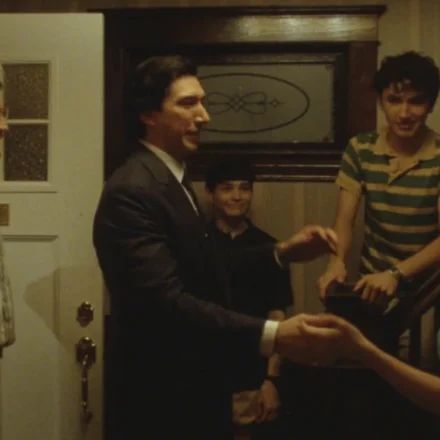
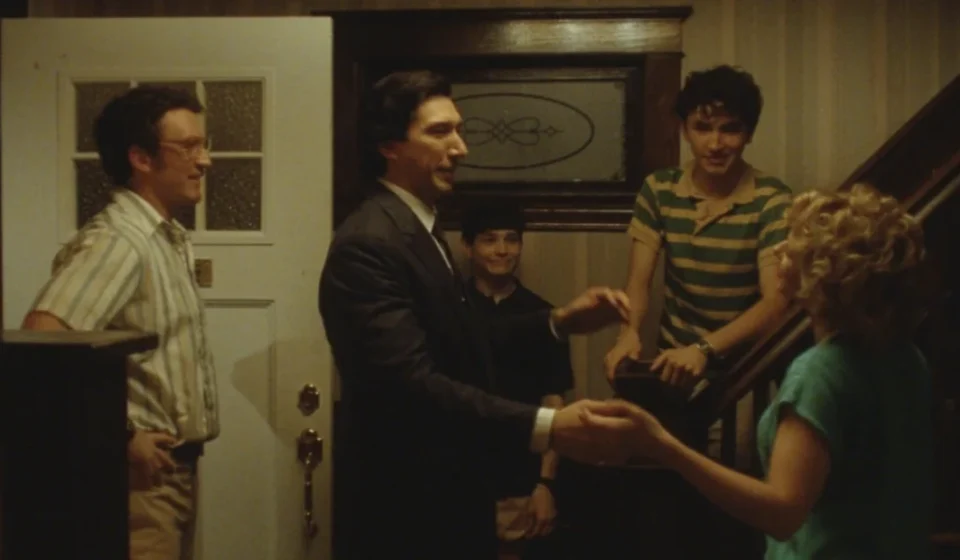
The narrative momentum of Paper Tiger is driven by a singular inciting incident: Gary, a divorced, disgraced former police officer, rolls into the lives of his brother and his sister-in-law, Hester (Scarlett Johansson), with the bravado of a man who has conquered the city. He arrives in a sleek blue Mercedes, bearing gifts of high-end takeout from Peter Luger’s, and a smile that masks a profound, hollow desperation.
Gary’s pitch to Irwin is simple, yet sinister: he has an "opportunity" involving a construction project on the Gowanus Canal. He needs an engineer with a steady hand. He does not mention the project is a front for illegal waste dumping by the Russian mob. Irwin, who views his brother as a larger-than-life figure despite his own misgivings, accepts the job, driven by a quiet desire to provide more for his family than his modest engineering salary allows.
The tragedy unfolds in a slow-motion collision. Irwin, ever the professional, takes his young sons to the site to survey the terrain. There, they bear witness to the illegal dumping. The subsequent discovery of their presence by the Russian syndicate transforms the film from a domestic drama into a race against time. The mob demands a resolution, and Gary is given seven days to "make the problem go away"—a task that requires capital and connections he simply does not possess.
The Anatomy of the Performance
The success of Paper Tiger hinges on the central dynamic between Teller and Driver. Miles Teller’s performance is a revelation; he adopts the jittery, intellectual, and slightly cowardly energy of a mid-career Albert Brooks. It is a brilliant pivot for the actor, who uses his natural charisma to highlight the insecurity of a man who feels he is being measured against a brother who is, in reality, a complete fraud.

Adam Driver, however, delivers a performance that will surely define his career. His Gary is a masterpiece of artifice—a man who uses "razzle-dazzle" to hide the fact that he is essentially a hollowed-out shell of a human being. Driver manages to make Gary’s menace and his genuine, misguided love for his brother exist in the same frame. He is a man who thinks he is protecting his family while systematically dismantling their future.
Scarlett Johansson, as Hester, provides the emotional anchor of the film. Her performance is characterized by a "void-like power." As she is kept in the dark by her husband, she begins to withdraw, her heart breaking in real-time as she realizes that the life she built is built on sand.
Supporting Data: The 1980s Context
To ground the film in its period, cinematographer Joaquín Baca-Asay utilizes 35mm film to capture the gritty, tangible reality of 1986 New York. The visual language of the film—the beepers, the constant presence of TaB soda, the gray, polluted water of the Gowanus Canal—serves as more than mere nostalgia. It is an indictment of an era defined by greed.
The film’s thematic weight is reinforced by the opening quotation from Aeschylus: "Let there be wealth without tears; enough for the wise man who will ask no further." It is a warning that Irwin ignores. While the film may be "underfunded" compared to modern blockbusters, its impact is outsized precisely because of its focus on the micro-details. The "home invasion" sequence, in particular, stands as one of the most terrifying pieces of cinema produced in the last decade, functioning as a physical manifestation of the family’s internal decay.

Official Responses and Industry Outlook
Since its premiere at the 2026 Cannes Film Festival, Paper Tiger has garnered universal acclaim from critics, who have lauded it as the "definitive James Gray film." Industry analysts at Neon are positioning the film as a major awards contender for the 2027 season, specifically highlighting Driver’s performance and Gray’s screenplay.
"It is a film about the devil’s bargain we make when we call ourselves a family," one critic noted during the festival. "It is our greatest strength and our heaviest cross to bear." The film has sparked significant conversation regarding the nature of the "American Dream" and whether the sacrifices made by the previous generation were, in the end, worth the price of the current generation’s soul.
Implications: The High Cost of Love
The true brilliance of Paper Tiger lies in its conclusion. The film suggests that the tragedy is not that the mob pulls these brothers apart, but that the threat forces them together. The worse the situation becomes, the more they rely on one another, revealing a bond that is as beautiful as it is self-destructive.
The final act of the film is a masterclass in tension. It is a story about a household being choked by its own self-inflicted wounds. When Irwin finally mutters, "We already had everything," it is a gut-wrenching moment of clarity. The film leaves the audience with a singular, harrowing realization: that in the pursuit of more, we often destroy the very things that make life worth living.

Paper Tiger is more than just a crime drama; it is a profound, meditative examination of the human condition. It confirms James Gray’s place as one of the most vital directors of our time, a filmmaker who continues to process his own history through the grand, tragic lens of the classics.
Grade: A