
In the modern celebrity ecosystem, the concept of the "authentic self" has become a paradoxical currency. Fans demand transparency, social media platforms incentivize unfiltered reaction, and the 24-hour news cycle thrives on the hot takes of public figures. Yet, as legendary writer, producer, and performer Tina Fey recently noted, this culture of total openness may be a trap.
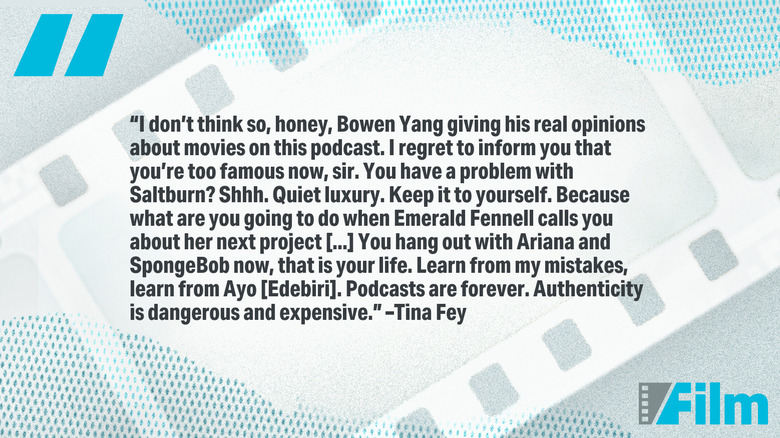
Fey, a comedic titan whose career trajectory spans from the writer’s room of "Saturday Night Live" to the creation of the quintessential sitcom "30 Rock," recently delivered a warning to the next generation of entertainers. During a guest appearance on the popular pop-culture podcast Las Culturistas, hosted by Bowen Yang and Matt Rogers, Fey distilled the precarious nature of modern fame into a single, biting mantra: "Authenticity is dangerous and expensive."
The Genesis of a Viral Moment: The ‘Las Culturistas’ Appearance
The quote emerged during the podcast’s recurring segment, "I Don’t Think So, Honey," a high-energy feature where hosts and guests are given sixty seconds to rant about a niche grievance. While many guests use this time to complain about trivial inconveniences like slow elevators or bad customer service, Fey used her minute to deliver a masterclass on the survival mechanics of A-list stardom.
Her target was the very podcast she was appearing on. Fey playfully chastised host Bowen Yang for his tendency to share genuine, unfiltered critiques of films and industry trends. Addressing Yang directly, she remarked, "I regret to inform you that you’re too famous now, sir."
Fey’s logic was stark: once a performer reaches a certain echelon of success, their opinions are no longer private musings shared among peers—they are professional liabilities. By publicly critiquing films like Emerald Fennell’s Saltburn or commenting on industry gossip, Yang was potentially sabotaging future career opportunities. Fey’s warning was clear: in an era where the internet records everything in "ink," casual candor carries a high price tag.
Chronology of a Career Built on Sharp Observations
To understand the weight of Fey’s advice, one must look at her own storied career. Fey has spent decades navigating the tightrope between satirical truth-telling and the pressures of corporate stardom.
- The SNL Years (1997–2006): Rising through the ranks to become the first female head writer of Saturday Night Live, Fey learned early on how to sharpen her wit for maximum impact. Her tenure as the co-anchor of "Weekend Update" allowed her to refine the art of the "hot take" within the protective context of a scripted format.
- The ’30 Rock’ Era (2006–2013): Fey’s sitcom, 30 Rock, was a masterclass in industry satire. Interestingly, Fey often used the show to signal truths that other comedians wouldn’t touch. Notably, she included jokes about Bill Cosby’s alleged misconduct years before the allegations became a national conversation, demonstrating a subtle, calculated form of speaking truth to power.
- The Modern Pivot (2014–Present): With the rise of social media and the "cancel culture" phenomenon, Fey has observed a shift. Her recent work, including her role in Netflix’s The Four Seasons, comes at a time when the stakes for public figures have never been higher.
Supporting Data: The Digital ‘Ink’ Problem
Fey’s comment regarding the "expensive" nature of authenticity refers to the permanence of the digital footprint. As she alluded to, the internet does not forget. A sentiment expressed in 2020 on a podcast can be weaponized in 2026, often without regard for the context in which it was originally uttered.
This is best illustrated by the "Ayo Edebiri effect." During her appearance, Fey referenced The Bear star Ayo Edebiri, who had previously made lighthearted jokes about Jennifer Lopez on a podcast years before the two found themselves working in the same orbit—specifically, when Edebiri hosted Saturday Night Live while Lopez served as the musical guest. While the situation ultimately resolved with grace, it serves as a case study for why Fey believes that, for the famous, silence is often a more strategic choice than transparency.
When a celebrity shares a hot take, they are not just sharing a personal opinion; they are creating a PR event. If that opinion offends a collaborator, a studio head, or a powerful fan base, it can lead to "expensive" consequences: lost roles, brand boycotts, and the time-consuming process of damage control.
The Professional Implications of ‘Opaque’ Stardom
Fey’s advice is not necessarily a call for dishonesty; rather, it is a call for strategic opacity. In the current climate, "authenticity" is often a marketing tool used by social media managers to humanize stars. However, true authenticity—the kind that involves sharing raw, unvarnished thoughts on professional peers or sensitive cultural topics—is, as Fey puts it, "dangerous."
The Burden of Expectations
Today’s consumers often feel entitled to the personal politics and unfiltered opinions of their idols. When a celebrity declines to share a take, they are often accused of being "out of touch" or "inauthentic." Fey’s position is that this demand is a trap. By refusing to engage in the constant cycle of commentary, celebrities can protect their professional mobility.
The Professional ‘Cold War’
Fey’s specific warning to Bowen Yang about "quiet luxury" and keeping opinions to himself highlights the small, interconnected nature of the entertainment industry. In Hollywood, where the person you criticize today might be the director you are auditioning for tomorrow, the cost of being "real" can literally be a paycheck.
Official Perspectives: A Shift in Celebrity Culture
While Fey’s comments were delivered with her signature comedic dryness, they resonate with a broader shift among veteran entertainers. Many stars who rose to fame before the ubiquity of social media have adopted a "less is more" approach to public discourse.
Unlike the early days of podcasting, where guests were encouraged to be as messy and honest as possible, the current landscape of celebrity media has become increasingly sanitized. Publicists now often vet guest appearances, and agents caution their clients against participating in "hot take" segments that could be clipped and taken out of context on platforms like TikTok or X (formerly Twitter).
Conclusion: The Wisdom of the ‘Philly Broad’
Tina Fey’s assertion that "authenticity is dangerous and expensive" serves as a poignant reminder of the trade-offs inherent in modern fame. While the audience may desire the illusion of knowing their favorite stars on a deeply personal level, the reality of the industry suggests that the most successful figures are those who have learned to curate their public persona with precision.
As Fey told Yang and Rogers, "Learn from my mistakes, learn from Ayo." It is a piece of advice that transcends comedy. In an age where every word is archived, indexed, and subject to public scrutiny, the ability to maintain a sense of mystery—to be strategically opaque—might just be the most valuable skill an entertainer can possess.
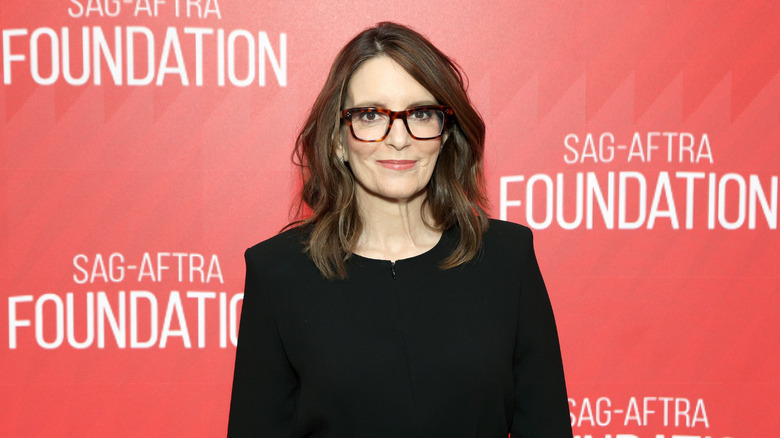
Tina Fey remains one of our most observant cultural commentators precisely because she understands the game better than anyone else. She knows that in a world that demands you show your cards, the smartest move is often to keep them close to the vest. Authenticity, as it turns out, is a luxury that the most famous among us simply cannot afford.