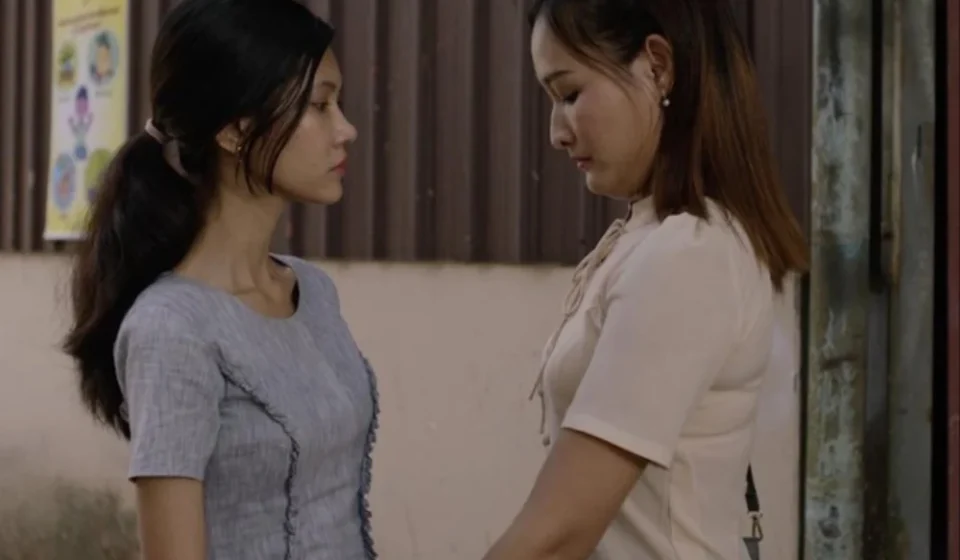
A New Chapter in Global Cinema: ‘Fruit Gathering’ Takes Top Honors at the 2026 Karlovy Vary Film Festival

The 2026 Karlovy Vary Film Festival reached its emotional and cinematic climax this Saturday, as the prestigious Crystal Globe for Best Film was awarded to Fruit Gathering, the breakout feature by Myanmar director Aung Phyoe. The victory marks a significant milestone for Burmese cinema, highlighting a narrative that manages to be both deeply personal and globally resonant. The festival, long regarded as a vital bridge between Eastern and Western cinematic traditions, concluded with a ceremony that celebrated not only the craft of filmmaking but the resilience of storytellers working against the backdrop of global instability.
The Ascent of ‘Fruit Gathering’
Set within the claustrophobic and rhythmic environment of a contemporary textile factory in Myanmar, Fruit Gathering is a nuanced study of human connection. The film charts the blossoming friendship between two young women, a relationship that gradually evolves from a shared experience of labor into an exploration of obsession and queer desire.
The festival jury, chaired by an esteemed panel including Justin Chang, Amanda Nell Eu, and Eskil Vogt, lauded the film for its transformative narrative structure. “It begins as a lush and meditative portrait of work and friendship before morphing, unexpectedly and organically, into a harrowing drama of obsession and queer desire,” the jury noted in their official statement.
For director Aung Phyoe, the win is a testament to the perseverance of a creative team operating in a country where artistic expression is frequently curtailed. Speaking during the awards ceremony, a visibly moved Phyoe reflected on the production process: “My producers have gone through many difficulties to make this film—and they had to deal with me, too. I don’t know why they believed in me. I don’t believe in myself.” He also offered a poignant tribute to his mother, describing her as the “mother of a long-suffering artist for many, many years.”
A Chronicle of the 2026 Ceremony
The ceremony was defined by a sense of solidarity and shared purpose. While Fruit Gathering took the top prize, the evening saw a diverse array of international talent recognized for their contributions to the medium.
The Special Jury Prize, accompanied by a $15,000 grant, was awarded to the Danish drama The Guest, starring the renowned Trine Dyrholm. Directed by Mads Mengel, the film was described by the jury as a “squirmingly funny yet precisely modulated drama that subtly raises questions about motherhood, filial duty, and mental illness.” Mengel also secured the Best Director award, cementing a dominant night for the Danish production.
In his acceptance speech, Mengel expressed gratitude for the collaborative nature of the film, noting that his exploration of family dynamics was driven by a desire to examine the moment when one’s perception of their parents shifts from infallible authority figures to complex, fallible humans. “Life rarely gives us perfect endings,” Mengel remarked, “but it does occasionally give us the chance to begin again.”
Further awards recognized performances of profound depth: Anna Schinz took home the Best Actress trophy for her role in A Happy Family, praised for a performance described as “gripping and hauntingly restrained.” The Best Actor award was presented to Ghassan Saad for his work in the Lebanese-Saudi-Qatari production Pipes.
The Proxima Competition: Emerging Voices
While the Crystal Globe Competition highlights established and rising auteurs, the Proxima Competition serves as a laboratory for formal experimentation and boundary-pushing narratives. This year, the Grand Prix went to Lover, Not a Fighter, directed by Martina Buchelová.
The jury praised the film for its “extraordinary lightness” and its refusal to succumb to the weight of its own themes. By balancing the absurdity of family life with the intensity of young love, Buchelová captured the attention of critics and audiences alike. The jury noted that the film treats the apprehensions of aging with a “luminous sincerity,” marking Buchelová as a director to watch in the coming years.
Other notable honors in the Proxima category included the Special Jury Prize for Shuntaro Uchida’s Incinerator and the Best Director award for Efthimis Kosemund-Sanidis’s A Whole Person Almost.
Artistic Contribution and Political Resonance
The evening was punctuated by moments of political gravity, particularly during the presentation of the Crystal Globe for Outstanding Artistic Contribution to World Cinema to French icon Juliette Binoche.
Binoche used her platform to draw attention to the global political climate, specifically naming the ongoing crises in Palestine, Lebanon, and Ukraine. “We need artists to tell stories, to tell the truth,” she asserted. “Passion is really the heart of what we do. Life goes by very quickly, so let’s give ourselves as much as possible. We need to unite.”
This sentiment was echoed by American actor Jeffrey Wright, who received the Festival President’s Award. Wright, known for his thoughtful engagement with cinema’s potential for cultural synthesis, spoke of his long-held desire to produce a film about Alexander Pushkin, a project he once discussed with the late director Miloš Forman. Wright emphasized that the power of the American—and by extension, the global—filmmaker lies in creation rather than destruction, framing storytelling as an essential tool for overcoming the forces of disconnection.
Implications for Global Cinema
The 2026 Karlovy Vary Film Festival has sent a clear message: the future of cinema lies in the intersection of local specificity and universal emotional truth. Aung Phyoe’s victory is particularly telling; he represents a new generation of filmmakers from Myanmar who are striving to create a “national language of cinema” while navigating the precarious political reality of their homeland.
Phyoe’s admission that “political things have to be very subtle” in his country underscores the bravery inherent in modern filmmaking. By focusing on the rhythm of his own lived experience, Phyoe has managed to produce a film that bypasses heavy-handed political messaging in favor of a deeper, more resonant human truth. This approach—restrained, atmospheric, and deeply observant—seems to be the hallmark of the most successful films at this year’s festival.
Data and Award Summary
The following is a breakdown of the key winners across the major categories:
Crystal Globe Competition
- Grand Prix: Fruit Gathering (Myanmar/Czech Republic/France), Dir. Aung Phyoe
- Special Jury Prize: The Guest (Denmark), Dir. Mads Mengel
- Best Director: Mads Mengel (The Guest)
- Best Actress: Anna Schinz (A Happy Family)
- Best Actor: Ghassan Saad (Pipes)
Proxima Competition
- Grand Prix: Lover, Not a Fighter (Slovakia/Czech Republic), Dir. Martina Buchelová
- Special Jury Prize: Incinerator (Japan), Dir. Shuntaro Uchida
- Best Director: Efthimis Kosemund-Sanidis (A Whole Person Almost)
Special Awards
- Outstanding Artistic Contribution: Juliette Binoche, Dustin Hoffman, Robert Richardson
- Festival President’s Award: Jesse Eisenberg, Maggie Gyllenhaal, Magda Vášáryová, Jeffrey Wright
- Ecumenical Jury Grand Prize: The Lion at My Back (Cyprus/Luxembourg/Greece), Dir. Tonia Mishiali
- FIPRESCI Award (Crystal Globe Comp): Only Beautiful Things to Look At (Slovakia/Czech Republic/Hungary), Dir. Ivan Ostrochovský
Looking Toward the Future
As the festival concludes, the industry looks toward the development of the projects recognized in the KVIFF Promises section. With substantial grants awarded to projects like North Macedonia’s They Bloom at Dawn and the Ukrainian co-production Reminiscence, the festival continues to function as a vital incubator for international talent.
The 2026 edition of the Karlovy Vary Film Festival will be remembered as a year where the personal became the political, and where the act of storytelling was reaffirmed as a necessary, life-affirming endeavor. Whether it was the quiet, factory-bound intimacy of Fruit Gathering or the intellectual ambition of Jeffrey Wright’s retrospective, the festival proved that despite a world prone to fragmentation, the screen remains a powerful space for unification. As Aung Phyoe noted, the struggle to make films in a constrained environment is immense, but the resonance of those films in a global arena is the ultimate reward.