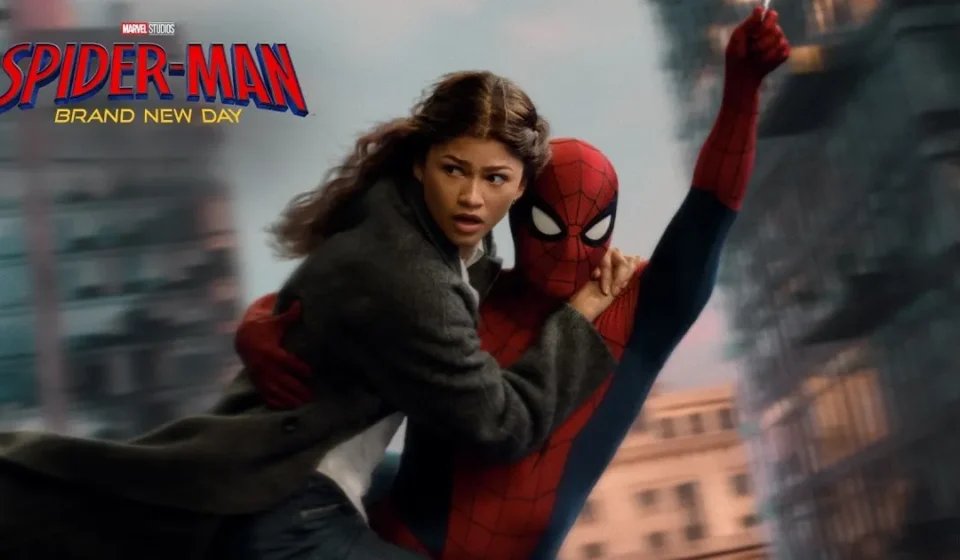
"Spider-Man: Brand New Day" Weaves a Web of Action, But Stumbles on Narrative Depth

New York, NY – July 30, 2026 – The highly anticipated return of Marvel’s beloved web-slinger, "Spider-Man: Brand New Day," swung into theaters today, greeted by a cacophony of fan excitement and critical anticipation. Starring Tom Holland in his latest portrayal of Peter Parker, the film promised a fresh chapter for the iconic hero. However, initial critical reception, including a 3/5 rating from 123telugu.com, suggests that while the movie delivers on spectacular action, it struggles to fully realize its narrative potential, leaving some key questions unanswered and character arcs underdeveloped.
Directed by Destin Daniel Cretton, known for his work on "Shang-Chi and the Legend of the Ten Rings," "Brand New Day" attempts to fuse high-octane superheroics with a more introspective look at Peter Parker’s evolving powers. While the film undeniably provides thrilling cinematic moments, its reliance on a thin premise and a somewhat predictable storyline has garnered a mixed response.
Main Facts
Initial Reception and Core Details
"Spider-Man: Brand New Day," released globally on July 30, 2026, has been one of the most talked-about cinematic events of the year. The film features a stellar ensemble cast, with Tom Holland reprising his role as Peter Parker/Spider-Man, alongside Zendaya as MJ, Jacob Batalon as Ned Leeds, and notable additions such as Sadie Sink in a pivotal role as Jean Grey, Jon Bernthal as The Punisher, and Mark Ruffalo returning as Bruce Banner/Hulk. Tramell Tillman and Michael Mando also feature in undisclosed roles that contribute to the film’s expansive universe.
Behind the camera, Destin Daniel Cretton took the helm, working with a seasoned production team including industry heavyweights Kevin Feige, Amy Pascal, Avi Arad, and Rachel O’Connor. The film’s sonic landscape was crafted by Oscar-winning composer Michael Giacchino, while Brett Pawlak handled cinematography, ensuring the visual grandeur characteristic of Marvel productions. Nat Sanders, Gina Sansom, and Harry Yoon were responsible for the intricate editing, shaping the film’s pace and flow.
The pre-release buzz, fueled by a compelling trailer (accessible via https://youtu.be/x-9i31iPe2A?si=Pw6-jKp48BVmy3XG), had built immense expectations, particularly around Holland’s continued evolution as Spider-Man and the intriguing new character introductions. However, the 123telugu.com review’s 3/5 rating indicates a film that, while entertaining, doesn’t quite ascend to the upper echelons of the superhero genre.
The Narrative Hook
The core narrative of "Brand New Day" plunges Peter Parker, still grappling with the complexities of his dual life, into an unprecedented personal and global crisis. The story opens with Peter noticing disconcerting and unusual changes in his physical abilities, hinting at an evolution or perhaps a destabilization of his powers. This internal struggle coincides with an external threat of significant magnitude: the Department of Damage Control (DDC) comes under a coordinated attack.
The orchestrator of this assault is revealed to be an enigmatic, invisible telepath, whose primary objective is the acquisition of a mysterious entity or device known only as "V-MAX." The film then charts Spider-Man’s desperate attempts to identify this shadowy assailant, uncover the true nature of V-MAX, and ultimately protect the world from a growing threat that seems intrinsically linked to both his personal changes and the broader geopolitical landscape. The intertwining of Peter’s personal struggles with a larger-scale conflict forms the central challenge for the web-slinger, as he navigates new powers and formidable foes.
Chronology of Anticipation and Release
Pre-Production Buzz and Casting Announcements
The journey to "Spider-Man: Brand New Day" began long before its release, with whispers and official announcements steadily building anticipation. Following the critically and commercially successful "Spider-Man: No Way Home," the future of Tom Holland’s Peter Parker was a subject of intense speculation. The confirmation of a new film, titled "Brand New Day," immediately signaled a potential narrative reset or significant turning point for the character, aligning with the comic book arc of the same name which famously rebooted Spider-Man’s continuity.
Casting announcements further ignited the fan base. The return of core cast members like Zendaya and Jacob Batalon was expected, but the inclusion of Sadie Sink, renowned for her role in "Stranger Things," as Jean Grey, sent shockwaves through the Marvel fandom. This casting hinted at a significant expansion of the Marvel Cinematic Universe, potentially laying groundwork for mutant introductions or multiversal crossovers, especially given Jean Grey’s iconic status within the X-Men mythos. Similarly, the confirmation of Jon Bernthal as The Punisher and Mark Ruffalo as Hulk suggested a blending of different Marvel properties, promising a more expansive and interconnected narrative than previous Spider-Man standalone films. These announcements generated fervent discussion about the film’s plot, its place within the MCU timeline, and the implications for future character interactions.
Marketing Campaign and Trailer Impact
The marketing campaign for "Brand New Day" was strategically designed to capitalize on this mounting excitement. Teaser posters featuring Holland in a new suit, cryptic taglines, and subtle hints about the film’s villains were gradually released. However, it was the official trailer, linked earlier, that truly set the internet ablaze. The trailer showcased breathtaking action sequences, glimpses of Spider-Man’s evolving powers, and tantalizing shots of the new characters. The dynamic interplay between Holland’s Peter Parker and the fresh faces, coupled with hints of a deeper, more personal conflict, resonated deeply with audiences.
The trailer highlighted the film’s impressive visual effects and the scale of its ambition, promising an epic superhero adventure. Social media platforms were abuzz with theories, frame-by-frame breakdowns, and discussions about the potential implications of Jean Grey’s appearance and the DDC’s involvement. This robust marketing push ensured that by the time July 30, 2026, arrived, "Spider-Man: Brand New Day" was not just another superhero movie, but a cultural event that fans had eagerly awaited for years.
Release Day and Initial Audience/Critical Pulse
The film’s release day was met with packed theaters and a surge in online discussions. Initial audience reactions were largely positive, with many praising the film’s action and Tom Holland’s performance. However, critical reviews, including the one from 123telugu.com, quickly began to paint a more nuanced picture. While the visual spectacle and the energy of the action sequences were universally lauded, a recurring theme in the feedback was the film’s narrative shortcomings.
Critics noted that despite the high-stakes premise and intriguing character introductions, the screenplay struggled to fully explore its potential. The 3/5 rating reflects a film that is certainly enjoyable and a worthy addition to the superhero genre in terms of sheer entertainment, but one that fails to leave a lasting impact due to its predictable plot points and underdeveloped emotional core. This initial pulse suggested that while "Brand New Day" would undoubtedly be a commercial success, its critical legacy might be more contested than its predecessors.
Supporting Data and Critical Analysis
The Spectacle: Action Choreography and Visuals
One of the undeniable strengths of "Spider-Man: Brand New Day," and a consistent highlight in critical reviews, is its commitment to delivering exhilarating superhero moments. The film’s opening sequences effectively establish the central conflict, swiftly transitioning into a series of meticulously crafted action blocks. These set pieces are not merely filler; they are integral to the film’s identity, providing a constant surge of energy and keeping the audience engaged.
The action choreography, a collaborative effort by Peng Zhang and the legendary Jackie Chan Stunt Team, is a standout achievement. Their expertise is evident in every frame, from the fluidity of Spider-Man’s movements to the intricate, multi-layered combat scenarios. The film reaches an early peak with Spider-Man’s explosive showdown against Hulk, a sequence that is both visually stunning and narratively impactful, showcasing the raw power of both characters. Similarly, the stylish combat against The Hand, an iconic martial arts criminal organization, demonstrates a sophisticated blend of acrobatic prowess and tactical fighting. These sequences are choreographed with flair, executed on a grand scale, and consistently elevate the entertainment quotient, proving that "Brand New Day" knows how to deliver on spectacle.
Brett Pawlak’s cinematography further enhances these moments, capturing the frenetic pace and intricate details of the action with clarity and dynamic composition. The visual effects are polished, seamlessly integrating digital characters and environments with live-action footage, creating a believable and immersive world. This technical prowess ensures that even when the narrative falters, the visual experience remains captivating.
Performances: Anchoring the Narrative
Tom Holland once again anchors the film with a committed and nuanced performance as Peter Parker/Spider-Man. His portrayal continues to strike a delicate balance between the character’s signature humor, his inherent vulnerability, and the demands of being a seasoned superhero. Holland effortlessly transitions from lighthearted quips to moments of intense emotional struggle, making Peter’s journey of adapting to his "unusual changes" believable and relatable. His earnestness and physical agility remain core strengths, solidifying his status as a beloved iteration of the character.
Zendaya, as MJ, delivers a decent performance despite her somewhat limited screen time. Her interactions with Peter provide crucial moments of warmth and grounding amidst the chaos, reminding audiences of the personal stakes involved. Jon Bernthal’s return as The Punisher, though potentially underutilized in terms of plot influence, brings a familiar intensity and gravitas to his scenes, hinting at a larger presence within the MCU. Mark Ruffalo, as Hulk, also provides an effective turn, particularly in his powerful confrontation with Spider-Man.
However, the performances of other key actors faced challenges due to the screenplay. Sadie Sink, in the significant role of Jean Grey, delivers what is described as a "fairly ordinary performance." While this could be attributed to Sink’s acting choices, the review suggests that the character of Jean Grey was not developed convincingly enough to allow for a truly impactful portrayal. This is a missed opportunity, especially given the character’s rich comic book history and the actress’s proven talent. Similarly, Jacob Batalon performs adequately as Ned, but his character is given little scope to make a significant emotional impact, leaving his arc feeling underdeveloped despite a slight improvement in the second half.
Storytelling Shortcomings: A Predictable Web
Despite its visual grandeur, "Spider-Man: Brand New Day" is hampered by a screenplay that, according to critics, is built around a "rather thin premise." This foundational weakness leads to a narrative that offers "very few surprises" and remains "largely predictable." While superhero films often adhere to certain genre conventions, the lack of innovative plot twists or genuine suspense prevents the film from rising above a certain level of engagement.
The review specifically points out the "revenge angle," which, despite having the potential for significant emotional resonance, is never "developed convincingly." As a result, the central conflict, which should drive the emotional core of the film, "fails to resonate as strongly as intended." This critical flaw impacts the audience’s investment in the antagonist’s motivations and Spider-Man’s struggle against them.
Furthermore, the screenplay leaves "several questions unanswered," creating a sense of incompleteness. The Department of Damage Control’s pursuit of the telepathic character is not explored convincingly, leaving their motivations and methods vague. Hulk’s subplot, while providing a spectacular action sequence, ultimately "lacks a satisfying payoff," feeling somewhat disconnected from the main narrative. The inclusion of characters like The Punisher and a "new Black Widow" is seen more as an attempt to "expand the universe" rather than integrating them meaningfully into the narrative. Their influence on the plot is minimal, suggesting they were added for fan service or future setup rather than immediate story impact, diluting the film’s focus.
Technical Craft Beyond the Screenplay
Beyond the narrative, the technical aspects of "Brand New Day" generally receive praise, albeit with some caveats. Director Destin Daniel Cretton, who demonstrated his ability to blend action and character development in "Shang-Chi," delivers a film that "excels in spectacle but falls short in storytelling." His direction effectively mounts the action sequences, showcasing a clear vision for the visual grandeur, but the emotional depth required to make the narrative truly compelling is often missing. This suggests a disconnect between the directorial execution of action and the script’s ability to provide a strong emotional foundation.
Michael Giacchino’s background score complements the proceedings, effectively enhancing the mood and tension of various scenes. However, the review notes that it "doesn’t leave a lasting impression," indicating that while it serves its purpose, it lacks the iconic themes or memorable motifs that often characterize great superhero scores. The editing, handled by Nat Sanders, Gina Sansom, and Harry Yoon, is generally effective in maintaining a brisk pace, especially during the action sequences. However, it "could have been sharper during the slower stretches," suggesting that a tighter edit might have mitigated some of the narrative’s pacing issues and made the less compelling plot points feel less drawn out.
Official Responses and Creative Direction
Director Destin Daniel Cretton’s Vision
Destin Daniel Cretton’s involvement in "Spider-Man: Brand New Day" was a significant point of interest, particularly after his successful helming of "Shang-Chi and the Legend of the Ten Rings." Cretton had proven his ability to manage large-scale action sequences while also imbuing his characters with genuine emotional depth. In "Brand New Day," his directorial strengths are evident in the film’s spectacular action set pieces and polished visual presentation. The explosive confrontations and stylish combat sequences bear his distinctive touch for dynamic choreography and clear storytelling within action.
However, the critical reception highlights a divergence from "Shang-Chi" in terms of narrative cohesion. While Cretton adeptly handles the spectacle, the review suggests that the "screenplay lacks the emotional depth required to make the narrative truly compelling." This points to a potential challenge in balancing the demands of a sprawling ensemble cast and an expansive universe with the need for a tightly focused, emotionally resonant story. It raises questions about whether creative compromises were made to prioritize world-building over individual character arcs or plot resolution.
Producers’ Role in Shaping the MCU
The producing team of Kevin Feige, Amy Pascal, Avi Arad, and Rachel O’Connor represents a formidable force in superhero cinema. Their collective vision has been instrumental in shaping the Marvel Cinematic Universe and the various iterations of Spider-Man films. In "Brand New Day," their influence is palpable in the film’s ambitious scope, the integration of diverse Marvel characters, and the high production values.
The decision to introduce Sadie Sink as Jean Grey, alongside Jon Bernthal’s Punisher and Mark Ruffalo’s Hulk, strongly suggests a strategic move to broaden the MCU’s narrative canvas. These inclusions are not merely incidental; they are indicative of a long-term plan to weave in characters from previously separate Marvel franchises, potentially setting the stage for future mutant narratives or darker, street-level hero arcs. However, the criticism regarding the "underutilization" of these characters and their feeling like "additions to expand the universe than as characters who significantly influence the narrative" points to a potential tension between this expansive vision and the need for a self-contained, satisfying story within a single film. The producers’ choices, while promising for the future, may have inadvertently diluted the impact of the current installment.
Addressing Fan Expectations and Franchise Continuity
"Spider-Man: Brand New Day" arrived with the weight of immense fan expectations, particularly concerning its place within the ever-evolving MCU. Fans eagerly awaited answers regarding Peter Parker’s future following the events of "No Way Home" and how new characters would integrate into established continuity. The film attempts to address these by presenting Peter with new, unexplained abilities and introducing powerful figures from across the Marvel spectrum.
However, the review’s observation that the screenplay "leaves several questions unanswered" and that certain subplots "lack a satisfying payoff" suggests that the film may have struggled to reconcile these expectations. The DDC’s involvement, the mysterious V-MAX, and the precise nature of the telepathic threat could have been opportunities to deepen the lore, but their vague resolution leaves fans wanting more. While laying groundwork for future narratives is a hallmark of the MCU, a lack of immediate gratification or clear purpose for certain plotlines can lead to frustration. The film attempts to balance continuity with novelty, but in doing so, it risks alienating some viewers who prefer a more self-contained and resolved story.
Implications and Future Outlook
Box Office Projections and Commercial Performance
Despite the mixed critical reception, "Spider-Man: Brand New Day" is poised for strong commercial performance. The enduring popularity of Spider-Man, Tom Holland’s star power, and the sheer spectacle promised by a Marvel film typically guarantee significant box office returns. A 3/5 rating, while not stellar, still positions the film as a "decent superhero entertainer" that "provides enough thrills to keep audiences engaged." This suggests that casual moviegoers, who often prioritize action and entertainment over intricate plot, will likely flock to theaters.
However, a rating that falls short of critical acclaim could impact the film’s long-term box office trajectory and its performance in subsequent weeks. While an opening weekend surge is almost guaranteed, strong word-of-mouth based on critical consensus often sustains box office numbers. If the sentiment remains that the film is "passable" rather than exceptional, it might struggle to reach the monumental figures of previous Spider-Man entries or other top-tier MCU films, especially in an increasingly competitive superhero landscape.
Impact on the Spider-Man Franchise
"Brand New Day" marks a significant juncture for Tom Holland’s Spider-Man. The "unusual changes" in Peter’s physical abilities hint at a new phase for the character, potentially exploring different facets of his powers or even a more mature, independent Spider-Man. The film’s conclusion, while leaving questions, sets the stage for potential sequels to delve deeper into these evolving abilities and the consequences of the events within this film.
However, the critique regarding the "underdeveloped central conflict" and "underutilization of supporting characters" poses a challenge for the franchise’s future. For the next installment to truly soar, it will need to address these narrative shortcomings, providing a more cohesive and emotionally resonant storyline. The relationship between Peter and MJ, though providing "warmth," needs more substantive development, and Ned’s character arc requires a more significant emotional payoff to avoid feeling ancillary. The success of future Spider-Man films will depend on whether the creative team can harness the spectacle while simultaneously crafting a story that truly resonates.
Broader MCU Ramifications
The introduction of characters like Jean Grey, The Punisher, and a new Black Widow, even if their roles were somewhat limited in "Brand New Day," carries significant ramifications for the broader Marvel Cinematic Universe. Jean Grey’s appearance, in particular, could be a pivotal moment for the eventual integration of mutants into the MCU, a highly anticipated development since Disney’s acquisition of 20th Century Fox. Her presence opens up countless possibilities for future X-Men narratives and crossovers.
Similarly, the inclusion of The Punisher, a character with a darker, more violent edge, suggests a continued willingness by Marvel to explore more mature themes and introduce anti-heroes. This could signal a diversification of the MCU’s tone and a broadening of its target audience. The "unanswered questions" and "underdeveloped subplots" related to the DDC and V-MAX might not be flaws but rather deliberate breadcrumbs for future MCU projects, potentially laying groundwork for new organizations, cosmic threats, or even multiversal anomalies that could span multiple films and Disney+ series.
The Evolving Landscape of Superhero Cinema
"Spider-Man: Brand New Day" enters an evolving landscape of superhero cinema, a genre that has seen both unprecedented success and increasing critical scrutiny. With numerous superhero films and series released annually, audience fatigue is a growing concern. Films are now expected to not only deliver on action but also offer innovative storytelling, deep character development, and meaningful themes.
The film’s reception, which praises its action but critiques its narrative depth, reflects this shifting expectation. It underscores the challenge facing studios: how to maintain the spectacle and expansive universe-building that fans expect, while simultaneously crafting compelling, self-contained stories. "Brand New Day" serves as a testament to the continued power of the Spider-Man brand and the MCU’s ability to draw audiences. However, it also highlights the increasing demand for quality control in storytelling to ensure the longevity and critical relevance of the superhero genre. As the industry moves forward, films like "Brand New Day" will be closely watched for their impact on both the creative direction and commercial viability of this dominant cinematic force.