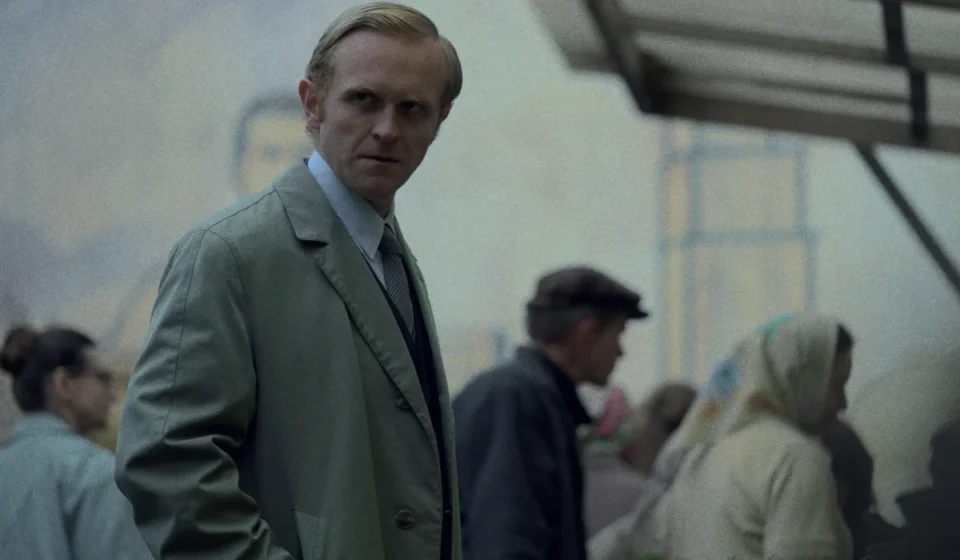
Beyond the Iron Curtain: How ‘Star City’ Reimagines the Soviet Space Race

Editor’s Note: This article contains major spoilers for the Season 1 finale of the Apple TV+ series "Star City."
For nearly a decade, showrunners Ben Nedivi and Matt Wolpert have established themselves as the architects of a unique, high-stakes television subgenre: the "Apollo 13-style puzzle box." Through their work on For All Mankind, the duo captivated audiences by dramatizing the lives of driven astronauts and beleaguered scientists navigating a world where the Space Race never ended. They have consistently explored the crushing weight of political machinations, the double-edged sword of rapid technological advancement, and the cold, indifferent hostility of the vacuum of space.
Now, with the release of the For All Mankind spin-off Star City, Nedivi and Wolpert have pivoted their focus behind the Iron Curtain, offering a grounded, suspense-filled, and at times haunting look at the Soviet side of that same alternate history.
The Cold Reality of a Secret History
The premise of Star City is rooted in a fascination with the "cowboy" nature of the early Soviet space program. While American space exploration was often defined by public spectacle and televised triumph, the Soviet effort was shrouded in a level of secrecy that, even today, makes it a fertile ground for historical fiction.

"The cold open of Star City is based on the fact that Cosmonaut Yuri Gagarin’s wife found out he was in space after he was already up there," Matt Wolpert explained during a recent appearance on IndieWire’s Filmmaker Toolkit podcast. "In America, there was this whole pomp and circumstance, but in the Soviet Union, it was a secret even from his spouse until the very last second. A lot of the inspiration for the show was driven by those true stories—the secret magic sauce of Star City is that the Soviet program was so secretive that we still don’t know the full extent of what happened behind those closed doors."
By leaning into this opacity, Nedivi and Wolpert have granted themselves the creative license to build a narrative that feels distinct from the established lore of For All Mankind. While the series features younger iterations of familiar faces like Irina Morozova (Agnes O’Casey) and Sergei Nikulov (Josef Davies), the show functions less as a companion piece and more as a high-tension spy thriller. It is a story about brilliant minds forced to operate within an authoritarian system that views scientific curiosity and personal ambition with the same suspicion it reserves for political dissent.
A Chronology of Crisis: The Season 1 Finale
The tension of Star City culminates in Episode 8, titled "The Wolves," a finale that shifts the series’ tone from scientific endeavor to desperate espionage. The narrative threads concerning the Chief Designer’s (Rhys Ifans) secret shuttle, Venera—long presumed lost—collide with the harsh realities of the Soviet intelligence state.
The episode forces a convergence of disparate storylines:

- The Venera Mission: The reveal that the shuttle not only survived but completed a tour of Venus raises the stakes. The crew’s return is not a victory lap, but a life-or-death gamble.
- The Mole’s Dilemma: Cosmonaut Valya (Adam Nagaitis), who has been operating as a mole for the West, finds his loyalties and survival instinct tested as the Soviet government closes in.
- The Final Escape: The climax of the season involves a desperate, improvised mission to guide surviving cosmonauts Sasha (Solly McLeod) and Lakshmi (Priya Kansara) to safety in neutral Finland.
The sequence is a masterclass in the showrunners’ signature style: a chaotic blend of improvised capsule landings, jet missile launches, and a high-stakes jeep chase. These moments are punctuated by the emotional weight of characters who have been pushed to their breaking points, all underscored by the "unhinged" organ-heavy score of composer Federico Justid.
The "Madness" of Production: Going the Hard Way
Perhaps the most compelling aspect of Star City is the behind-the-scenes commitment to authenticity. Justid’s refusal to rely on digital synthesizers—insisting instead on live instrumentation for the entire 10-hour score—mirrors the show’s overall production philosophy.
"We kept telling Federico, ‘This is madness,’" Nedivi recalled. "But that madness is part of the magic. He refused to rely on synth libraries, and every time we gave notes, he would bring live musicians back to address them."
This philosophy extended to the production design, led by Paul Spriggs. Filming in locations that provide an authentic, often brutalist backdrop, the team faced a unique challenge: they were tasked with building a space station for a limited number of scenes, with a crew base that wasn’t accustomed to the scale of such an undertaking.

"We told them, ‘Look, we’ll shoot her in a corner. Just give us a corner of the space station, and we’ll do an exterior VFX shot,’" Wolpert said. "The Lithuanian art department was like, ‘Screw that.’ They built the whole space station. We walked on set, and it was mind-blowing."
Nedivi adds that the local crew members, many of whom worked on projects outside of the film industry, brought an emotional investment to the work that transformed the set. "No one chose the easy path. And I think in television, if there is a key to getting things right, it’s doing it the hard way."
Implications: The Creep of Authoritarianism
While Star City is a period piece, its creators are acutely aware of how the past reflects the anxieties of the present. The struggle of scientists and cosmonauts to achieve greatness while under the constant, suffocating thumb of an authoritarian regime is a theme that feels increasingly relevant to a modern global audience.
"The story is one that’s more relevant than ever," Wolpert noted. "It really was about the kinds of things happening both in the Soviet space program and in the politics of our own time—the creep of authoritarianism and how people struggle to maintain their humanity, creativity, and freedom when those things are systematically suppressed."

This thematic depth elevates Star City from a simple space drama to a broader commentary on the resilience of the human spirit. The "wolves" in the finale are not just the political enforcers like the relentless KGB Colonel Lyudmilla Raskova (Anna Maxwell Martin); they are the systems that demand total, unquestioning compliance at the expense of progress.
Conclusion: The Legacy of the Soviet Space Program
As the first season draws to a close, Star City successfully carves out its own space within the For All Mankind universe. It manages to balance the technical awe of space travel with the claustrophobic, paranoid atmosphere of Cold War-era espionage. By focusing on the "true cowboys" of the Soviet program—the engineers, pilots, and designers who did impossible work under impossible conditions—the series offers a poignant tribute to a generation that reached for the stars even while trapped in the shadows of an empire.
Ultimately, the show proves that the most compelling space stories aren’t just about the technology used to reach the cosmos, but about the people who survive the journey. As viewers look forward to what may come in subsequent seasons, Star City stands as a testament to the idea that, in both television and life, the hardest path is often the one that leads to the most rewarding destination.
Star City Season 1 is currently available to stream on Apple TV+.