The Evolution of Alden Ehrenreich: From Blockbuster Expectations to Artistic Autonomy

In a sun-drenched, albeit strangely orchestrated, hotel suite at the Toronto International Film Festival, Alden Ehrenreich sits across from me, seemingly unfazed by the incongruous, high-stakes cinematic score blaring through the room’s sound system. It is 10:00 AM, a time usually reserved for quiet contemplation, yet the speakers are pumping out the kind of thunderous, sweeping orchestral music typically reserved for a protagonist discovering a life-altering truth.
"This is not a room you usually spend time in in the morning," Ehrenreich notes with a wry smile, acknowledging the absurdity of our backdrop. He is here to discuss A Talent for Murder, the latest project from auteur Anton Corbijn. The film, which recently premiered at TIFF, serves as a testament to the actor’s current professional trajectory—one that has shifted from the high-pressure stakes of franchise filmmaking to a deliberate, craft-focused pursuit of substance.
The Intersection of Fiction and Reality: ‘A Talent for Murder’
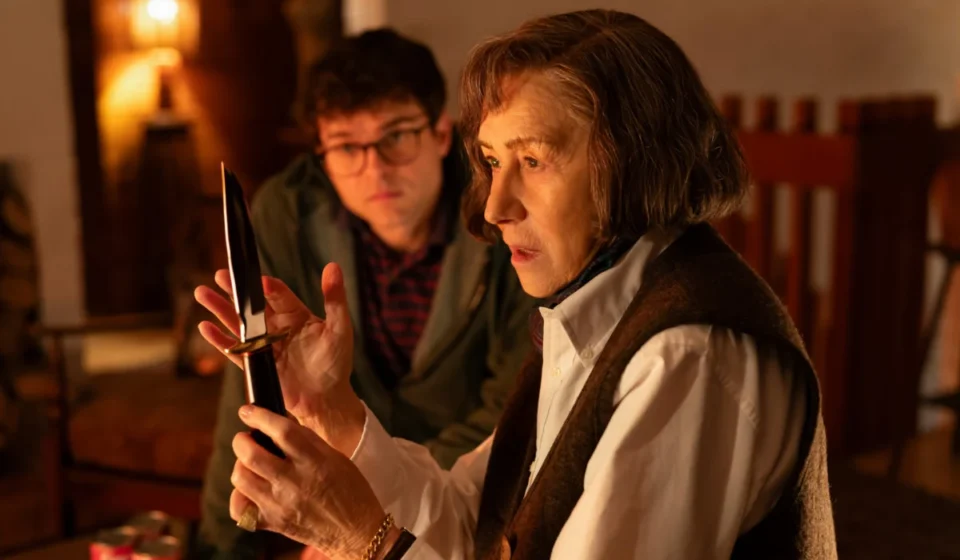
In A Talent for Murder, Ehrenreich portrays Edward, a representative from a New York publishing house tasked with a daunting mission: trekking to Switzerland to convince the legendary Patricia Highsmith (played by Helen Mirren) to pen a sixth installment of her iconic Tom Ripley series.

The narrative, however, quickly pivots from a standard literary drama into something far more meta. As Edward and Highsmith collaborate, the lines between author and subject blur, with Highsmith beginning to mold Edward into the very persona of the sociopathic Tom Ripley.
For Ehrenreich, this role offered a unique reprieve from the burden of traditional franchise expectations. "It’s a much more interesting way into that character than just it being ‘a Tom Ripley movie,’" he explains. Having previously navigated the intense scrutiny that accompanies playing an iconic legacy character, Ehrenreich finds this "Ripley-esque" exploration liberating. It avoids the trap of pre-conceived audience notions, allowing him to inhabit a version of the character that feels more akin to the later, more cynical iterations of Highsmith’s creation.
A Career Defined by Artistic Growth
Ehrenreich’s journey through the industry has been anything but conventional. In his twenties, he was frequently pegged as the "next big thing," a label that often came with the baggage of massive expectations. He reflects on his early role in Beautiful Creatures, a project that was positioned by the studio as the successor to the Twilight phenomenon.

"It was not the next Twilight," he says bluntly. That experience, followed by his tenure as Han Solo, taught him that the commercial success of a project is rarely within an actor’s control. These moments, which he now views with a healthy degree of detachment, were instrumental in shaping his philosophy on performance.
This shift toward "artistic autonomy" is perhaps best exemplified by his recent Tony Award-winning turn in the Broadway production of Becky Shaw. For an actor who had long harbored a desire for the stage, the win was not just a career milestone; it was a vindication of his process. He speaks of the "physical cost" and the rigorous, unglamorous nature of professional theater with a reverence that reveals his true priorities. Unlike the "easy-breezy" nature of his recent foray into the Marvel Cinematic Universe—where he sought advice from Robert Downey Jr. before signing on—theater demanded a level of commitment that stripped away the artifice of film stardom.
Navigating the Public Eye and Industry Press
One of the most defining aspects of Ehrenreich’s recent career has been his conscious decision to stop reading about himself. In an era where digital footprints and instant criticism can define an actor’s worth, he has chosen a different path.

"When you’re in a play, you have to avoid it because you actually still have to go do it," he says, contrasting the immediate, iterative nature of theater with the detached reality of film. If a movie fails, an actor can pivot to the next project. If a play is poorly received, the actor must return to the stage night after night to face the music. This "gamble" is precisely what he finds invigorating.
This deliberate withdrawal from the noise of the press has allowed him to focus on the work itself, rather than the discourse surrounding it. His performance in Christopher Nolan’s Oppenheimer is a prime example of this focus. He speaks of his character in the film with a deep, intellectual appreciation, noting that he approached the role through the lens of classic, "old-school" American optimism—a sentiment he sees mirrored in the works of Jimmy Stewart.
Implications: The Legacy of the Artist
As our conversation winds down, the dramatic music still playing in the background, we touch upon the "Steve Urkel" of it all—specifically, the duality of performance. Ehrenreich compares the challenge of playing two sides of a character to the dual-persona arc of Jaleel White’s iconic Family Matters role. It is a humorous, self-aware comparison, but it underscores a deeper truth about his approach: he is consistently looking for the "cool guy version" of the material, the subtext that lies beneath the surface.

The implications for his future are clear. Whether or not he returns to the galaxy far, far away—a topic he approaches with a guarded "We’ll see"—is secondary to the life he is building for himself. He is a man who takes inspiration from the likes of Marlon Brando and John Cassavetes, artists whose careers were not defined by "number one hits" but by a lifelong commitment to the craft.
"The short-term gain of a certain success next week can kind of cost you the integrity of a lifetime sometimes, if you chase it," he muses. "It really is about the thing itself."
Looking Ahead: The Path of Continued Success
As A Talent for Murder prepares for its theatrical release on October 23, the industry will undoubtedly offer its "thumbs up or thumbs down" in the grand coliseum of the box office. But for Ehrenreich, the outcome is secondary. He has learned to equate success not with headlines, but with the ability to maintain his focus on the work that matters to him.

He is, in every sense, a performer who has outgrown the need for external validation. From the stage of Radio City Music Hall to the intimate, tension-filled rooms of a psychological thriller, Alden Ehrenreich is carving out a career that feels less like a series of commercial transactions and more like a deliberate, artistic narrative.
When asked if he ever takes stock of how far he has come from the "disappointing" days of his early career, he pauses. He doesn’t offer a platitude about his triumphs. Instead, he speaks of gratitude—gratitude for the ability to work, for the opportunity to tell stories, and for the chance to keep the "flame at the center" lit.
As he prepares for the premiere, one gets the sense that the music playing in our hotel room—so dramatic, so cinematic—is no longer a distraction. It has become, quite fittingly, the soundtrack to a man who has finally found his own rhythm.