
By Alex Billington | September 18, 2026
"Vi veri universum vivus vici." – "By the power of truth, I, while living, have conquered the universe."
Twenty years after it first ignited screens and sparked a global conversation about authoritarianism, surveillance, and the spirit of resistance, the seminal dystopian classic V for Vendetta is returning to the big screen. Fathom Entertainment has officially unveiled the final, high-octane "get your tickets" trailer for a nationwide theatrical event scheduled for November 1st and November 5th, 2026. This special engagement commemorates two decades of the film’s legacy—a cinematic achievement that remains as piercingly relevant today as it was upon its original 2006 debut.
The Significance of the Date
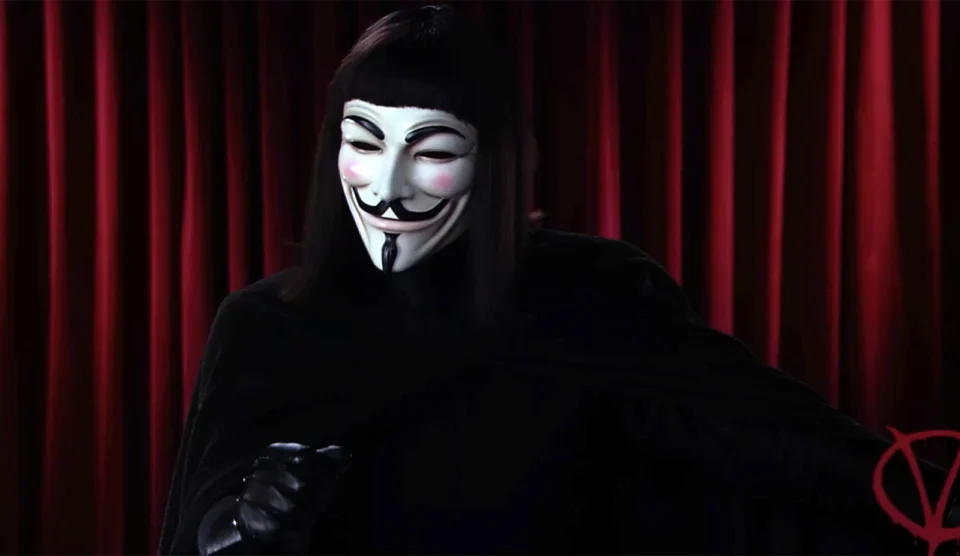
While the film first reached audiences in March 2006, the choice of November 5th for these commemorative screenings is far from arbitrary. In the film’s lore, and in the historical context of the Guy Fawkes Gunpowder Plot of 1605, the date is synonymous with defiance. It is the day the mask—the iconic, grinning visage of Guy Fawkes—becomes a symbol of radical change.
By bringing the film back to theaters on the exact date that anchors its narrative, Fathom Entertainment is inviting a new generation to experience the gravity of the story in the communal setting it demands. Whether it is a first-time viewing or a twentieth, the film promises to resonate with a modern audience currently grappling with their own iterations of political instability and systemic shifts.

A Legacy of Revolutionary Cinema: The Chronology
To understand the impact of V for Vendetta, one must look at the landscape of the early 2000s. Emerging from the shadow of The Matrix trilogy, The Wachowski Sisters (Lilly and Lana) penned the screenplay, bringing their signature blend of high-concept philosophy and kinetic action to the project. Directed by James McTeigue, who was making his directorial debut, the film was an ambitious adaptation of the 1982 graphic novel by Alan Moore and David Lloyd.
- 1982: The original graphic novel is serialized, offering a grim, black-and-white vision of a post-nuclear Britain under the thumb of the Norsefire fascist party.
- 2006 (March): Warner Bros. releases the film adaptation. It earns $70 million at the U.S. box office, solidifying its status as a cult classic that defies traditional genre constraints.
- 2006–2026: The Guy Fawkes mask, popularized by the film, transcends the medium of cinema to become a global symbol for hacktivist collectives and grassroots protest movements worldwide.
- 2025: Fathom Entertainment announces the 20th Anniversary restoration project, building anticipation for the 2026 theatrical run.
- 2026 (November): The 20th Anniversary event takes place, serving as a cultural touchstone for the current political climate.
The Power of the Performance
At the heart of the film’s enduring power is the haunting, masked performance of Hugo Weaving as "V." By obscuring his face behind a static mask for the entirety of the film, Weaving relies on vocal inflection and physicality to convey a depth of sorrow, rage, and intellectual brilliance that few actors could achieve with a full range of facial expressions.
Opposite him, Natalie Portman delivers one of the most transformative performances of her career as Evey Hammond. Her arc—from a timid, state-employed citizen to a revolutionary soul forged in the fires of V’s "education"—serves as the audience’s emotional anchor. The supporting cast, a "who’s who" of British acting royalty including Stephen Rea, Stephen Fry, John Hurt, Tim Pigott-Smith, and Rupert Graves, lends the production an air of theatrical gravity, grounding the high-stakes political drama in a reality that feels uncomfortably close to home.
The Wachowski Vision: A Masterclass in Dystopia
Lilly and Lana Wachowski’s script took the complex, often nihilistic tone of Alan Moore’s source material and injected it with a sense of operatic hope. While Moore famously distanced himself from the film, the Wachowskis succeeded in distilling the core essence of his narrative into a digestible, yet profound, cinematic language.
The aesthetic of the film—a muted, rain-slicked London under the watchful eye of the "Eye" and the propaganda-heavy "British Television Network"—remains a masterclass in production design. It is a world of surveillance, fear, and manufactured consensus. When V tells Evey that "ideas are bulletproof," he isn’t just delivering a line of dialogue; he is summarizing the film’s entire thesis. It is a story about the fragility of democracy and the necessity of individual courage in the face of absolute power.

Official Responses and Industry Impact
The industry reaction to the 20th Anniversary screenings has been overwhelmingly positive. Critics and exhibitors alike recognize the film’s unique ability to "age into" its own prophecies. Fathom Entertainment’s decision to prioritize this release reflects a growing trend in the film industry: the curation of "event cinema" that prioritizes the shared experience of politically charged, high-quality storytelling.
James McTeigue, reflecting on the film in recent press, has noted that he is humbled by the way the film has persisted in the public consciousness. "We didn’t set out to make a political manifesto," McTeigue noted during the announcement of the screenings. "We set out to tell a story about the human spirit. The fact that people are still talking about it—still finding new meanings in it two decades later—is the greatest reward a filmmaker could ask for."
The Societal Implications
Why does V for Vendetta feel more relevant in 2026 than it did in 2006? The answer lies in the shifting tides of the global political landscape. As societies move toward increasing reliance on digital surveillance, and as the lines between truth and state-sponsored information continue to blur, the film’s depiction of the Norsefire regime feels less like fiction and more like a cautionary blueprint.
The film forces viewers to confront the "banality of evil"—the way good people are coerced into supporting bad systems through fear, apathy, and the comfort of security. By showing Evey’s journey, the film argues that the true enemy is not just the tyrant at the top, but the complicity of the bystander. It is this message—that truth is a power that can conquer the universe—that continues to draw crowds to theaters.
Conclusion: Why You Must See It
As November 5th approaches, the call to action is clear. Whether you are a fan of the graphic novel, an aficionado of the Wachowskis’ filmography, or simply a citizen of the world concerned with the direction of our collective future, V for Vendetta is essential viewing.

It is a rare example of a blockbuster that respects the intelligence of its audience, challenging them to question authority and, more importantly, to question themselves. It is a film that does not provide easy answers but instead provides a mirror, reflecting the best and worst of human nature.
With only two days of screenings scheduled—November 1st and November 5th—the window to witness this revolutionary masterpiece in its intended format is narrow. Tickets are currently available through Fathom Entertainment’s website and participating local theaters.
Do not miss the chance to revisit the underground lair of V, to watch the iconic fireworks over the Houses of Parliament, and to remember, remember the Fifth of November. In a time when the world feels increasingly fragmented, perhaps we all need a reminder of what it means to stand for something.
V for Vendetta is more than just a movie; it is a catalyst. And it is waiting for you at a theater near you.