
The Television Academy faces a monumental task this September. With the 76th Primetime Emmy Awards ceremony scheduled for September 14, the industry is bracing for what is arguably the most politically charged and logistically complex awards cycle in the institution’s history. Beyond the 23 primary categories honoring the best in comedy, drama, and limited series, the Academy must navigate a labyrinth of evolving rules, sudden regulatory shifts, and a media climate defined by the volatile intersection of celebrity and partisan politics.
As voters prepare to cast their ballots, the spotlight has shifted away from mere artistic merit, landing squarely on the "Variety Series" category—a battleground that has been forcibly restructured by the Academy, effectively pitting titan against titan in a race that feels as much like a referendum on the current administration as it does a celebration of television.
The Regulatory Landscape: Rules in Constant Flux
To understand the tension surrounding this year’s Emmys, one must first look at the administrative hurdles the Television Academy has erected. The Academy’s tendency to tweak rules annually has created a "constant flux" environment that frustrates showrunners and streamers alike.
The most contentious new regulation involves the disqualification of performers who attempt to compete in guest actor categories for roles they have previously inhabited as leads or supporting players. The rationale is ostensibly to prevent "category fraud," where veteran actors with significant screen time drop down into the guest category to secure an easier win.
The immediate fallout of this rule was felt by Apple TV+ and Jon Hamm. Having been nominated for a supporting actor Emmy in 2024 for his work in The Morning Show, Hamm was disqualified from a guest actor nomination for the same role this year. While the error was technically a submission mistake by the streamer, the ruling highlights a rigid, unforgiving bureaucracy. As industry insiders note, while Hamm remains eligible in other categories, the incident serves as a stark warning to production houses: the Academy’s rulebook is no longer a suggestion, but a weaponized standard.
A Chronology of the Variety Category: From Mismatch to Merger
The history of the "Variety Series" Emmy is a story of identity crisis. Since its inception in 1951, the category has struggled to find a logical home for its diverse participants.
The Era of Disparity (1970s–2014)
For decades, the Academy forced disparate formats to compete under a single banner. This resulted in the "mismatched competitor" phenomenon. In the 1990s, the landscape was chaotic; in 1995, Jay Leno’s The Tonight Show defeated the music-heavy MTV Unplugged. By the mid-2000s, the category had become a monologue-dominated boys’ club, with the likes of Jon Stewart, Bill Maher, and Conan O’Brien squeezing out sketch-based variety shows. The dominance was so absolute that Stewart’s The Daily Show secured a record-shattering 10 consecutive wins, effectively turning the category into a coronation.
The Great Split (2015–2023)
In 2015, the Academy finally intervened, bifurcating the category into "Variety Talk Series" and "Variety Sketch Series." This allowed shows like Inside Amy Schumer and Key & Peele to find oxygen away from the late-night hosts. Saturday Night Live dominated the sketch category for six years, while Last Week Tonight with John Oliver redefined the talk category, eventually being moved to "Scripted Variety" to mitigate its overwhelming dominance.
The 2026 Consolidation
This year, the Academy reversed course, merging the categories once again. This decision has created a "clash of the titans." John Oliver’s Last Week Tonight—a three-time winner in the scripted category—is now forced to compete head-to-head with the traditional late-night talk shows and Saturday Night Live. It is a move that has effectively reset the hierarchy, creating an unpredictable vacuum of power.
Supporting Data: The Political Pressure Cooker
The 2026 awards cycle is inseparable from the geopolitical climate. The current administration has made no secret of its hostility toward late-night television, viewing programs like The Late Show and Jimmy Kimmel Live! as extensions of political opposition.
The Fall of Stephen Colbert
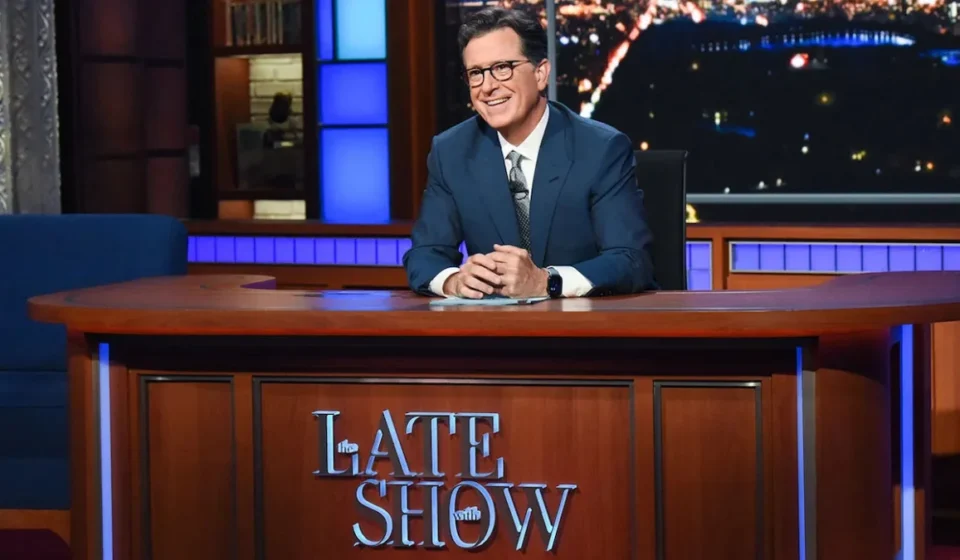
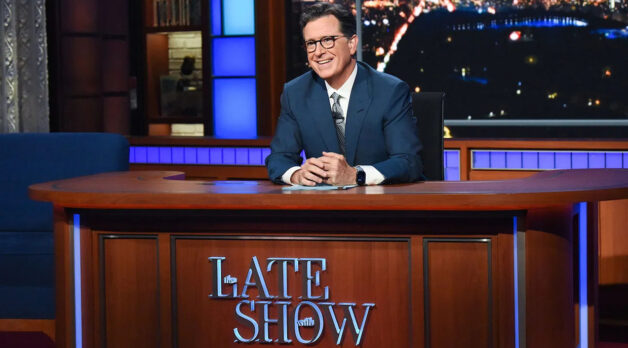
On May 21, 2026, the television landscape shifted seismically when CBS canceled The Late Show after 33 years. The official narrative cited a $40 million annual loss following Paramount’s acquisition by Skydance Media. However, industry critics remain skeptical, pointing to the close ties between the Ellison family and the Trump administration. Colbert’s departure was not a quiet fade-out; it was a defiant, 11-season farewell that culminated in a rare Emmy win for his talk series just last year.
The Kimmel Crisis
If Colbert’s exit was a slow burn, the crisis surrounding Jimmy Kimmel Live! was an explosion. In September, the show was temporarily pulled from the air following an FCC-backed ultimatum after Kimmel’s monologue on Charlie Kirk. The subsequent viewer backlash—a record-breaking return episode drawing 6.26 million viewers—demonstrated the massive, mobilized audience that late-night hosts still command.
Implications for the Emmy Ballot
As voters head to the polls, the "Variety Series" category serves as a proxy for the cultural zeitgeist. The implications are threefold:
- The "Anti-Trump" Sentiment: The Late Show carries the emotional weight of a show that was "sacrificed" to political pressure. Voters may view an Emmy for Colbert as a symbolic act of resistance, a final, high-profile acknowledgement of his role in the cultural discourse.
- The Kimmel Factor: Jimmy Kimmel Live! has been nominated for 12 years without a win in this specific category. The public defense of his show in September has elevated his profile, making him a "sympathy and solidarity" candidate.
- The John Oliver Wildcard: Despite the political drama surrounding his rivals, Last Week Tonight remains the most technically and creatively consistent show in the race. If voters choose to prioritize craft over cultural signaling, Oliver remains the prohibitive favorite.
Meanwhile, Saturday Night Live continues to pivot. By leaning into the absurd and moving away from the "political timeliness" that characterized its previous decade, SNL has managed to remain relevant without becoming a direct target. With the successful launch of SNL UK, Lorne Michaels continues to demonstrate an uncanny ability to navigate the shifting sands of global media regulation.
Conclusion: A Ceremony of Consequences
The September 14 ceremony will be more than just an awards show; it will be a high-stakes televised statement. Whether the Academy chooses to reward the political bravery of Colbert and Kimmel, or the relentless, surgical satire of John Oliver, the outcome will be scrutinized by the White House and the viewing public alike.
Expectations are high for a night of pointed speeches. The "rambling rant" on Truth Social that is all but guaranteed following the broadcast will only serve to reinforce the idea that the Emmys are no longer just about television—they are about the battle for the narrative of a nation. As we await the results, one thing is certain: the era of the "safe" variety show is over. In the current climate, every monologue is a manifesto, and every award is a shot across the bow.