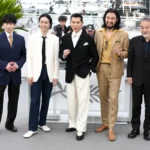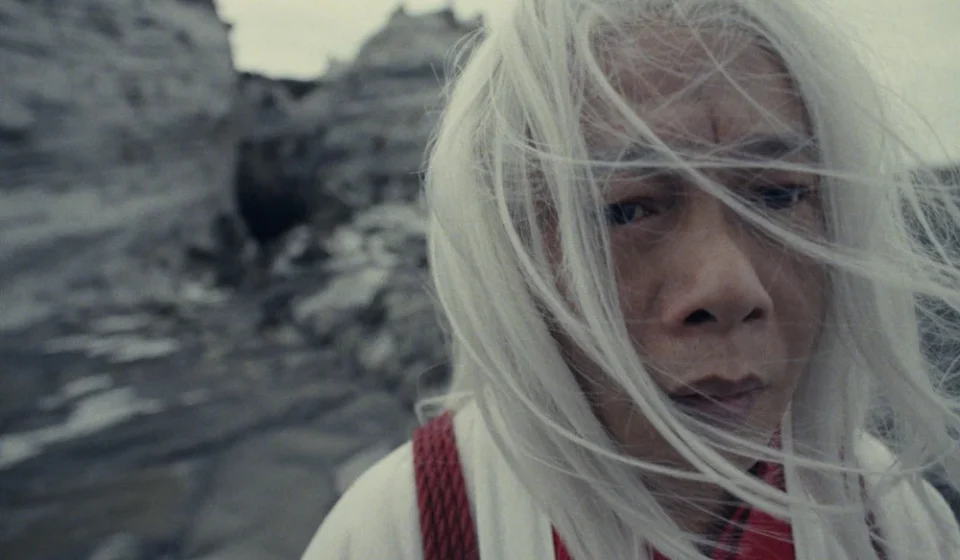

Singaporean cinema has long been defined by its grounded, urban narratives—stories of HDB heartlands, social realism, and the complexities of life in a modern metropolis. Yet, for all its technical prowess, the nation has largely bypassed the lush, high-flying world of wuxia, the traditional Chinese genre defined by chivalric heroes, supernatural martial arts, and profound emotional stakes. While the late 1980s and early 1990s saw a brief, localized surge of wuxia serials on television, featuring icons like Li Nanxing and Zhu Ming, the genre never successfully made the leap to the big screen as a dedicated Singaporean feature film category.
That is changing. Director Nelson Yeo is set to shatter that long-standing ceiling with his latest feature, The House on the Moon. A lunar reimagining of the classic myth of Chang’e, the moon goddess, the film is poised for its world premiere at the Locarno Film Festival, where it has been selected for the prestigious international competition.
The Myth Reimagined: Bridging Legend and Modernity
The House on the Moon is not merely a costume drama; it is an ambitious deconstruction of one of East Asia’s most enduring myths. The traditional story of Chang’e and her husband, the archer Hou Yi, is a foundational piece of folklore. In the original tale, Chang’e ascends to the moon after drinking the elixir of immortality, leaving her mortal life—and her husband—behind.
Yeo, however, is interested in the gaps between the lines. “The original myth has always been so simple,” Yeo tells Variety. “As a kid, you can pretty much recite the whole story in a couple of lines and people will get it. But then at the same time, you always wonder: What are these characters really going through? What are their emotions like?”
In Yeo’s vision, the film picks up after Chang’e’s ascension, following her journey to the dark side of the moon. Crucially, he introduces a bandit character from Earth, a move intended to anchor the film’s ethereal, high-fantasy tone in the relatable. By having this character speak Singlish, Yeo provides an immediate, grounded entry point for the audience, effectively creating a bridge between the celestial and the colloquial.
“I really wanted that character to be the one that the audience can really relate to,” Yeo explains. “After all, he is a mortal among all these immortals. He’s the closest to the audience.” This addition also served a tonal purpose, shifting the film away from a purely somber, heavy-handed drama toward a more nuanced, lighter register that allows the audience to breathe amidst the spectacle.
Chronology: From Locarno Academy to International Competition
Nelson Yeo’s relationship with the Locarno Film Festival is both significant and foundational. His journey there began in 2018, when he participated in the festival’s prestigious Filmmakers Academy. This initial engagement provided a launchpad for his career, which reached a zenith in 2023 with the premiere of his debut feature, Dreaming & Dying. That film made waves, securing both the Filmmakers of the Present Golden Leopard and the Swatch First Feature Award.
Returning to Locarno three years later with The House on the Moon marks a full-circle moment for the filmmaker. His rapid ascent through the festival’s ecosystem reflects both his creative evolution and his commitment to pushing the boundaries of what Singaporean cinema can achieve on a global stage.
“I’m super glad to be back in Locarno,” Yeo says, acknowledging the festival’s role in his development. His return, this time in the international competition, underscores the industry’s recognition of his maturation from an emerging voice to a sophisticated auteur.
Supporting Data: The Production Challenges
The process of bringing The House on the Moon to life was anything but straightforward. Yeo, a devotee of the works of Tsui Hark (specifically Zu: Warriors From the Magic Mountain) and Wong Kar-wai (Ashes of Time), faced the harsh reality of filming a genre film in a country as hyper-modern as Singapore.
“Sourcing for the props was a nightmare,” Yeo admits, noting that the logistical requirements of a wuxia film—period-appropriate weaponry, costumes, and set design—are vastly different from the contemporary realism that dominates the local industry. Furthermore, the lack of traditional, period-authentic locations in Singapore forced the production to look abroad.
This led to the Taiwan leg of the shoot, a first for Yeo. The collaboration proved to be one of the production’s most fruitful decisions, not only for the location accessibility but for the inclusion of Taiwanese acting legend Lee Kang-sheng. A longtime collaborator of the celebrated auteur Tsai Ming-liang, Lee’s involvement was a masterstroke.
“He’s amazing because he’s a one-take wonder,” Yeo says of the actor. “Everything that he does on the first day is just perfect. And I’m so fortunate to work with him.”
The production also integrated cutting-edge virtual production technology. While Yeo remains cautious about the costs associated with such tools—noting that they are often prohibitively expensive for independent filmmakers—he acknowledges that the technology acts as a "game changer." However, he maintains a firm stance on the necessity of real-world interaction, noting that he is wary of the over-reliance on artificial intelligence in filmmaking. “Nothing beats being on the real locations, having the actors interact with the space,” he asserts. “There’s so much more room for creative freedom on set in terms of blocking or improvisation.”
Official Responses and Collaborative Scope
The House on the Moon is a testament to the power of international co-production. Produced by Tan Si En, Wendy Lie, and Kuek Shee Heng for Momo Film Co (a Fremantle-backed entity) and Aview Images, the project also involved partnerships with Weydemann Bros., 9LB Film, KawanKawan Media, and Widewall Pictures. The financial backing from the Taiwan Creative Content Agency (TAICCA) and the proof-of-concept support from Singapore’s Infocomm Media Development Authority (IMDA) highlight the regional and global stakes involved in the project.
The film’s aesthetic and emotional resonance is further bolstered by a truly global crew, including a German visual effects team and an Indonesian composer based in Berlin. This deliberate broadening of the production team was, according to Yeo, essential to achieving the specific, otherworldly atmosphere required for a wuxia epic.
Parallax Films has secured worldwide exclusive sales rights for the film, with the notable exceptions of German-speaking territories, Taiwan, and Singapore, where distribution is being handled locally. This strategic distribution plan ensures that the film will find a home in international markets that are increasingly receptive to high-concept Asian genre cinema.
Implications: A New Era for Singaporean Genre Film?
The implications of The House on the Moon extend beyond the immediate success of the film. For the Singaporean film industry, it serves as a proof of concept that local filmmakers can look beyond the constraints of social realism and explore the high-fantasy traditions of Chinese literature and cinema.
When asked if this might lead to a wuxia franchise, Yeo remains characteristically grounded. “If it happens, it happens,” he says. “I won’t force it. I won’t force myself to make a sequel.” Instead, his eyes are already set on his next projects: a draft for a new horror film and Black Sun, a passion project he has been developing for over a decade.
Ultimately, Yeo hopes that audiences at Locarno will approach The House on the Moon without the weight of expectations. He encourages viewers to "give in to their senses" and focus on the emotional arcs of the characters rather than the mechanics of the plot. By prioritizing the internal journey of Chang’e—her search for voice and selfhood—over the external spectacle of the myth, Yeo has created a film that is as much an intimate character study as it is a genre-defying epic.
As the lights dim in Locarno for the world premiere, the significance of the moment is clear: Singaporean cinema has stepped out of the shadow of its own reality and into the dark, expansive light of the moon. Whether this marks a permanent shift in the industry remains to be seen, but for now, Nelson Yeo has successfully opened a door that many thought was forever locked.