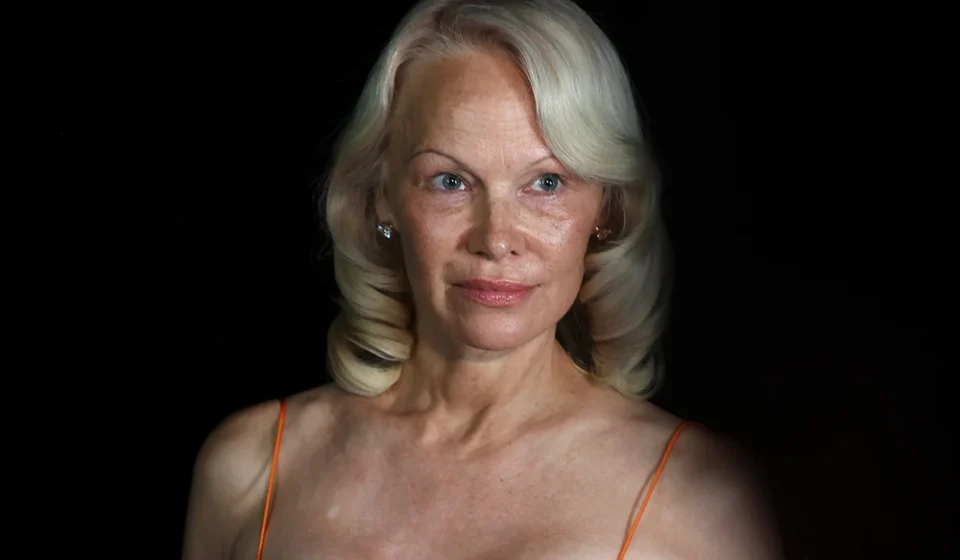
From "Death Sentence" to Renaissance: Pamela Anderson’s Journey of Courage and Artistic Rebirth

Main Facts: A Night of Recognition and Reflection
At the recent amfAR Gala in Venice, held at the historic Hilton Molino Stucky, the atmosphere was a blend of high-octane glamour and profound emotional vulnerability. Among the luminaries gathered to support the nonprofit organization’s ongoing mission to end the HIV/AIDS epidemic, one figure stood out for her raw, unfiltered testimony: Pamela Anderson.
The Baywatch icon was presented with the amfAR Award of Courage, a recognition that carries heavy significance given the organization’s dual commitment to HIV/AIDS advocacy and hepatitis C research—the latter being a condition often co-occurring with HIV. Anderson’s acceptance speech, however, transcended the standard awards-show rhetoric. Instead, she offered a searingly honest account of her personal struggle with a hepatitis C diagnosis in the late 1990s, a period she described as "a death sentence" that fundamentally altered her life’s trajectory.
A Chronology of Struggle and Survival
To understand the magnitude of Anderson’s current career resurgence, one must look back at the shadow that loomed over her life for nearly two decades.
The Darkest Years (1990s–2011)
In the late 1990s, when medical science had yet to perfect a reliable treatment for hepatitis C, a diagnosis was often viewed as terminal. Anderson recalled her doctor’s chilling prognosis: she had approximately ten years to live. "It was not fear of death, but fear of what might happen to my young children," she explained. "It turned my life inside out."
During this era, the diagnosis became a source of deep-seated shame. Anderson compared the internal burden of the illness to the trauma of her childhood sexual abuse, noting, "It felt like it was carved into my forehead: Damaged goods."
The Turning Point (2011–2015)
The landscape for hepatitis C patients shifted dramatically in 2011 with the discovery of more effective, direct-acting antiviral treatments. By 2015, Anderson was officially declared "hep C free." However, the path to recovery was fraught with financial and psychological strain. Anderson noted that the cost of the treatment "took everything I had in my bank," highlighting the systemic barriers to healthcare that persist even for those in the public eye.
The Renaissance (2023–Present)
Today, Anderson has moved beyond survival to a state of creative flourishing. Her recent filmography—including The Last Showgirl, The Naked Gun, Rosebush Pruning, and her latest project, Place to Be, which premiered at the Venice Film Festival—marks a departure from the "damsel in distress" archetypes that previously defined her career.
Supporting Data: The Impact of amfAR and Medical Advocacy
The amfAR Gala is more than a social event; it is a critical fundraiser for global health. The organization has spent decades championing research into HIV/AIDS and its related co-infections. The evening’s auction, led by the legendary Simon de Pury, underscored the intersection of philanthropy and high finance.
The gala successfully raised significant capital through a series of high-value lots:
- Artistic Investment: An Andy Warhol Flowers painting commanded €160,000 ($185,000).
- Luxury Philanthropy: A set of Chopard earrings, featuring rare pink and blue sapphires, was purchased by Ferrari producer Monika Bacardi for €140,000 ($162,000).
- Experiential Charity: A "once-in-a-lifetime" package to visit the set of The Lord of the Rings: The Hunt for Gollum in New Zealand, including meetings with Andy Serkis, Anya Taylor-Joy, and Kate Winslet, fetched €90,000 ($104,000).
- The Main Event: Performance artist Marina Abramović, who received the Award of Inspiration, donated an immersive lot. It included a digital art piece titled Slow Walking and a private, home-cooked lunch with the artist herself, paired with a tutorial in the famous "Abramović Method." The package sold for an astonishing €500,000 ($580,000).
Official Responses and Emotional Testimonies
The gala served as a platform for profound expressions of respect and solidarity. Orlando Bloom, who presented the Award of Inspiration to Marina Abramović, lauded her five-decade career of pushing human endurance. "Marina has fearlessly pushed the boundaries of the body, the mind and human endurance, profoundly expanding our understanding of what art can be," Bloom remarked.
For Anderson, the night was a realization of her transformation from a perceived victim to a victor. "My truth has come through my work, finding ways to express myself through the arts," she stated. "It gave me the ammunition I needed, a fertile life to use and play in. I’m not a victim, I’m a victor."
The evening concluded with an electric performance by Bebe Rexha, who turned the formal gala into an impromptu dance floor. Her interaction with the crowd, including a reprise of her hit "I’m Good (Blue)," signaled a shift in the gala’s tone from somber reflection on the history of disease to a celebration of the human spirit’s resilience.
Implications: The Destigmatization of Illness
The broader implications of Anderson’s testimony extend far beyond the walls of the Hilton Molino Stucky. By publicly discussing the "shame and guilt" associated with her hepatitis C diagnosis, Anderson is participating in a necessary cultural shift toward destigmatizing chronic and viral illnesses.
Breaking the Silence
The narrative of the "damaged" celebrity is one the media has often exploited. By reclaiming her story, Anderson is challenging the public to re-examine how we treat those living with health crises. Her assertion that "I’m not the damsel in distress, no matter how easy that role is to play," serves as a critique of both Hollywood’s casting habits and the societal tendency to label survivors of trauma or illness as "lesser."
The Role of Art in Healing
Anderson’s career resurgence provides a compelling case study on the cathartic power of the arts. For many survivors, the act of performance or creative expression provides a necessary outlet for processing trauma. In her case, the roles she has chosen—daring, complex, and unconventional—serve as the final step in her "unconscious journey" toward self-acceptance.
Future Advocacy
As amfAR continues its work, the inclusion of figures like Anderson and Abramović highlights the importance of celebrity platforms in global health. When high-profile individuals speak openly about their experiences with stigmatized diseases, it shifts the global discourse, encourages funding for research, and provides a blueprint for others navigating similar paths of recovery.
Ultimately, the Venice gala was a testament to the fact that while the scars of a "death sentence" diagnosis may never fully vanish, they can be transformed into the very foundation of a more authentic and powerful life. Anderson stands as a living example that, even after being "carved into," one can emerge not as damaged goods, but as a force of nature.