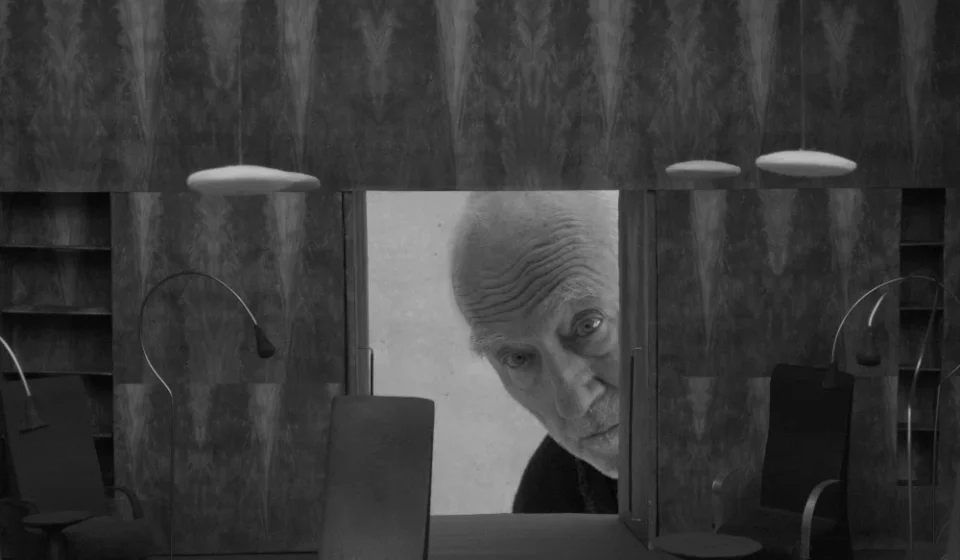
The Poetics of Space: Wim Wenders’ Immersive Exploration of Peter Zumthor’s Architecture

In his latest cinematic endeavor, legendary filmmaker Wim Wenders transcends the traditional boundaries of the documentary format, transforming the silver screen from a flat canvas into a voluminous window. His new 3D documentary, From Inside Out – The Architecture of Peter Zumthor, offers an exhaustive and deeply meditative portrait of the Swiss master architect. By utilizing advanced stereoscopic technology, Wenders seeks to do more than merely document buildings; he attempts to capture the "atmosphere" and "soul" of the spaces Zumthor creates. The film serves as a spiritual successor to Wenders’ previous 3D works, Pina and Anselm, completing a trilogy of sorts that explores the intersection of human movement, monumental art, and the built environment.
Main Facts: A Convergence of Two Masters
From Inside Out – The Architecture of Peter Zumthor is a two-hour immersive experience that debuted to critical curiosity, focusing on the life’s work of the Pritzker Prize-winning architect Peter Zumthor. Now in his eighties, Zumthor is widely regarded as one of the most influential yet reclusive figures in contemporary architecture, known for his uncompromising stance on materials, light, and the sensory experience of space.
The documentary is not a conventional biography. Instead, it is a sensory exploration of Zumthor’s philosophy, which posits that a building should be understood "from the inside out"—prioritizing the experience of the inhabitant over the external facade. Key features of the film include:
- Format: 3D Cinematography by Franz Lustig, designed to replicate the physical sensation of walking through corridors and feeling the texture of materials.
- Key Projects: The film highlights the Steilneset Memorial in Norway, Zumthor’s own residence, and the highly anticipated, multi-million-dollar David Geffen Galleries at the Los Angeles County Museum of Art (LACMA).
- Narrative Style: A blend of archival "ghost" projections, present-day interviews, and dramatized sequences featuring "travelers" who provide a poetic, if sometimes cryptic, commentary on the structures.
- Themes: The tension between form and function, the importance of local craftsmanship, and the role of architecture in memorializing history (including the horrors of war and the witch trials of the Nordic regions).
Chronology: The Evolution of a Vision
The film’s narrative structure mirrors the experience of approaching a complex building: it begins with the abstract and external before slowly penetrating the core of the subject’s philosophy.
The Abstract Beginning
The documentary opens with a series of striking, high-contrast shots focusing on the minutiae of Zumthor’s work. The 3D camera lingers on concave corners, convex monolithic surfaces, and the play of shadows across raw concrete. This initial phase is academic and intentionally slow, teaching the audience "how to watch" the film. Wenders uses archival footage from the 1980s, projecting a younger, "ghostly" Zumthor onto the very walls he would later build. This technique creates a bridge between the architect’s early theories and his realized legacies.
The Present-Day Architect
As the film progresses, it shifts to the present. We meet the octogenarian Zumthor, an unassuming but fiercely principled man. He is depicted in his studio and on-site, discussing the "fluidity" of space. The middle section of the film explores his process of collaboration with local artisans, illustrating his belief that a building must be "at one" with its geographic and cultural surroundings. This segment highlights his stubbornness—a trait Wenders treats with a touch of humor—particularly when Zumthor’s conceptual purity clashes with the practical preferences of his clients.
The Climactic Triptych
The final third of the film represents its emotional and technical peak. Wenders presents a triptych of major works that define Zumthor’s career. First is a deeply personal home designed by the architect, showcasing his intimate relationship with domestic space. Second is the Steilneset Memorial in Vardø, Norway, a collaboration with artist Louise Bourgeois. The film captures the terrifying, infinite feeling of this corridor dedicated to victims of 17th-century witch trials. Finally, the documentary culminates in the massive construction of the new LACMA building in Los Angeles, an "amoebic" structure that challenges traditional museum layouts by emphasizing horizontal equality among art pieces.
Supporting Data: The Technical and Philosophical Foundation
The effectiveness of From Inside Out relies heavily on the synergy between Zumthor’s minimalist aesthetics and Franz Lustig’s 3D cinematography. In architectural circles, Zumthor is often associated with "Phenomenology"—a philosophy that emphasizes the subjective experience of the built environment.
The 3D Advantage
Wenders argues that 3D is the only medium capable of conveying the "truth" of architecture. While 2D photography flattens depth, Wenders’ use of the 3D camera allows the viewer to perceive the "echo" of a room. This is particularly evident in the scenes featuring the LACMA construction. The camera moves in tandem with Zumthor’s abstract notions, revealing pockets and side rooms where rough, exposed concrete provides a tactile contrast to the "gilded grandeur" of the art intended for the space.
Materiality and Light
The film provides significant visual data on Zumthor’s use of materials. Whether it is the scorched wood of a chapel or the sand-blasted glass of a museum, the documentary emphasizes that light is a building material as much as steel or stone. The "inside out" philosophy is supported by footage showing how natural light transitions throughout the day, altering the "mood" of the internal chambers.
The Role of Art and History
A significant portion of the film’s "data" concerns the purpose of these spaces. Zumthor’s buildings often house art related to trauma and war. Wenders contrasts contemporary footage of these museums with historical archives, suggesting that architecture serves as a vessel for collective memory. The film notes that the spaces are "only as important as what goes inside them," reinforcing the idea that Zumthor builds for the human spirit rather than the architectural ego.
Official Responses and Cameos
The documentary features several high-profile appearances that lend weight to the global significance of Zumthor’s work, particularly regarding the LACMA project.
- Werner Herzog and Ava DuVernay: The presence of these acclaimed filmmakers during the LACMA walkthrough highlights the project’s cultural gravity. Herzog, known for his own explorations of "ecstatic truth," and DuVernay, a voice for social consciousness in art, provide a contemporary context for Zumthor’s "horizontally equal" gallery spaces.
- Critical Reception: Early reviews suggest that while the film’s "laborious" pacing may challenge some viewers, it is a necessary component of the experience. Critics have noted that Wenders’ refusal to rush mirrors Zumthor’s own slow, deliberate design process.
- The Architectural Community: While the film has been praised for its beauty, some architectural critics have pointed out the controversy surrounding the LACMA expansion—specifically its cost and the demolition of previous structures. Wenders’ film, however, remains largely celebratory, focusing on the artistic triumph of the new form rather than the bureaucratic hurdles.
Implications: A New Standard for Architectural Documentation
The release of From Inside Out – The Architecture of Peter Zumthor has broader implications for both the film industry and the world of architecture.
The Future of the "Artist Documentary"
Wenders has set a new benchmark for how we document the lives of creators. By moving away from the "talking head" format and toward an "experiential" format, he invites the audience to become participants in the creative process. This suggests a future where documentaries about physical arts—sculpture, dance, and architecture—will increasingly rely on VR and 3D technologies to bridge the gap between the viewer and the work.
Preserving the Legacy of Peter Zumthor
As Zumthor enters the twilight of his career, this film serves as a definitive digital archive of his philosophy. It preserves the "sincerity and wisdom" of his voice alongside the physical presence of his buildings. The film’s focus on the LACMA project is particularly significant, as it provides a permanent record of the building’s conceptual birth and physical execution, ensuring that Zumthor’s "magnum opus" is understood through his own eyes.
The Human-Centric Shift
Ultimately, the film reinforces a shift in how the public perceives architecture. By emphasizing the "inside out" approach, Wenders and Zumthor challenge the modern obsession with "starchitecture" and "Instagrammable" facades. The documentary implies that the true value of our physical world lies in how it makes us feel, how it houses our stories, and how it connects us to our history. As the film concludes, viewers are left not just with an appreciation for a Swiss architect, but with a renewed awareness of their own place within the physical and temporal world.