Musical Landscapes of 1900s Australia: François Tétaz to Score Netflix’s ‘My Brilliant Career’

As the global appetite for period dramas continues to thrive on streaming platforms, Netflix is set to unveil its latest high-profile Australian production: a reimagining of the Miles Franklin literary classic, My Brilliant Career. Adding a layer of sonic prestige to the six-part limited series, the production has tapped acclaimed composer François Tétaz to craft the musical score. Known for his atmospheric and emotionally resonant work on films such as The Surfer, Wolf Creek, and Hesher, Tétaz brings a seasoned perspective to this ambitious adaptation of Australian history.
Main Facts: A Modern Take on a Literary Pillar
The upcoming Netflix original series, My Brilliant Career, is poised to introduce a new generation to one of Australia’s most celebrated stories. Developed by writer and producer Liz Doran, known for her work on Barons, the project is a modern, six-part interpretation of Miles Franklin’s 1901 novel.
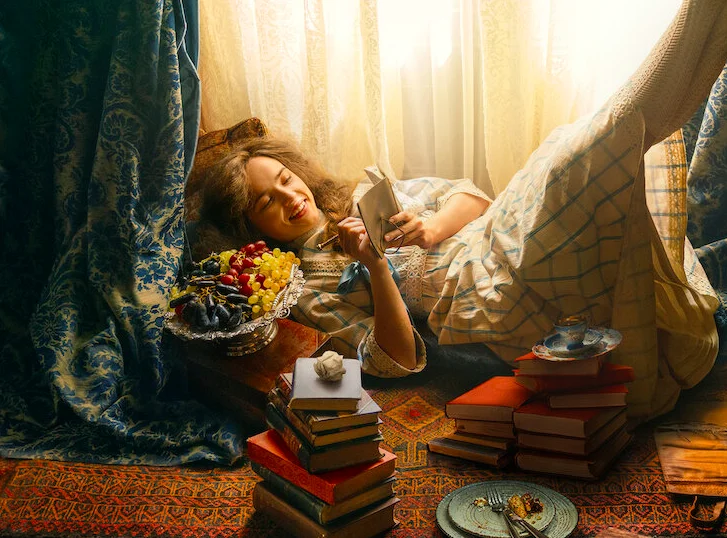
The narrative follows the journey of a young, aspiring writer in the turn-of-the-century Australian bush. The protagonist—played by Philippa Northeast—seeks to defy the rigid societal conventions of 1900s Australia. Her quest for creative independence is complicated by the intrusion of romance, setting the stage for a classic struggle between personal ambition and societal expectations.
The production boasts an impressive ensemble cast, featuring Christopher Chung, Anna Chancellor, Genevieve O’Reilly, Kate Mulvany, Alexander England, Jake Dunn, Sherry-Lee Watson, and Miah Madden. With a global premiere date set for August 13, 2026, the series is positioned as a cornerstone of Netflix’s international content strategy for the latter half of the year.
Chronology: From Miles Franklin to Netflix
To understand the weight of this adaptation, one must look at the historical trajectory of the source material.
- 1901: Miles Franklin publishes My Brilliant Career at the age of 21. It becomes an instant sensation, lauded for its raw, unfiltered look at the life of a young woman in the Australian outback.
- 1979: The novel receives its most famous screen adaptation, a feature film directed by Gillian Armstrong, starring Judy Davis and Sam Neill. The film is credited with triggering a renaissance in the Australian film industry.
- 2024–2025: Netflix officially greenlights the six-part series, commissioning Liz Doran to develop a fresh, serialized take that allows for deeper character exploration than a feature film format.
- Early 2026: Principal photography concludes across various locations in Australia, capturing the stark beauty of the landscape that mirrors the protagonist’s internal struggle.
- July 2026: It is confirmed that François Tétaz has been brought on board to compose the score, signaling the final stages of post-production.
- August 13, 2026: The official worldwide premiere date for the series on Netflix.
Supporting Data: The Creative Team and Compositional Style
The pedigree of the creative team behind My Brilliant Career suggests a production that balances artistic integrity with high-end television production values.
The Composer’s Provenance
François Tétaz is an artist of significant range. His previous credits—ranging from the visceral tension of Wolf Creek to the indie-drama sensitivity of Judy & Punch and the experimental textures of The Portal—demonstrate his ability to adapt to diverse genre requirements. In the context of a period drama set in the turn of the 20th century, industry insiders anticipate a score that utilizes traditional Australian folk instrumentation juxtaposed with modern, ambient sensibilities. This "anachronistic" approach has become a hallmark of contemporary period pieces, allowing the music to bridge the gap between the historical setting and the contemporary audience’s emotional language.
Production Leadership
The series is helmed by a powerhouse team of Australian talent. Liz Doran serves as executive producer alongside Chloe Rickard, whose credits include Good Cop/Bad Cop and Population 11. The directorial vision is largely shaped by Alyssa McClelland, who directed the first three episodes, setting the visual and rhythmic tone for the remainder of the series. The involvement of Jungle Entertainment, a production house known for its sharp, narrative-driven content, further underscores the series’ potential for critical acclaim.
Official Responses: Crafting the Vision
While formal press statements remain largely focused on the August premiere, the selection of the core team has been met with enthusiasm within the industry. Sources close to the production suggest that Netflix prioritized a "distinctly Australian" voice for the project, seeking to capture the specific cadence and cultural nuances of the era.
"The goal," says one production associate, "was never to simply retell a story that everyone knows. It was to interrogate the themes of My Brilliant Career through a lens that feels relevant to a 2026 audience. When we brought François on, he understood immediately that the music shouldn’t just act as wallpaper for the 1900s, but as an active participant in the protagonist’s internal monologue."
The casting process, which brought together veterans like Anna Chancellor with rising stars like Philippa Northeast, has been described by insiders as a deliberate effort to blend the gravitas of established acting traditions with the kinetic energy of new talent.
Implications: Why This Matters for the Australian Industry
The production of My Brilliant Career is more than just another adaptation; it is a significant cultural marker for the Australian screen industry.
Global Export and Cultural Diplomacy
By securing a global platform like Netflix, the production ensures that a quintessentially Australian story reaches audiences in every corner of the world. This is a critical component of modern "soft power," where the landscape, history, and literature of a nation are packaged into high-quality entertainment. It highlights the viability of the Australian film industry as a hub for prestige production.
The Evolution of the "Period Piece"
For decades, period dramas were characterized by rigid adherence to historical aesthetics. However, recent trends—seen in shows like Bridgerton or The Great—have pushed the boundaries of how we define "period." The choice of Tétaz, a composer who is comfortable moving between horror, indie, and drama, suggests that Netflix is aiming for a soundscape that is both respectful of the setting and bold in its delivery. If successful, this could set a new benchmark for how Australian literary adaptations are scored and presented globally.
Impact on the Talent Pool
The collaboration between established producers like Chloe Rickard and newer directors like Alyssa McClelland creates a robust pipeline for talent. For actors like Philippa Northeast, the title role represents a potential career-defining moment, one that parallels the trajectory of Judy Davis decades prior. The series serves as a showcase for the depth of acting talent currently residing in Australia, potentially leading to increased international casting opportunities for the entire ensemble.
Economic Considerations
The production has undoubtedly stimulated the local economy, utilizing Australian crews, technical staff, and post-production facilities. As the streaming giant continues to invest in Australian content to meet local content quotas and fulfill global demand, projects of this scale act as vital economic engines for the creative sector.
Final Thoughts: Anticipating the Premiere
As August 13, 2026, approaches, the industry’s eyes are fixed on the intersection of Miles Franklin’s enduring prose and Netflix’s modern production machine. The inclusion of François Tétaz’s score is perhaps the final piece of a complex puzzle designed to capture the isolation, the beauty, and the rebellious spirit of the Australian landscape.
Whether the series will successfully navigate the transition from a 125-year-old novel to a 21st-century streaming phenomenon remains to be seen. However, given the track record of those involved, My Brilliant Career is poised to be a significant cultural conversation piece. It promises to be a story not just about the constraints of the past, but about the timeless, often painful process of finding one’s own voice—a theme that, thanks to Tétaz’s composition, will undoubtedly resonate with viewers worldwide.