"Korean Kanakaraju": Varun Tej Ventures into Horror-Comedy with High Hopes and a Folk Anthem

Hyderabad, India – Mega Prince Varun Tej is gearing up for a significant theatrical release with "Korean Kanakaraju," a much-anticipated horror-comedy entertainer slated to hit screens on August 7. Directed by Merlapaka Gandhi and jointly produced by UV Creations in association with First Frame Entertainment, the film has generated considerable buzz, not least due to its intriguing title and a recent musical offering that has captivated audiences. With post-production now in its final stages, the promotional machinery is in full swing, highlighted by the release of its second single, "Raasa Gummadi," an energetic dance number that promises to be a festive anthem.
Main Facts: A Genre Blend with Star Power
"Korean Kanakaraju" marks a distinctive turn for Varun Tej, known for his diverse filmography spanning romantic dramas, intense action thrillers, and social commentaries. His foray into the horror-comedy genre, a consistently popular segment in Telugu cinema, signals a strategic move to broaden his appeal and deliver a commercial entertainer. The film, helmed by Merlapaka Gandhi, a director celebrated for his knack for crafting engaging narratives with a blend of humor and emotional depth, aims to deliver a laugh-out-loud experience interspersed with supernatural elements.
The project is a collaborative effort between two prominent production houses: UV Creations, renowned for backing blockbuster films with high production values, and First Frame Entertainment, known for its content-driven approach. This partnership underscores the confidence in the film’s potential to resonate with a wide audience.
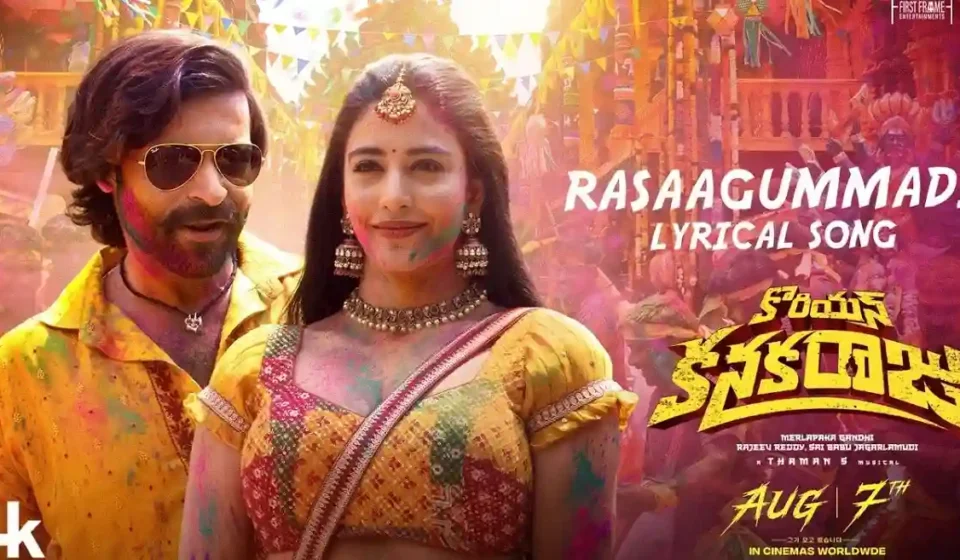
The recent release of the second single, "Raasa Gummadi," has become a focal point of the film’s promotional campaign. Composed by the prolific S Thaman, the track stands in stark contrast to the first single, which featured a distinctly Korea-inspired flavour. "Raasa Gummadi" is deeply entrenched in Telugu folk traditions, characterized by its energetic beats, rustic instrumentation, and an infectious festive vibe. The song commences with a soothing female voice invoking "Vanne Rayudu," the protagonist, before transitioning into a vibrant folk number. Nalgonda Gaddar’s powerful and authentic vocals, coupled with Kasarla Shyam’s catchy and culturally rich lyrics, imbue the song with an undeniable festive spirit.
Visually, "Raasa Gummadi" is a spectacle of colour and celebration. Varun Tej impresses with a stylish yet traditional look, showcasing high-energy dance moves that amplify the song’s celebratory mood. The choreography and set design lean into a vibrant carnival-style aesthetic, enhancing the overall festive atmosphere. Daksha Nagarkar, featuring prominently in the song, commands attention with her glamorous screen presence and lively performance, establishing a palpable chemistry with Varun Tej. This dynamic pairing, set against the backdrop of vibrant visuals and pulsating folk rhythms, transforms "Raasa Gummadi" into an entertaining mass number designed to get audiences dancing.
Beyond the musical fanfare, the film boasts a promising ensemble cast. Ritika Nayak takes on the leading lady role, while Satya is set to deliver an entertaining performance in a pivotal character. Manojh Reddy Katasani is credited with the cinematography, promising a visually engaging experience that complements the film’s genre blend. All elements point towards "Korean Kanakaraju" being a significant offering in the Telugu film calendar, poised to make a mark upon its release on August 7.
Chronology: From Concept to Cinematic Canvas
The journey of "Korean Kanakaraju" began several months ago, stemming from a unique concept that blended the increasingly popular horror-comedy genre with an intriguing cross-cultural element implied by its title. The initial discussions between director Merlapaka Gandhi and the production houses, UV Creations and First Frame Entertainment, focused on developing a script that could offer fresh perspectives within a familiar framework.
The project gained significant momentum with the announcement of Varun Tej as the lead. Known for his willingness to experiment with roles and genres, Tej’s commitment to "Korean Kanakaraju" immediately piqued interest, signaling a potential shift back towards more commercially driven, mass-appealing cinema after his recent ventures. Following his casting, the hunt for the female leads and supporting actors commenced, eventually bringing Ritika Nayak on board as the primary heroine and Daksha Nagarkar into a significant role, particularly highlighted in the promotional songs. Satya, a popular comedian, was also roped in, promising to add a layer of comedic relief integral to the genre.
Principal photography commenced in late 2025, with the production team meticulously planning schedules to capture the film’s unique aesthetic. While specific details about filming locations remain under wraps, it is understood that a significant portion of the movie was shot across various locales designed to evoke both eerie and humorous atmospheres, critical for a horror-comedy. The cinematography by Manojh Reddy Katasani aimed to create a visual language that could seamlessly transition between moments of suspense and lightheartedness.
Post-production work, including editing, visual effects, and sound design, began in early 2026, ensuring that the film’s various elements were polished to perfection. The first look poster and official title reveal occurred earlier this year, generating a positive initial response and setting the stage for the subsequent promotional blitz. The release of the first single, characterized by its "Korea-inspired flavour," offered an initial glimpse into the film’s distinct musical approach and hinted at the titular "Korean" connection. This was followed by a strategic gap before the unveiling of "Raasa Gummadi," designed to build anticipation and showcase the film’s diverse musical palette. The release of "Raasa Gummadi" in July has since dominated discussions, further intensifying excitement for the August 7 theatrical premiere, as the film enters its final week of pre-release promotions.
Supporting Data: Genre Trends, Star Trajectories, and Musical Mastery
The decision to produce "Korean Kanakaraju" within the horror-comedy genre is a calculated move, leveraging its proven track record of success in Telugu cinema. The genre, which skillfully blends scares with laughter, has consistently delivered commercial hits, appealing to a broad demographic from families to youth. Films like "Prema Katha Chitram," "Raju Gari Gadhi" series, and "Anando Brahma" have demonstrated the genre’s immense box office potential, often with modest budgets yielding significant returns. This genre offers filmmakers a canvas to experiment with quirky characters, supernatural twists, and situational comedy, making it a relatively safe yet creatively fulfilling venture. The audience’s appetite for this particular blend ensures a ready market, provided the execution is fresh and engaging.
For Varun Tej, "Korean Kanakaraju" represents a pivotal moment in his career. After a string of varied performances, including the critically acclaimed "Fidaa," the intense "Gaddalakonda Ganesh," and the experimental "Antariksham," his recent boxing drama "Ghani" faced challenges at the box office. A successful horror-comedy could reaffirm his position as a versatile star capable of delivering commercial blockbusters. His dedication to transforming for roles, coupled with his improving dance skills, makes him a compelling choice for a film that demands both comedic timing and energetic performances. This project could be instrumental in solidifying his mass appeal and securing his position among the top tier of Telugu actors.
Director Merlapaka Gandhi’s filmography is marked by a distinctive storytelling style that often prioritizes entertainment without sacrificing narrative coherence. His earlier successes, such as "Venkatadri Express" and "Express Raja," are testaments to his ability to craft fast-paced, humorous, and engaging films. While "Krishnarjuna Yudham" offered a different challenge, Gandhi’s strength lies in his command over comedic situations and character development, skills that are paramount for a horror-comedy. "Korean Kanakaraju" provides him with an ideal platform to showcase his mastery of the genre, promising audiences a well-executed and enjoyable cinematic experience.
The musical landscape of "Korean Kanakaraju" is dominated by S Thaman, a name synonymous with chart-topping albums in contemporary Telugu cinema. Thaman’s prolific output and ability to deliver diverse soundtracks, from high-octane mass numbers to soulful melodies, have made him one of the most sought-after music directors in the industry. His recent successes, including blockbuster albums for films like "Ala Vaikunthapurramuloo," "Akhanda," and "Sarkaru Vaari Paata," highlight his pulse on audience preferences. For "Korean Kanakaraju," Thaman’s dual approach with the "Korea-inspired" first single and the rooted "Raasa Gummadi" demonstrates his versatility and strategic understanding of a film’s promotional needs. The choice of Nalgonda Gaddar for "Raasa Gummadi" further underscores a growing trend in Telugu cinema to integrate authentic folk voices and traditional sounds, connecting with regional roots and enhancing mass appeal. This blend of global and local musical influences reflects a broader trend in Indian cinema to appeal to both modern and traditional sensibilities.
UV Creations and First Frame Entertainment bring significant production prowess to the table. UV Creations, with its association with major stars and large-scale productions like "Saaho" and "Mirchi," ensures high technical standards and widespread distribution. First Frame Entertainment, known for critically acclaimed and commercially successful films such as "Kanche" and "Gamyam," adds a layer of content-driven credibility. This synergistic partnership promises a film that is not only visually grand but also narratively engaging, a crucial combination for a genre that often relies on strong storytelling.
The August 7 release date places "Korean Kanakaraju" in a competitive yet potentially lucrative window. The period often sees a surge in moviegoers, especially if schools and colleges are still on a break or just reopening. The film’s genre and star power could allow it to carve out a significant share of the market, even amidst other releases. The success of its promotional materials, particularly the "Raasa Gummadi" song, indicates strong pre-release traction, setting a positive precedent for its box office performance.
Official Responses: Voices Behind the Vision
While direct quotes are often embargoed until closer to release, industry insights and past statements from the cast and crew offer a glimpse into their perspectives on "Korean Kanakaraju."
Varun Tej, often speaking about his desire for diverse roles, would likely express enthusiasm for the horror-comedy genre. "It’s a fantastic challenge to make people laugh and jump in their seats almost simultaneously," he might say. "Working with Merlapaka Gandhi has been an absolute joy; he has a unique vision for this blend of horror and humor. The character is unlike anything I’ve done before, demanding a different kind of energy, especially for the dance numbers. ‘Raasa Gummadi’ is a celebration of our culture, and I’m thrilled to bring that energy to the screen. It’s a film that has something for everyone."
Director Merlapaka Gandhi would undoubtedly emphasize the uniqueness of the script. "The core idea of ‘Korean Kanakaraju’ was to present a horror-comedy that felt fresh and unpredictable," he might explain. "We’ve tried to infuse elements that surprise the audience, not just with scares but also with genuine humor. Varun Tej’s commitment to the role and his understanding of the genre nuances have been exceptional. The blend of ‘Korean’ elements with our traditional ‘Kanakaraju’ concept creates a truly distinct flavor. We’ve paid close attention to the visual storytelling and the music to ensure an immersive experience."
From the production houses, a spokesperson from UV Creations/First Frame Entertainment would articulate their confidence in the project’s commercial viability and artistic merit. "We believe ‘Korean Kanakaraju’ has all the ingredients for a grand success," they might state. "The script is engaging, the direction is sharp, and Varun Tej leads a brilliant cast. We’ve invested significantly in ensuring top-notch production quality, from the cinematography to the music. The audience response to our promotional material, especially ‘Raasa Gummadi,’ confirms our belief that this film will resonate widely. It’s a true entertainer for the masses."
S Thaman, the celebrated music director, would likely elaborate on the creative process behind the film’s diverse soundtrack. "For ‘Korean Kanakaraju,’ the brief was clear: create music that enhances both the horror and comedy aspects, while also delivering chartbusters," he might share. "The first single was designed to introduce a unique, international flavour, aligning with the title. But with ‘Raasa Gummadi,’ we wanted to go completely traditional, to create a song that celebrates our roots, our festivals, and our dance culture. Nalgonda Gaddar’s voice brought an incredible authenticity to it, and Kasarla Shyam’s lyrics captured the essence perfectly. It’s a song designed to make you feel joyous and just move."
Kasarla Shyam, the lyricist for "Raasa Gummadi," might speak to the inspiration behind the song’s words. "My goal was to capture the true spirit of Telugu folk tradition, the essence of our village festivals and celebrations," he would explain. "The lyrics are simple yet evocative, designed to connect directly with the hearts of the common people. Working with Thaman sir and Nalgonda Gaddar, we aimed to create something timeless, something that people would sing and dance to for years."
Daksha Nagarkar would likely express her excitement about her role and the vibrant visuals. "Being a part of ‘Raasa Gummadi’ was an incredible experience," she might say. "The energy on set was infectious, and dancing alongside Varun Tej, surrounded by such vibrant colours, was truly memorable. The song is a feast for the eyes and ears, and I’m thrilled with how it has turned out. I believe my character adds a dynamic element to the film, and I can’t wait for audiences to see the full story."
Implications: Charting Future Trajectories and Industry Impact
The success of "Korean Kanakaraju" holds significant implications for several key players in the Telugu film industry, as well as for the broader trends in filmmaking.
For Varun Tej, the film represents a crucial juncture. A resounding success would not only re-establish his commercial footing after the mixed reception of some recent projects but also underscore his versatility. It would cement his ability to lead a mass entertainer and potentially open doors to more roles in the lucrative horror-comedy genre or other commercial ventures. It could also influence his future project selections, encouraging a balance between experimental and commercially safe choices.
For Merlapaka Gandhi, a hit with "Korean Kanakaraju" would reinforce his reputation as a director capable of delivering consistent commercial successes. It would strengthen his brand as a reliable filmmaker for genre-specific entertainment, making him a sought-after talent for production houses looking to tap into the popular horror-comedy space. His ability to blend varied cultural influences (Korean and Telugu) could also set a new standard for narrative creativity.
UV Creations and First Frame Entertainment stand to benefit significantly from the film’s success. It would validate their collaborative strategy and strengthen their positions as leading production houses committed to diverse, high-quality content. A hit would enhance their brand equity, potentially attracting more top-tier talent and enabling them to greenlight further ambitious projects across various genres. It also highlights their strategic understanding of market demands and audience preferences.
The film’s reception will also have implications for the horror-comedy genre itself. If "Korean Kanakaraju" delivers on its promise of fresh content and engaging storytelling, it could inspire a new wave of filmmakers to explore innovative tropes and narrative structures within the genre. The blend of a "Korean-inspired flavour" with deeply rooted Telugu traditions could set a precedent for cross-cultural narrative fusion, encouraging more creative experimentation in regional cinema. This could lead to a more nuanced evolution of the genre, moving beyond conventional scare tactics and comedic setups.
Furthermore, the widespread appeal of "Raasa Gummadi" underscores the enduring power of authentic folk music in mainstream cinema. In an era often dominated by electronic beats and global influences, the song’s success highlights a renewed appreciation for indigenous musical traditions. This could encourage music directors and filmmakers to further explore and integrate regional folk art forms, providing a platform for talented traditional artists like Nalgonda Gaddar and enriching the cultural tapestry of film soundtracks.
Finally, "Korean Kanakaraju" will test the evolving dynamics of audience expectations. In a post-pandemic world, audiences are more discerning, seeking films that offer unique experiences and strong entertainment value. The film’s ability to balance its dual genre elements and cultural influences will be key to its critical and commercial success. Its performance on August 7 will offer valuable insights into current market preferences and the efficacy of its innovative promotional strategies, setting a benchmark for upcoming releases in the competitive Telugu film industry.