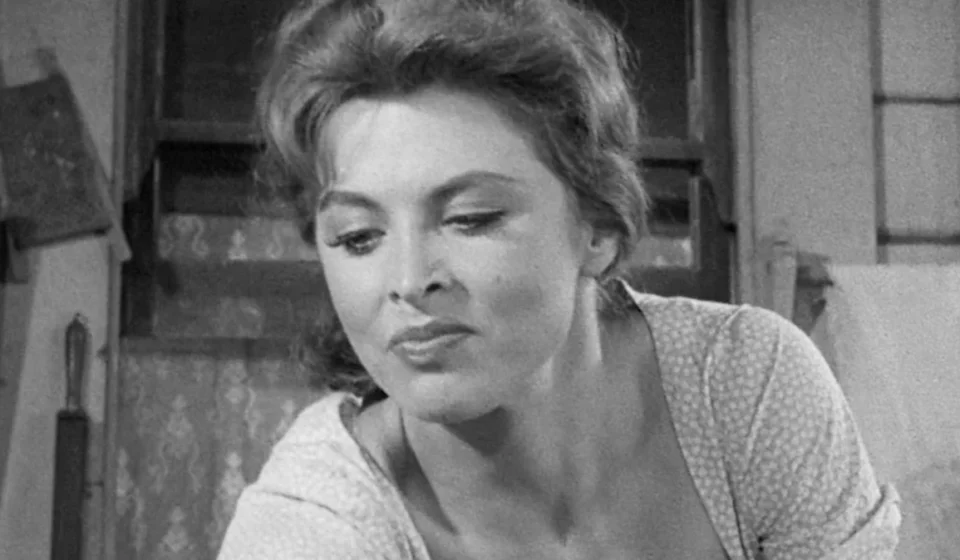

Before the sun-drenched beaches of a deserted island became her professional home, and before the name "Ginger Grant" was etched into the annals of television history, Tina Louise was a rising star navigating the treacherous waters of mid-century American cinema. Her feature film debut in the 1958 adaptation of Erskine Caldwell’s God’s Little Acre serves as a fascinating lens through which to view the evolution of Hollywood censorship, the transition of mid-century acting talent, and the formidable career of the legendary Robert Ryan.
The Literary Scandal: A Pre-Code Fever Dream in the Deep South
To understand the weight of Tina Louise’s debut, one must first understand the notoriety of the source material. Published in 1933, Erskine Caldwell’s God’s Little Acre was a literary lightning rod. Its unflinching, sweaty, and visceral depiction of lust, poverty, and religious fervor in the Deep South sent shockwaves through the American moral establishment.
The New York Society for the Suppression of Vice, an organization whose puritanical reach was legendary, took immediate aim at the novel. They viewed the book as a corrupting influence, yet their efforts to ban the work only served to solidify its status as a must-read. By the 1950s, the book had permeated every level of American culture—even finding its way into the hands of U.S. Armed Forces personnel. As referenced in the 1955 film Mister Roberts, the novel was so famously "well-read" that it became a shorthand for illicit interest among young men. Bringing such a story to the screen required a delicate balance between artistic integrity and the iron-fisted dictates of the Motion Picture Production Code.
A Director’s Vision: Anthony Mann and the Politics of Adaptation
The task of adapting God’s Little Acre fell to Anthony Mann, a director whose reputation for grit and psychological depth was already well-established. Mann was a master of the Western genre, having famously collaborated with James Stewart on iconic films such as Winchester ’73, Bend of the River, and The Man from Laramie.
Mann’s approach to God’s Little Acre was shrewd; he leaned into the political and economic desperation of the Walden family rather than focusing solely on the sexual provocations that had drawn the ire of censors. By framing the story as a tragic, systemic failure rather than a pure "sex-ploitation" vehicle, Mann was able to navigate the studio system’s restrictions. He understood that the story’s power didn’t lie in the mere suggestion of sin, but in the internal rot of a family consumed by the delusion of hidden fortune.
Chronology of a Career: The Rise of Tina Louise
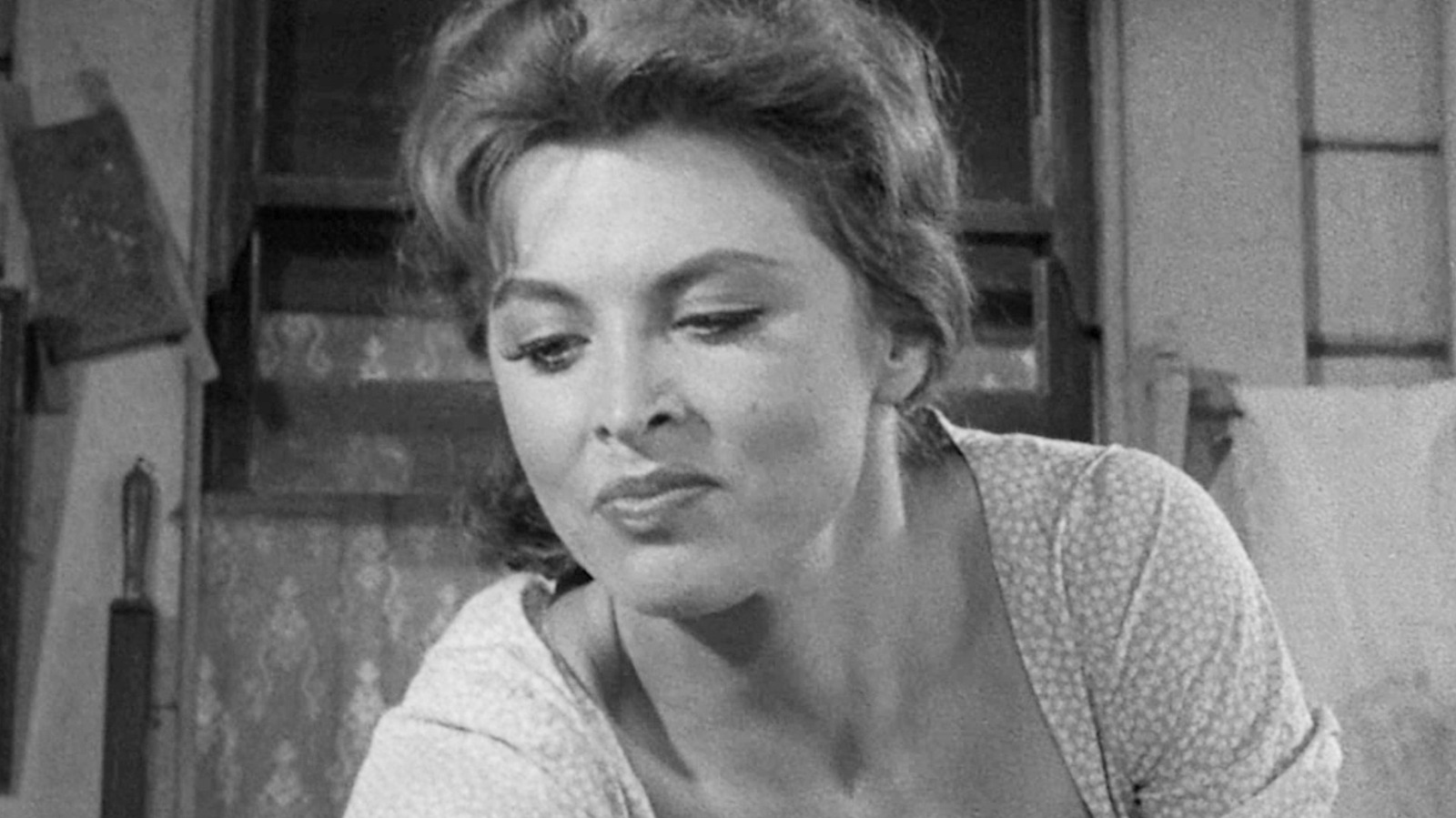
The casting of Tina Louise as Griselda Walden—the wife of Buck (played by Jack Lord) and the object of universal desire—was a masterstroke. At the time, Louise was a burgeoning talent with a presence that felt both contemporary and classical.
The Debut (1958)
God’s Little Acre introduced audiences to a performer capable of balancing tawdry allure with a strange, quiet grace. Despite the film’s chaotic narrative, Louise’s performance as the "sinful" Griselda provided a necessary anchor. She was not merely a decorative element; she was the silent center of the family’s turmoil.
The Western Transition (1959)
Following her debut, Louise solidified her status as a serious dramatic actor by appearing in Andre de Toth’s Day of the Outlaw. This bleak, atmospheric Western further showcased her range, proving that she could hold her own against the toughest actors in Hollywood.
The Broadway Pivot
Between her film roles, Louise made significant noise on Broadway. Her work in the Carol Burnett vehicle Fade Out — Fade In demonstrated a comedic timing that would eventually inform her most famous role. However, the trajectory of her career took a sharp, lucrative turn when she accepted the role of Ginger Grant on Gilligan’s Island. While the sitcom provided a steady paycheck and immortalized her in the pop culture lexicon, many critics at the time—and subsequently—have noted that the show arguably constrained a talent that had shown such promise in her early film work.
Supporting Data: The Force of Robert Ryan
The film’s gravity is largely provided by Robert Ryan, a character actor of unparalleled intensity. Ryan played Ty Ty Walden, the mentally fraying patriarch of the Walden clan.
Ryan’s career was defined by his ability to oscillate between the deeply sympathetic and the genuinely terrifying. Whether starring in Sam Peckinpah’s The Wild Bunch or Robert Aldrich’s The Dirty Dozen, Ryan possessed a "wild card" quality that made his performances unpredictable. In God’s Little Acre, his portrayal of Ty Ty—a man who spends his life digging for a fortune that doesn’t exist—is a tour de force of obsession.
Critics often point to the synergy between Ryan and his younger cast members, including Louise, Vic Morrow, and Jack Lord, as the engine of the film. While the narrative is a "full-scale implosion" of a family, the audience remains engaged because of the commitment of these actors to the tragedy of their characters.
Implications: The Legacy of a Controversial Classic
The success of God’s Little Acre had significant implications for the film industry in the late 1950s. It proved that "adult" themes—if treated with enough stylistic rigor and anchored by legitimate acting talent—could be brought to the screen without destroying the reputations of the studio heads.
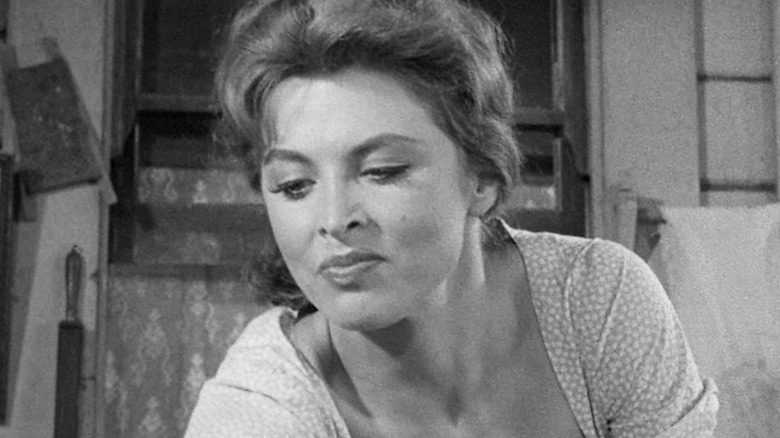
However, the film also highlights the "what-if" scenario regarding Tina Louise’s career. By moving into the regimented world of episodic television, Louise arguably traded a trajectory of "serious" film acting for the comfort of a household name. In the context of modern retrospectives, her early work is being rediscovered as evidence of an actress who was far more than a television stereotype.
The Censor’s Failure
Ultimately, the history of God’s Little Acre is a case study in the futility of suppression. The very elements that the New York Society for the Suppression of Vice sought to hide became the primary reasons for the story’s enduring interest. The film stands as a relic of a time when the mere act of depicting human desire was a revolutionary gesture in American art.
Conclusion: A Performance Underscored
As we look back at the credits of God’s Little Acre, we see more than just a debut performance; we see the intersection of a fading era of American Westerns and the birth of a new, more psychological approach to ensemble drama. Tina Louise, Robert Ryan, and Anthony Mann created a film that, much like the buried treasure in Ty Ty Walden’s fields, holds a value that continues to be unearthed by new generations of cinephiles.
While history may remember Louise primarily for her time on the S.S. Minnow, the archives tell a richer story—one of a young woman who walked onto the set of a banned, scandalous masterpiece and held her own against some of the most formidable screen presences of the 20th century. Her performance as Griselda remains a testament to the fact that, even in a world obsessed with suppression, true talent eventually finds its way to the surface.