From Near-Exit to Cult Icon: Jason Patric’s Journey Through the Shadows of Cinema

In the mid-1980s, the Hollywood landscape was shifting. The era of the high-concept blockbuster was in full swing, and for a young, aspiring actor like Jason Patric, the industry felt like a mix of immense promise and volatile unpredictability. In 1986, at just 19 years old, Patric landed his first major starring role under the prestigious banner of Brooksfilms. Founded by the legendary Mel Brooks, the production company had become the gold standard for independent, auteur-driven cinema, having shepherded critical darlings and cultural touchstones like The Elephant Man, Frances, and My Favorite Year.
For a newcomer, signing with Brooksfilms felt like a coronation. “They had just made Frances and 84 Charing Cross Road, and a couple of years before that, The Elephant Man,” Patric recalled in a recent conversation with IndieWire. “This was the biggest and most respected independent company at that time.” Yet, the reality of the business would soon deliver a sobering lesson to the young actor. The project in question was Solarbabies, a garbled, post-apocalyptic science fiction outing that attempted to blend the kinetic energy of Mad Max with the sports-centric violence of Rollerball. Upon arriving on location in Spain, the dream of a prestigious debut evaporated. “I got there and just went, ‘Oh my God,’” Patric said, noting that the production was a chaotic mess. By the time the cameras stopped rolling, the young actor was disillusioned, nearly walking away from the industry before his career had truly begun.
The Crucible: A Path Defined by Grit and Ambition
The failure of Solarbabies served as a baptism by fire, but it didn’t break Patric’s resolve. Instead, it sharpened his discernment. He pivoted toward roles that demanded intensity, starring in Joel Schumacher’s stylized vampire cult classic The Lost Boys (1987) and Kevin Reynolds’ The Beast (1988). While The Beast was effectively buried by its studio—playing in only two theaters for a single week—it reached one crucial viewer: director James Foley.
Foley, a filmmaker whose own career trajectory had been defined by sharp, atmospheric crime dramas like 1984’s Reckless and the 1986 masterpiece At Close Range, saw something in Patric that transcended the screen. The two met for an impromptu, hours-long discussion that never once touched on a specific project. It was the beginning of a profound creative partnership. “We talked for two or three hours,” Patric remembered. “He didn’t bring up the project, and he never brought it up again. But from that moment on, we were as tight as we could be.”

This friendship arrived at a pivotal juncture for both men. Foley, despite the critical acclaim for his earlier work, had suffered a professional blow following the 1987 release of Who’s That Girl. Despite the massive global star power of Madonna, the film underperformed with critics and audiences, casting a pall over Foley’s standing in the studio system. Both artist and actor found themselves at a crossroads, hungry to create something that felt personal and uncompromised.
The Adaptation: Mining Jim Thompson for Truth
The creative salvation for both men came in the form of Jim Thompson’s hardboiled crime novel, After Dark, My Sweet. Patric was captivated by the source material, sensing a rare opportunity to play a character of genuine psychological depth. When he brought the script to Foley, the alignment was instantaneous.
“Both Foley and I were ready,” Patric stated. “I laugh now, because I was only 23, but I told Foley that if I couldn’t nail this guy, I was packing it in. I knew I would only get an opportunity like this a handful of times.” His perspective on the longevity of an acting career remains pragmatic, even years later: “Look at your favorite actors, whoever they are. I don’t care if they had 40-year careers, there are only six movies you really talk about. And you know when one of those is coming along.”
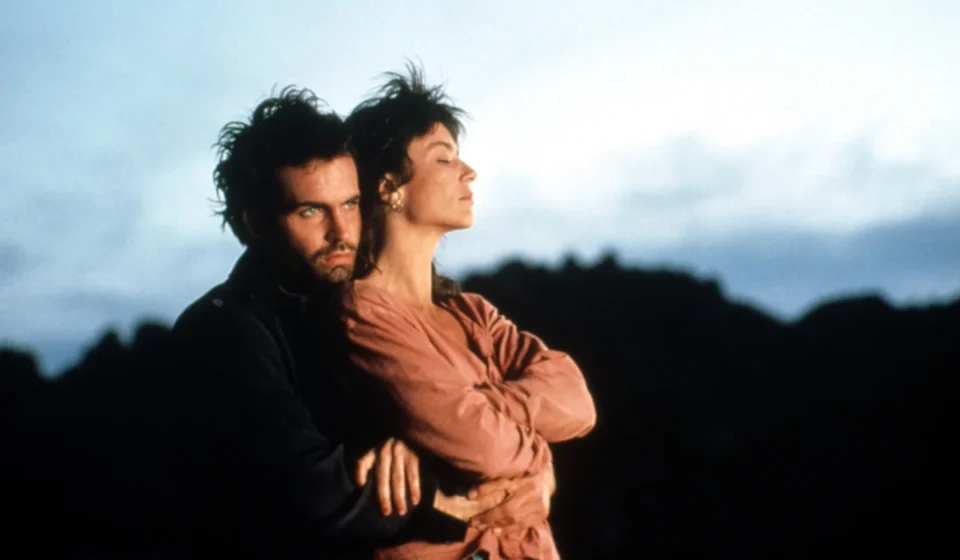
Patric immersed himself in the role of “Kid” Collins, a drifter and former boxer who finds himself entangled in a kidnapping scheme orchestrated by a cynical widow, played by Rachel Ward, and a duplicitous ex-cop, portrayed by Bruce Dern. To capture the essence of a man haunted by a fractured past, Patric underwent rigorous boxing training and developed a specific, guarded physicality. He wanted the audience to constantly question the protagonist: Was the Kid genuinely simple-minded, or was there a calculated danger lurking beneath his vacant stare?

Critical Reappraisal and the Legacy of the Underappreciated
Upon its release in 1990, After Dark, My Sweet did not set the box office on fire, but it did ignite the imaginations of critics. Roger Ebert, in a glowing review, identified the film as one of the best of the year and lauded Foley as a criminally overlooked talent. Despite this, the film remained a niche success.
In the decades since, however, the reputation of the film—and of James Foley—has undergone a massive, deserved rehabilitation. While Foley went on to direct notable projects like the screen adaptation of David Mamet’s Glengarry Glen Ross, the thriller Fear, and segments of prestige television like House of Cards and Hannibal, he remains an elusive figure in the public consciousness.
The recent resurgence of After Dark, My Sweet is evidenced by high-quality physical media releases from boutiques like Kino Lorber and Imprint. When Patric recently screened a personal 35mm print of the film at Vidiots in Los Angeles, he was met with a sold-out crowd. The event served as a testament to the film’s enduring power. For Patric, who is bringing that same 35mm print to the Roxy Cinema in New York this August, the big screen is the only way to truly experience Foley’s vision.
“It’s beautifully shot in a way where you don’t notice how complicated the shots are,” Patric noted. “It’s not showy in any way, but every camera movement is really connected to the scene and to the actor. And that’s imperative because it’s a subjective piece of filmmaking. I’m in every scene, and part of the difficulty and the reward of playing that character is that the audience is in the same boat with him every step of the way.”

The Long View: Defining a Career
Though After Dark, My Sweet failed to achieve financial success, it provided the structural foundation for the career Patric desired. It granted him the creative agency to choose projects based on artistic merit rather than commercial viability. This autonomy led to a string of acclaimed, daring performances in films like Lili Fini Zanuck’s Rush, Walter Hill’s Geronimo: An American Legend, Barry Levinson’s Sleepers, Neil LaBute’s Your Friends & Neighbors, and Joe Carnahan’s Narc.
Patric reflects on these choices with a sense of clarity. He rejects the notion that his filmography is defined by an obsession with "darkness." Instead, he views his work as a continuation of the tradition established by the titans of the 1970s. “I always got targeted as being dark,” he said. “I wasn’t doing anything darker than Pacino or De Niro did in the 1970s. The culture was just different. But I wanted to make those movies, and if they didn’t do well, that was OK. I always felt that movies should last, and it’s good if they get discovered later on when all the detritus is gone.”
The implications of Patric’s career are clear: true artistic longevity is not found in the fleeting metrics of opening weekends, but in the slow-burn appreciation of audiences who seek out quality long after the marketing campaigns have faded. As he prepares to present After Dark, My Sweet to new audiences in New York, the cycle of rediscovery continues. For a man who almost quit at 19, Jason Patric has proven that the most resilient path is often the one carved in the shadows.
“After Dark, My Sweet” will screen at the Roxy Cinema on August 5 and 6, featuring post-screening Q&As with Jason Patric.