
The cinematic landscape has lost one of its most versatile and beloved anchors. Sam Neill, the New Zealand-born actor whose career spanned five decades of arthouse introspection and blockbuster spectacle, passed away last week at the age of 78. While millions recognized him as the rugged paleontologist Dr. Alan Grant from the Jurassic Park franchise, those who followed his life beyond the silver screen knew him as a man of profound humility, a dedicated environmentalist, and a self-described "gentleman rancher."
His death has prompted an outpouring of grief from peers and fans alike, not merely for the characters he portrayed—ranging from the demonic to the heroic—but for the authentic, unpretentious humanity he projected in every role.
A Legacy Written in Celluloid: The Chronology of an Icon
Sam Neill’s career was defined by a defiance of typecasting. His rise to international prominence was not a linear trajectory but a series of calculated risks that showcased his uncanny ability to ground the supernatural in emotional truth.
The Early Years and Arthouse Origins (1970s–1981)
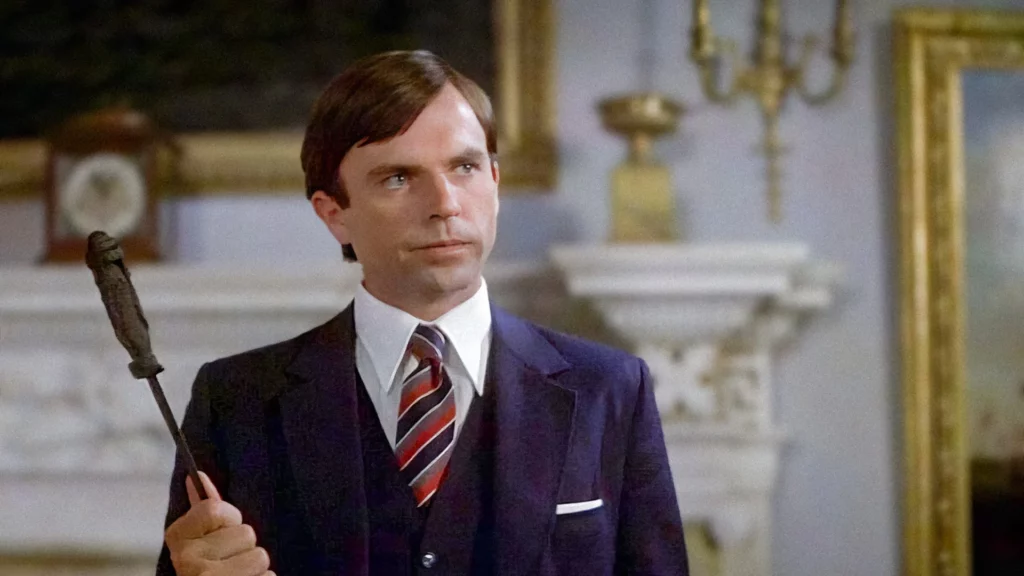
Before he was a Hollywood staple, Neill was a fixture of the burgeoning Australian and New Zealand film scenes. His breakout performance in Gillian Armstrong’s 1979 classic My Brilliant Career cemented his reputation as a romantic lead with a depth that transcended traditional matinee-idol tropes. It was this performance that caught the eye of acting titan James Mason, who recommended the young actor for a role that would ironically define his early international perception: Damien Thorne in The Omen III: The Final Conflict (1981). Playing the Antichrist, Neill imbued the character with a chilling, corporate-executive coldness that remains a benchmark for horror performances.

The Genre Renaissance (1981–1997)
The year 1981 proved pivotal for Neill, as he simultaneously appeared in Andrzej Żuławski’s cult masterpiece Possession. While The Omen III gave him mainstream visibility, Possession highlighted his capacity for raw, psychological intensity. Throughout the 80s and 90s, Neill became the go-to actor for directors seeking a rationalist protagonist to anchor their "lurid" genre projects. Whether in the claustrophobic tension of Phillip Noyce’s Dead Calm (1988) or the existential dread of John Carpenter’s In the Mouth of Madness (1994), Neill possessed a rare ability: he never condescended to the material. He approached Lovecraftian horror with the same gravity as a period drama, ultimately imbuing these projects with a "wounded, human soul."
The Blockbuster Era and Beyond (1993–2025)
In 1993, Steven Spielberg cast Neill as Dr. Alan Grant in Jurassic Park. The role was a masterclass in reactionary acting; Neill’s wide-eyed, breathless realization that "they do move in herds" remains one of the most iconic moments in cinema history. Following this, he leaned into his own eclecticism, moving seamlessly between the visceral, space-borne terror of Event Horizon (1997) and more intimate, character-driven projects.
Supporting Data: The Alchemist of the Screen
One of the most striking aspects of Neill’s career was his profound chemistry with his female co-stars. Throughout his filmography, Neill consistently elevated the performances of those around him, acting as a collaborative force rather than a scene-stealer.
From the nuanced, complicated romantic tensions with Judy Davis in My Brilliant Career to the electric, begrudging affection shared with Laura Dern in Jurassic Park, Neill’s strength lay in his receptivity. He was a master of "The Spielberg Face"—the ability to communicate a sense of awe, terror, or existential realization with a single, unadorned expression. Critics have long noted that Neill’s success in blockbuster franchises was not due to his capacity for action-hero posturing, but his capacity for genuine wonder.

Official Responses and Personal Reflection
The industry response to Neill’s passing has been deeply personal, reflecting his status as a "proverbial good guy." John Carpenter, who directed Neill in In the Mouth of Madness, took to social media to express his heartbreak, noting that Neill was not just a remarkable actor, but a father, farmer, and friend.
For those who knew him through his digital presence, the loss feels equally intimate. His social media persona under the handle @TwoPaddocks—named after his organic wine estate in Central Otago, New Zealand—was a sanctuary of kindness. His posts were a curated feed of ducks, pigs, and candid reflections on rural life. He was a "born poster" who used his platform not for self-promotion, but for quiet wisdom. His decision to leave Twitter in 2023, following the platform’s acquisition by Elon Musk, was characteristic of his integrity: he refused to participate in a space he deemed "angry and divisive."
The Man Behind the Myth: Implications of a Life Well-Lived
Sam Neill’s life was not defined solely by his output in front of the camera. His documentary work, such as Cinema of Unease (1995), showed a man deeply concerned with the identity and morality of his home country. He was an outspoken environmentalist and a philanthropist, yet he was also fiercely candid about the fragility of life.
In 2023, following his diagnosis with non-Hodgkin lymphoma, Neill spoke with the BBC about his outlook. "I’m not afraid of dying," he said. "What I don’t want to do is to stop living, because I really enjoy living."
This sentiment echoes through his final years. Even when facing the realities of his illness, he remained a vibrant, active presence in his community and on his farm. He viewed his career as a privilege, never a burden, and treated his fame with the same bemused detachment he brought to his characters.
A Final Note: The Eglinton Theatre
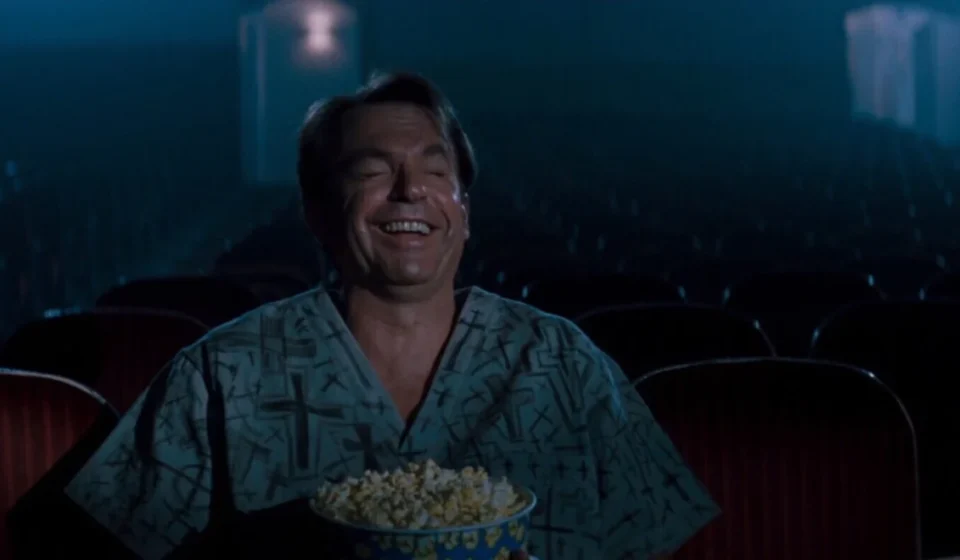
The image of Sam Neill, as seen in the final moments of In the Mouth of Madness, sitting in the front row of the Eglinton Theatre, remains a poignant metaphor for his relationship with the medium. In that scene, his character—a man whose reality has been systematically dismantled—sits in the dark, eating popcorn, watching the end of the world. It is a moment of total, terrifying acceptance.
For many fans, this image has become a touchstone of remembrance. It is a testament to Neill’s ability to find the humor in the horrific and the warmth in the cold. Whether he was fleeing dinosaurs or confronting cosmic deities, Neill remained fundamentally grounded. He was the everyman caught in extraordinary circumstances, a neighbor to us all, who taught us that even when the world seems to be "pear-shaped," the best thing one can do is "cuddle a duck" and find the grace to smile.
The world has indeed lost a remarkable man. While the screen may be dark, the legacy of his kindness, his craft, and his insatiable appetite for life remains firmly etched in the collective consciousness of film lovers everywhere.