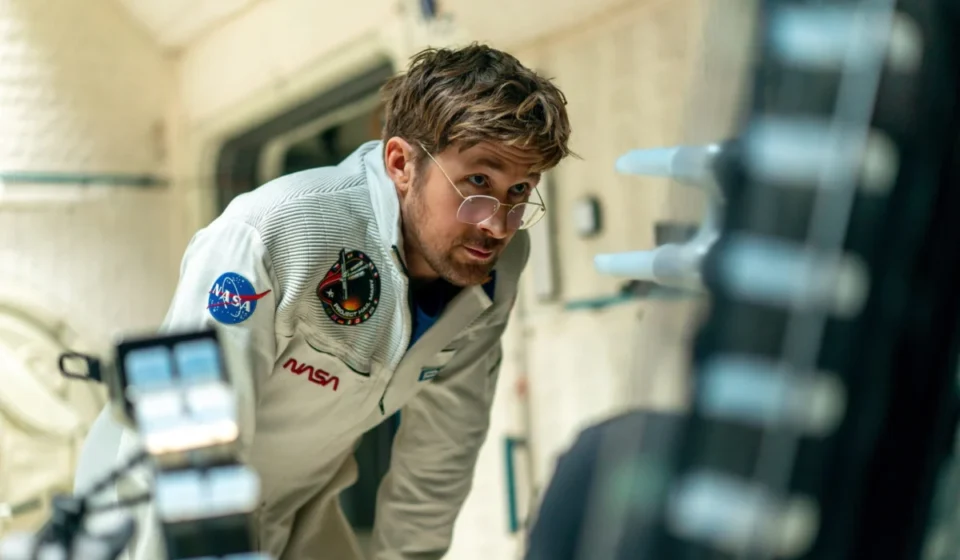
From Manuscript to Masterpiece: How Ryan Gosling and ‘Project Hail Mary’ Defied the Odds

In the landscape of modern science fiction cinema, few projects have carried the weight of expectation—and the sheer logistical burden—of the 2026 adaptation of Andy Weir’s Project Hail Mary. Following the success of The Martian, expectations for another Weir adaptation were stratospheric. Yet, Project Hail Mary emerged not just as a commercial juggernaut, but as a critical triumph, anchored by a singular, powerhouse performance from Ryan Gosling.
Six years after the initial seeds of the project were sown, the film stands as a testament to the power of creative collaboration, proving that even in the high-tech world of big-budget space epics, the most human elements remain the most essential.
The Genesis of a Galactic Mission
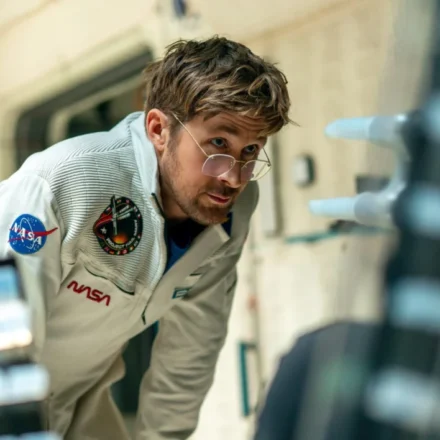
The story of Project Hail Mary began in 2020, long before the cameras rolled. Andy Weir, the architect behind the survivalist narrative of The Martian, had completed a manuscript that was as ambitious as it was isolating. The story follows a middle-school science teacher who wakes up on a spacecraft with no memory of his identity, only to realize he is humanity’s last hope against an extinction-level threat. His only companion? A rock-like extraterrestrial entity affectionately known as "Rocky."
Weir sent the manuscript to Ryan Gosling, hoping to gauge interest from the actor. Gosling, known for his deliberate and often unconventional career choices, found the material impossible to put down. Reflecting on that first read during a recent guild screening Q&A, Gosling described the experience as a form of creative possession.
"It felt like this project had a knife in my ribs," Gosling told the audience. "When I put the book down, the knife was saying, ‘OK, now you’re going to call Phil Lord and Chris Miller, and you’re going to get them to direct this. Then you’re going to get Amy Pascal to help you, and then you’re going to get the best team in the business.’ It just took me hostage."

Chronology: A Six-Year Odyssey
The road to the screen was far from linear. The project moved from the page to the pre-production phase during the height of a rapidly shifting film industry.
- 2020: Andy Weir shares the unpublished manuscript with Ryan Gosling.
- 2021-2022: The creative team, led by producers Amy Pascal and Gosling, secures the directorial duo Phil Lord and Chris Miller, known for their unique blend of visual flair and emotional depth.
- 2023-2024: Intensive development of the "Rocky" character begins. Rather than opting for pure CGI, the team commits to a practical puppet-based approach.
- 2025: The "high-tech" phase of filming begins, utilizing advanced LED stage technology to simulate the interior of the spaceship.
- 2026: Project Hail Mary premieres, becoming an instant cultural phenomenon and an awards season frontrunner.
The Puppet Problem: Solving for Rocky
One of the most significant artistic decisions made by Lord and Miller was the rejection of a digital, computer-generated alien. Instead, they insisted on a practical, physical presence on set. This was a massive gamble; it meant Gosling would be acting against a puppet, operated by a team of puppeteers, rather than a green screen.
James Ortiz, a veteran puppeteer, was cast as the man behind the alien. The rapport between Gosling and the inanimate (yet soulful) figure of Rocky was instantaneous. Gosling recalls the moment Ortiz finished his audition: "I just instinctively called out, ‘Bye, Rocky!’"
However, the set was far from a traditional acting environment. "It was six puppeteers, dressed like ninjas, and me pretending I couldn’t see them," Gosling noted. The logistical reality was chaotic. The puppet frequently malfunctioned, mimicking the unpredictable nature of the shark in Jaws. Yet, both Gosling and the directors embraced these failures.
"They appreciate that the obstacles are opportunities," Gosling said. A prime example of this philosophy is the iconic "thumbs down" gesture in the film. The arm mechanism on the puppet broke during a key scene, preventing a thumbs-up. Instead of calling "cut," the team leaned into the error, and the moment became one of the most endearing character beats in the final cut.

The "Moppy Ringwald" Incident: A Lesson in Human Interaction
Even for a veteran actor like Gosling, the isolation of the production took a toll. Toward the end of the shoot, filming on a high-tech set with massive LED screens—an environment that was meant to be the pinnacle of cinematic achievement—Gosling reached a breaking point.
"I was just so tired of acting alone," he confessed. Seeking a reprieve, he wandered off the set and happened upon a nearby production: Julia Roberts, filming After the Hunt with director Luca Guadagnino.
The brief interaction with Roberts provided the perspective shift Gosling needed. Inspired by the camaraderie he witnessed on her set, he returned to the Project Hail Mary stage with a wild request. He told Lord and Miller he needed a scene partner, and he wanted to build one out of whatever he could find.
"They stopped everything on our fancy, expensive day, and crawled around the sets looking for tape, glasses, and a dress," Gosling recalled. The result was "Moppy Ringwald," a mop-based puppet that became his unexpected confidante for several scenes. That the directors were willing to pause a massive, multi-million dollar production to build a mop lady for their lead actor speaks volumes about the culture they fostered—a culture where spontaneity is valued over rigid adherence to a schedule.
Implications for Modern Filmmaking
The success of Project Hail Mary serves as a counter-narrative to the current trend of "AI-everything" in Hollywood. By grounding the most fantastical elements of the film in physical, tangible reality, Lord and Miller have created something that feels visceral and lived-in.

For Gosling, the film represents a career-defining turn. Carrying a 156-minute feature almost entirely solo requires a level of range that few actors possess. From razor-sharp comedic timing to the depths of existential dread, Gosling’s performance is a masterclass in endurance.
Furthermore, the film highlights the shifting priorities of the industry. As audiences become increasingly savvy about CGI, the "practical" approach—even when it involves ninjas and mops—offers a level of sincerity that audiences are gravitating toward.
Conclusion: The "Julia Roberts" Rule
If there is one takeaway from the production of Project Hail Mary, it is perhaps the most unconventional piece of advice offered by its star. When asked how he managed to maintain his sanity through the grueling, solitary shoot, Gosling joked, "If you’re having a problem and you can’t solve it, talk to Julia Roberts. That’s the big lesson here. She’ll solve it for you."
But beyond the humor, the film stands as a triumph of collaboration. It is a story about a science teacher and an alien solving impossible problems to save the world, mirrored by a director, an actor, and a crew who solved their own set of impossible problems to bring that story to life. Project Hail Mary is not just a film about the vastness of space; it is a film about the intimacy of human (and non-human) connection, and the resilience required to keep working until the job is done.
Project Hail Mary is currently available for streaming on Prime Video.