Bridging the Dynamic Range Gap: Beeble’s SwitchHDR Redefines AI-Powered Post-Production

In the modern landscape of high-end cinematography, the demand for High Dynamic Range (HDR) content has outpaced the available source material. While streaming platforms, cinema projectors, and professional displays now predominantly support HDR, a vast majority of the world’s visual history—archival footage, stock media, and older production plates—remains locked in the constrained confines of Standard Dynamic Range (SDR).
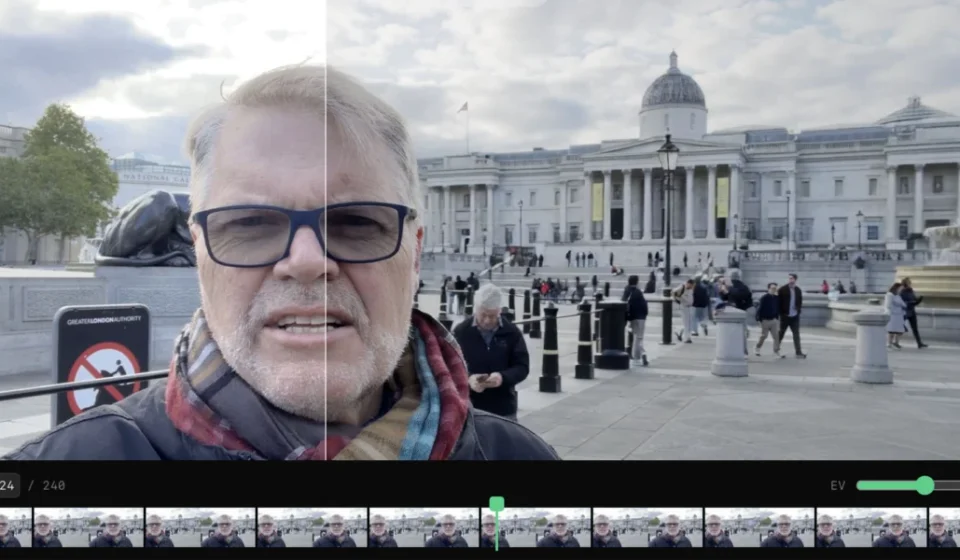
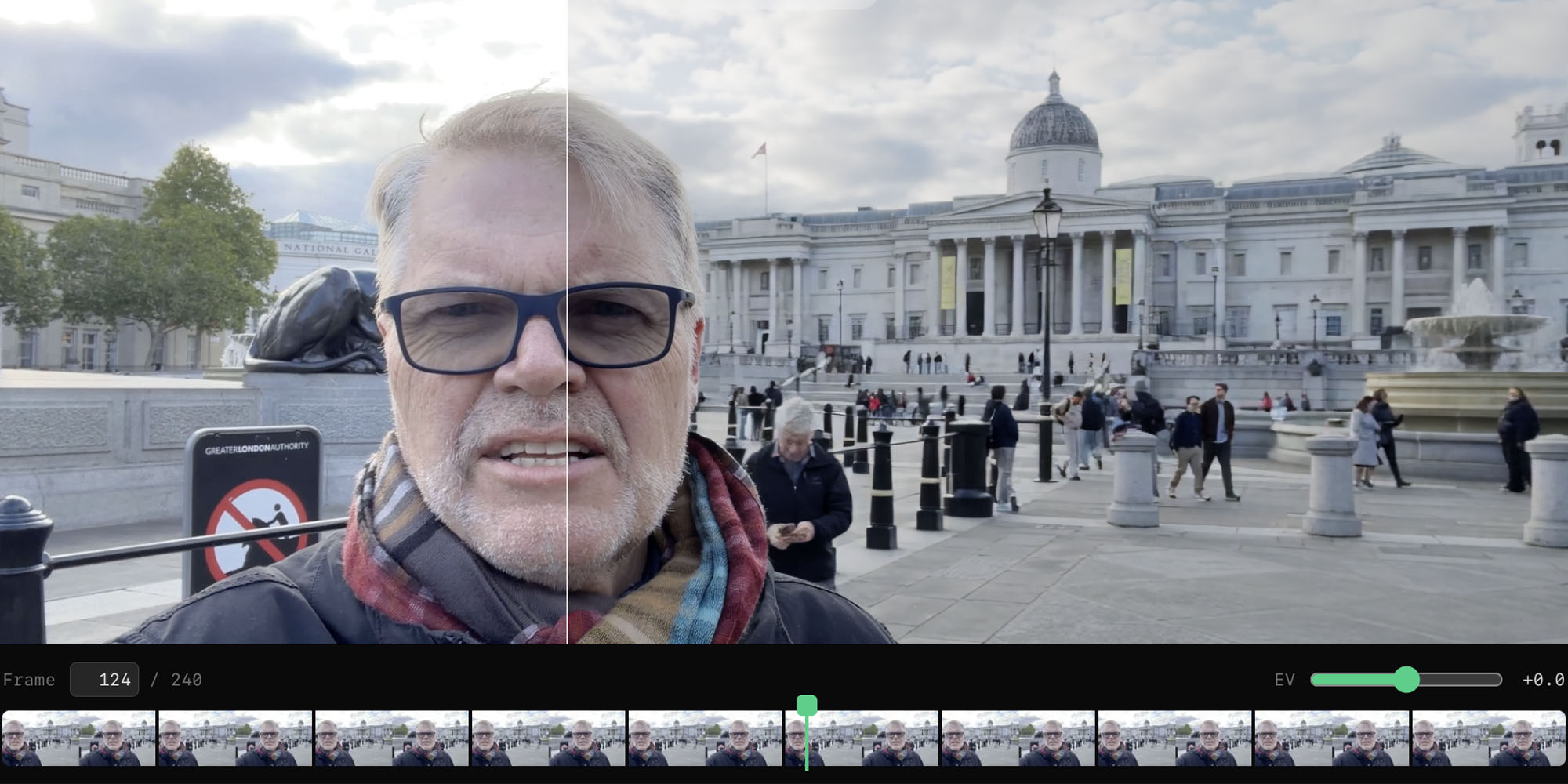
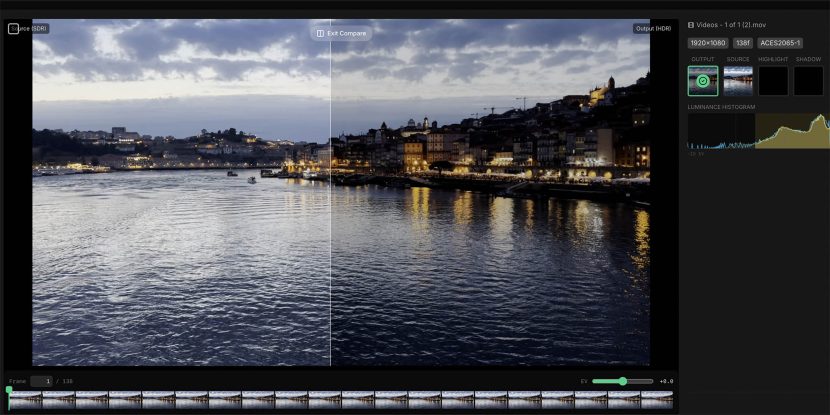
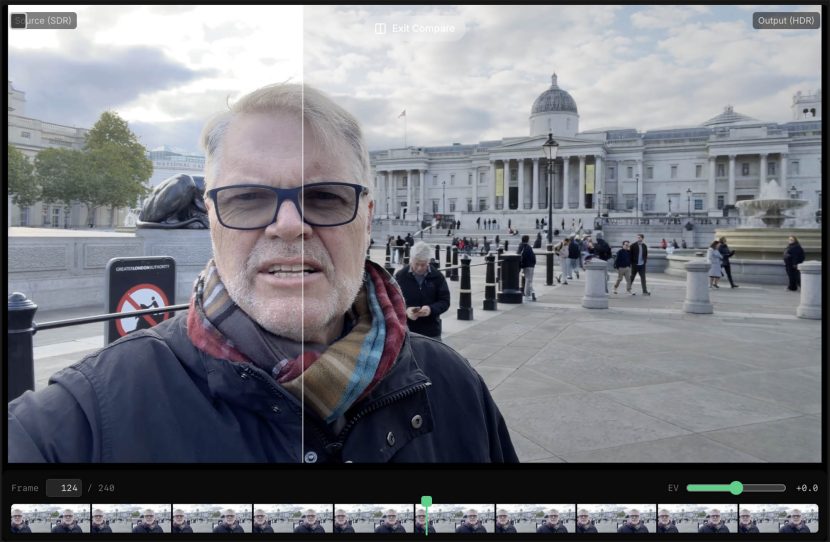
Beeble, the Seoul-based AI research firm, is looking to solve this disparity with the launch of SwitchHDR, a sophisticated machine learning model designed to reconstruct HDR imagery from conventional SDR video. Unlike consumer-grade "upscaling" tools that simply remap luminance, SwitchHDR outputs scene-linear 16-bit EXR sequences. This technical choice signals a clear intent: Beeble is not targeting casual users, but rather the professional ecosystem of colourists, VFX artists, and archival restorers who require production-ready assets that can hold up under the scrutiny of modern finishing pipelines.
The Technical Core: Beyond Simple Expansion
To understand the significance of SwitchHDR, one must first understand the limitations of traditional SDR-to-HDR conversion. Conventional methods typically rely on inverse tone mapping, which essentially stretches existing SDR signal values into a larger container. The problem, as any professional colorist will attest, is that once a highlight has clipped or shadow detail has collapsed into noise, the underlying data is mathematically absent. Simple expansion often amplifies these artifacts, leading to unsightly banding, "plasticky" skin tones, and temporal instability that betrays the artificial nature of the conversion.
Beeble’s approach is fundamentally different. According to the company, SwitchHDR was trained on a curated dataset of genuine HDR footage rather than the internet-standard SDR corpus. This training allows the model to perform "informed reconstruction." It does not magically invent data that isn’t there; instead, it uses its learned understanding of high-radiance scenes to infer a plausible, physically consistent HDR representation.
The Power of Scene-Linear 16-Bit EXR
The decision to output in 16-bit EXR (ACES2065-1) is the cornerstone of the tool’s professional viability. By delivering a scene-linear format, SwitchHDR ensures that the recovered material remains "open" for further grading and compositing. In a standard VFX workflow, an artist needs to manipulate light, shadow, and color without hitting the baked-in limitations of a compressed video codec. By providing this flexibility, Beeble allows the reconstructed footage to be integrated into high-end projects, including color grading suites like DaVinci Resolve or compositing environments like Nuke, without the "black-box" limitations typical of AI plugins.
A Brief Chronology: From Relighting to Reconstruction
The evolution of Beeble as a company mirrors the rapid maturation of generative AI within the professional VFX industry.
- June 2023: fxguide first profiled Beeble, focusing on their debut tool, "SwitchLight." At that time, the company was a specialized player focused primarily on single-frame relighting—a significant breakthrough that allowed artists to change the lighting direction of a subject post-capture.
- Late 2023–2024: The company began aggressively expanding its research focus, moving beyond relighting into the broader realm of AI-assisted image manipulation.
- August 2025: Beeble unveiled "Canvas" at ACM SIGGRAPH in Los Angeles. Canvas, a node-based environment, signaled the company’s intent to move away from standalone tools toward a unified, pipeline-integrated platform.
- July 2026: The official launch of SwitchHDR. This release represents a maturation of their machine learning research, shifting from simple image manipulation to complex signal reconstruction for archival and restoration workflows.
Throughout this period, CEO and founder Hoon Kim has maintained a consistent philosophy: AI should serve as an extension of the artist’s intent rather than a replacement for human creative decision-making.
Official Perspectives: The "Production-Grade" Philosophy
We spoke with Hoon Kim to gain insight into the development process behind SwitchHDR. Kim emphasized that the tool was built with a "production-first" mindset, noting that the development team prioritized the specific needs of colorists and VFX supervisors over the "wow factor" that often characterizes consumer-focused AI demos.
"From day one, we built SwitchHDR around what post-production actually requires, not what makes a good demo," Kim stated. "That meant ensuring temporal consistency across full sequences and providing artists with explicit control over where reconstruction happens. We don’t want a black-box conversion. If real detail survives in the footage, we recover it. Where it is fully clipped, the artist decides how it gets rebuilt, guided by masks and prompts."
Kim’s emphasis on "masks and prompts" is telling. It acknowledges that AI, no matter how sophisticated, cannot always know the creative intent of a director. If a window is intended to be blown out to emphasize a dreamlike quality, a fully automated AI might incorrectly try to recover the detail outside. By allowing the artist to define the boundaries of the HDR reconstruction, Beeble is positioning SwitchHDR as a surgical tool, not a blunt instrument.
Implications for the Industry
The implications of SwitchHDR are profound for several sectors of the film and television industry.
1. Archival and Restoration
Perhaps the most immediate beneficiary of this technology is the restoration sector. Older, classic films—many of which were never captured with the dynamic range required for modern theatrical HDR releases—can now be brought into the current era without sacrificing the original cinematography. By reconstructing the radiance of a scene, studios can provide a more immersive experience for modern audiences while maintaining the artistic integrity of the original film.
2. The VFX Pipeline
In visual effects, consistency is king. If a production needs to insert a modern CGI element into a legacy plate, the dynamic range of the plate must match the CGI. Previously, this required painstaking manual grading and, often, a compromise in quality. With SwitchHDR, VFX artists can elevate the dynamic range of the plate first, allowing for a more seamless integration with high-dynamic-range digital assets.
3. Documentary and Stock Footage
Documentary filmmakers often struggle with archival footage that looks "flat" or "dull" when placed alongside contemporary high-budget footage. SwitchHDR allows for a more consistent visual language across a project, blending legacy content with new, high-quality capture.
Limitations and Future Trajectories
Despite the impressive technical specifications, Beeble remains transparent about the current state of the technology. As noted in early testing, while SwitchHDR is arguably the best-in-class for this specific application, temporal consistency remains a minor challenge when dealing with highly complex, moving textures.
However, the trajectory of the company suggests that these hurdles are temporary. The integration of SwitchHDR into the broader "Canvas" node-based ecosystem indicates that Beeble is building a future where AI tools are modular. Artists will eventually be able to chain these models together—perhaps using SwitchLight to relight a plate, then feeding that result into SwitchHDR for dynamic range expansion, and finally using a third-party compositing model for cleanup.
Conclusion
Beeble’s SwitchHDR is not merely another "AI filter." By focusing on 16-bit EXR outputs, ACES compliance, and artist-driven control, the company has signaled that it understands the reality of modern post-production.
The industry has long been wary of AI, fearing a "black-box" approach that removes human agency. By providing tools that are controllable, technically accurate, and pipeline-aware, Beeble is helping to dispel that fear. For the filmmaker, the colorist, and the VFX artist, SwitchHDR offers a bridge between the limitations of the past and the demands of the future, proving that in the right hands, machine learning can be a powerful instrument for creative expression. As the tool continues to evolve, it will likely become a staple in the suites of professionals looking to breathe new life into existing imagery.