Echoes of the Past, Visions of the Future: Reflections on the 60th Karlovy Vary International Film Festival

The Karlovy Vary International Film Festival (KVIFF) is not merely a cinematic gathering; it is a living, breathing testament to historical resilience. In 2026, the festival celebrated a monumental milestone: sixty editions spanning eighty years. Situated in the picturesque Czech spa town of Karlovy Vary, the festival stands as a bridge between a tumultuous mid-20th-century past and a vibrant, forward-looking future. It is a place where the Brutalist architecture of the Hotel Thermal serves not as a relic of oppression, but as a nostalgic, sanatorium-like backdrop for the global avant-garde.
A Chronology of Survival: From Occupation to Global Stature
The genesis of KVIFF is inseparable from the geopolitical tremors of the 1940s. Its inaugural edition in 1946 occurred just months after the cessation of Nazi rule in Czechoslovakia—a bold, defiant assertion of cultural life in the wake of total war. It arrived on the international stage even before the first Cannes Film Festival, establishing an early, ambitious footprint.
By 1958, the festival had secured its place in the pantheon of world cinema, earning a category-A designation from the International Federation of Film Producers Associations (FIAPF), placing it alongside the "Big Three" of Cannes, Venice, and Berlin. However, the Cold War dictated a restrictive path. Starting in 1959, the Soviet Union imposed a policy requiring KVIFF to alternate years with the Moscow International Film Festival. This state-mandated choreography lasted until 1994, two years after the peaceful dissolution of Czechoslovakia.
Today, the "Vary Special" edition serves as a retrospective of that survival. It acknowledges the ideological baggage of the past while firmly embracing a progressive, eclectic identity. The festival’s programming—a mix of regional debuts of international hits and deep-cut Eastern European rediscoveries—reflects a refusal to be defined by any single narrative, whether that of a Soviet satellite or a post-communist democracy.

The Rituals of Cinema: Defining the KVIFF Experience
To attend KVIFF is to engage with a unique set of traditions. The festival is famously curated to prevent attendee burnout, employing a daily three-ticket booking cap that encourages a measured, deliberate pace of consumption.
A central feature of the festival’s charm remains the signature black-and-white trailers directed by Ivan Zachariáš. These short, eccentric films star recipients of the Crystal Globe, blending high-concept comedy with the prestige of the award. Whether it is Mel Gibson being foiled by blowgun-wielding bandits or Stellan Skarsgård using the prestigious statuette as a makeshift fishing rod, these trailers serve as a reminder that even the most esteemed international festival does not take itself too seriously.
Furthermore, the influence of artistic director Karel Och remains profound. His multi-year tradition of programming a John Cassavetes film at every edition serves as a master class for attendees, grounding the festival in the spirit of independent, character-driven storytelling.
Retrospective: "Out of the Past" – KVIFF 60/80
This year’s cornerstone section, "Out of the Past – KVIFF 60/80," provided a scholarly examination of the festival’s historical milestones. It was a journey through the evolution of Czechoslovak and international cinema.

Highlights included:
- Powell and Pressburger’s A Matter of Life and Death (1946): A reminder of the post-war hope that permeated the festival’s founding years.
- Crystal Globe Winners: The retrospective showcased the work of Ján Kadár and Elmar Klos, whose 1964 courtroom drama The Defendant captured the early, tense spirit of the festival, alongside Ken Loach’s Kes (1970), a film that resonated deeply in the immediate aftermath of the Prague Spring.
- Suppressed Voices: The section paid tribute to directors like Juraj Jakubisko, whose masterpiece Birds, Orphans and Fools (1969) was suppressed for decades, only reaching audiences after the Velvet Revolution.
- Global Horizons: The inclusion of Glauber Rocha’s Barravento (1962) underscored KVIFF’s historical commitment to the "Cinema Novo" movement, proving that even behind the Iron Curtain, the festival looked toward Brazil, Italy, and beyond.
The restoration of Věra Chytilová’s psychosexual tragicomedy Tainted Horseplay (1988) was a revelation, marking one of the festival’s most anticipated screenings. It provided a stark look at the late-Cold War zeitgeist, blending social commentary with the experimental spirit that defines the Czech New Wave.
The Contemporary Landscape: Cannes Imports and New Voices
While the retrospective anchored the festival in history, the contemporary lineup—specifically films featuring the word "time" in the title—commanded attention.
Emmanuel Marre’s A Man of His Time (2026) was a standout. Set in the lush but uncomfortable confines of the festival’s main hall, the film’s 155-minute runtime felt like a deliberate physical challenge. The film, which depicts the moral decay of a man ascending the ranks of the Vichy regime, serves as a chillingly relevant parable on the banality of evil. Swann Arlaud delivers a performance of chilling ambivalence, transforming the viewer’s empathy into discomfort.

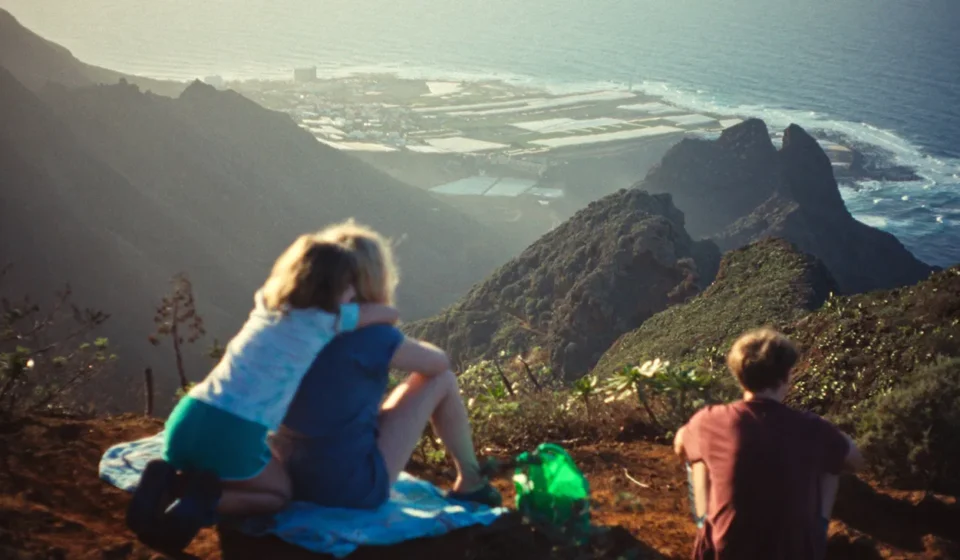
Similarly, Sandra Wollner’s Everytime (2026) offered a masterclass in emotional resonance. Often compared to Charlotte Wells’ Aftersun, Wollner’s work is arguably more daring, utilizing a hallucinogenic visual register to explore the grief of a Berlin family. It is a work of fiction that seeks to mend the fractures of reality, cementing Wollner as one of Europe’s most essential contemporary voices.
Competitive Tensions: Proxima and the Crystal Globe
The festival’s competitive sections continue to evolve. The "Proxima" section, which replaced the region-specific "East of the West" competition five years ago, has successfully transitioned into a global showcase for emerging talent. The winner, Martina Buchelová’s Lover, Not a Fighter, captured the spirit of the new generation. Through a fragmented, digital-native aesthetic—incorporating vertical phone footage and reflexive subtitles—Buchelová crafts an intimate portrait of youth, anxiety, and the looming shadow of geopolitical instability.
In the main Crystal Globe competition, the scope remained aggressively global. Aung Phyoe’s Fruit Gathering, a tender romance from Myanmar, claimed the top prize, while Slovak auteur Ivan Ostrochovský’s Only Beautiful Things to Look At was honored by FIPRESCI.
However, the most discussed film was arguably the Bulgarian production Black Money for White Nights, directed by Kristina Grozeva and Petar Valchanov. The film serves as a biting satire on the illusion of political neutrality. By depicting an elderly couple who attempt to ignore the news of the war in Ukraine to fulfill a dream of visiting St. Petersburg, the film acts as a metaphor for the karmic debt of an entire generation. Its visual language—defined by birch-forest wallpaper and high-key lighting—underscores the tragedy of clinging to an idealized past while reality crumbles outside the window.

Implications: A Festival Reclaimed
The fact that Black Money for White Nights went home empty-handed is perhaps the most telling aspect of this year’s festival. Its themes of political denial and the lingering, often painful, legacy of Soviet-era influence strike at the heart of the festival’s own history.
KVIFF has evolved into a unique organism. It has successfully shed the forced ideological constraints of the past while retaining the infrastructure—both physical and cultural—that makes it one of the most vital festivals in the world. The festival is no longer a tool of state propaganda; it is a mirror held up to the complex, often contradictory history of Central Europe.
As KVIFF concludes its 60th edition, the implication is clear: the most effective way to confront the ghosts of the past is to invite them into the theater, screen them alongside the best of the present, and allow the audience to decide what remains relevant. The festival has survived the occupation, the coup, and the collapse of the Bloc. By reclaiming its own narrative, Karlovy Vary has ensured that, while the world changes, the power of cinema to confront, heal, and provoke remains constant. It is a testament to the idea that culture, when nurtured with integrity, can survive even the most harrowing of political winters.