Eternal Night: An Oral History and Deep Dive into the 4K Resurrection of ‘Interview with the Vampire’

In the pantheon of 1990s cinema, few films possess the enduring, blood-soaked magnetism of Neil Jordan’s Interview with the Vampire. Released in 1994, the adaptation of Anne Rice’s seminal 1976 novel did more than just bring the gothic aesthetic to the mainstream; it redefined the vampire for a new generation. As the film marks its 30th anniversary and Warner Bros. unveils a stunning, newly restored 4K Ultra HD edition, we take a retrospective journey into the dark, candle-lit heart of one of horror’s most ambitious productions.
The Legacy of the Night: A Cinematic Milestone
When discussing the quintessential vampire films of the late 20th century, the conversation invariably pivots to two pillars: Francis Ford Coppola’s Bram Stoker’s Dracula and Neil Jordan’s Interview with the Vampire. Jordan himself has frequently cited the former as a primary influence, a testament to the symbiotic relationship between these two projects in the cultural consciousness.
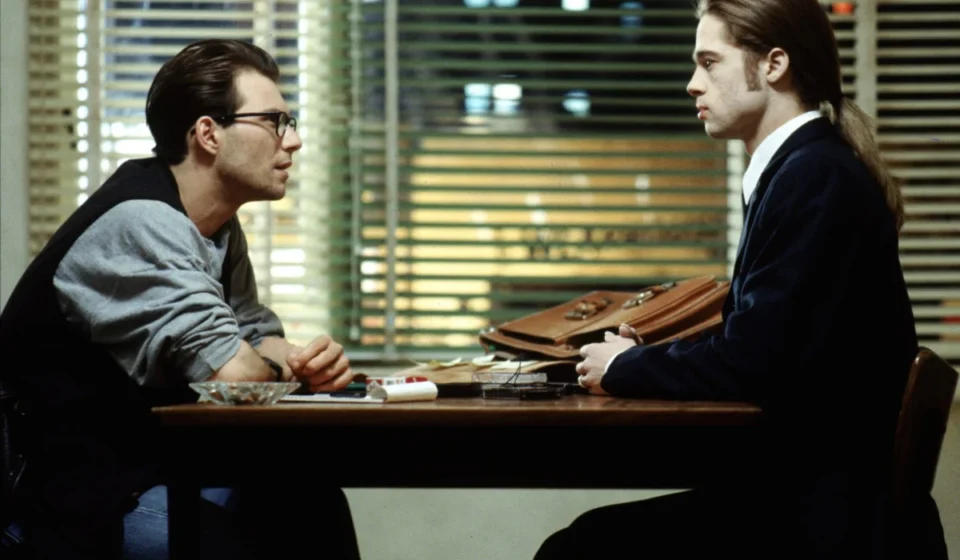
The story, now a cornerstone of pop culture, remains as intoxicating as it was decades ago: Louis de Pointe du Lac (Brad Pitt), a grief-stricken plantation owner, is seduced into an existence of eternal darkness by the charismatic, hedonistic Lestat de Lioncourt (Tom Cruise). Their complicated, often parasitic bond is further destabilized by the introduction of Claudia (Kirsten Dunst), an eternal child whose presence serves as both a tether and a curse. Through the framework of an interview with a contemporary journalist (Christian Slater), the film explores themes of existential dread, power dynamics, and the agony of immortality.
A Tortured Path to the Screen: From Rights to Reality
The journey of Interview with the Vampire from the printed page to the silver screen was fraught with "development hell." Paramount Pictures originally acquired the rights in 1976, the same year the novel was published, yet the project languished for nearly two decades.
Neil Jordan, riding high on the critical success of his 1992 thriller The Crying Game, was eventually tapped to bring Rice’s vision to life. However, it was not just his recent success that impressed the author—it was his 1984 fantasy-horror film, The Company of Wolves.
![‘Interview With the Vampire’ Director Talks Anne Rice, Lestat, Claudia & the Legacy of All Three [Exclusive]](https://www.dreadcentral.com/wp-content/uploads/2026/09/LESTAT-LOUIS-1600x900.jpg)
"When Anne Rice called me up to persuade me to make this movie, she said to me, ‘Company of Wolves is Lestat’s favorite film,’" Jordan recalled in a recent interview. He remembers the surreal nature of the exchange: "This is really weird. You’re talking about your fictional character as if he’s sitting there beside you, having a cup of tea with you." For Rice, who passed away in 2021 at the age of 80, the boundary between her life and her creation was famously porous, a sentiment echoed by fans who have long documented her personal connection to Lestat.
The Scripting of Seduction
Rice initially wrote the screenplay, which served as a rigid blueprint for the project. However, after years of stagnation, Jordan felt the narrative had lost some of its visceral, transgressive edge. He approached Warner Bros. with a plea to reintroduce the eroticism and thematic depth that had been excised during the long development process. "I had to reintroduce a lot of eroticism. Something had gone missing through the years," Jordan explained. "I tried to make something that was as honest to the books as I could possibly do."
Casting Chaos: The "Musical Chairs" of Hollywood
The production history of Interview is perhaps best known for its turbulent casting process. It is a tale of missed connections and bold creative gambles.
Early in the process, Anne Rice was vocal about her desire for French icon Alain Delon to inhabit the role of Louis. When the studio looked for a Lestat, the name Julian Sands was at the top of the wishlist for both the author and her fanbase. Studio executives, however, remained skeptical of his box-office draw, even following his success in A Room with a View.
The eventual casting of Brad Pitt as Louis and Tom Cruise as Lestat was met with significant backlash from the literary community. Rice herself famously expressed public dismay before the film’s release, though she would later perform a total reversal, praising the final product. "I was kind of delighted that she liked the movie," Jordan admitted.
![‘Interview With the Vampire’ Director Talks Anne Rice, Lestat, Claudia & the Legacy of All Three [Exclusive]](https://www.dreadcentral.com/cdn-cgi/image/width=788%2Cheight=444%2Cfit=crop%2Cquality=75%2Cgravity=auto%2Csharpen=1%2Cmetadata=none%2Cformat=auto%2Conerror=redirect/wp-content/uploads/2026/09/LESTAT-LOUIS.jpg)
The supporting cast also underwent drastic changes. The role of the interviewer, Daniel Molloy, was originally intended for River Phoenix. Following the tragic, untimely death of the young star just before production began, Christian Slater was cast in his stead, with the film dedicated to Phoenix’s memory. Similarly, while a young Julia Stiles read for the role of Claudia, it was Kirsten Dunst who delivered a performance that, even 30 years later, remains a masterclass in child acting.
Living in the Shadows: The Technical Feat of Night
To capture the oppressive, sun-starved existence of the vampires, the production made the radical choice to shoot almost exclusively at night. This decision, while visually transformative, proved physically and mentally grueling for the cast and crew.
"New Orleans was amazing… We never saw the daylight," Jordan quipped, noting that he spent so much time on set that he still hasn’t seen the Mississippi River in the sun. "We lived like vampires when we made the movie." The commitment to this nocturnal schedule contributed to the film’s unique, suffocating atmosphere, turning the city of New Orleans into a character unto itself—a hot, humid, and decaying stage for the immortal drama.
The Claudia Conundrum: A Question of Perspective
Kirsten Dunst’s performance as Claudia is widely considered the film’s secret weapon. At just 12 years old, she brought a predatory intelligence to a role that required a balance of childlike innocence and centuries-old malice.
In light of the modern, critically acclaimed AMC adaptation of The Vampire Chronicles, comparisons between the two iterations of Claudia have been inevitable. In the series, Claudia is turned as a teenager, a significant departure from the film’s depiction of a child trapped in a permanent, prepubescent state.
![‘Interview With the Vampire’ Director Talks Anne Rice, Lestat, Claudia & the Legacy of All Three [Exclusive]](https://www.dreadcentral.com/cdn-cgi/image/width=787%2Cheight=518%2Cfit=crop%2Cquality=75%2Cgravity=auto%2Csharpen=1%2Cmetadata=none%2Cformat=auto%2Conerror=redirect/wp-content/uploads/2026/09/DANIEL-LOUIS-1.jpg)
"The only thing I didn’t understand was why they made Claudia so old," Jordan remarked. "When I was making the movie, I thought, ‘This is a beautiful thing.’ You get two men stuck together in a relationship that both find unbearable. One of them wants to leave, and the other says, ‘I don’t want you to leave.’ And he makes a child, so he knows once he’s made the child, [Louis] will never leave. If she’s not a child, it’s not the same thing, really."
The Search for the "Lost" Cut
Rumors have long circulated regarding an early, bloodier, and more visceral cut of the film screened for test audiences in 1994. When asked if this version could be recovered for the new 4K restoration, Jordan revealed a frustrating reality: "When this Blu-ray was announced, I did try to track my original cut of the movie." Unfortunately, the elusive cut could not be located in the Warner Bros. vaults. While the legendary "lost" edit remains missing, the new release does offer a treasure trove of deleted scenes that provide fans with a more complete view of the production’s original scope.
The Eternal Allure of the Outsider
As we look back on both the film’s 30th anniversary and the book’s 50th, the question remains: Why does Anne Rice’s work continue to resonate? According to Jordan, it comes down to her fundamental reinvention of the vampire mythos.
"Anne, she broadened it out into this kind of Byronic, romantic kind of zone," he observed. "I don’t think the genre has ever recovered from what she’s done. The idea of vampires as doomed, attractive figures—as doomed outsiders—that will express whatever outsiderness we want to express came from her."
Conclusion: A Restoration of Dread
The 4K restoration of Interview with the Vampire is more than a technical upgrade; it is a validation of the film’s place in horror history. By stripping away the wear and tear of decades and presenting the film’s lush, gothic cinematography in pristine detail, Warner Bros. has allowed a new generation to witness the birth of the modern cinematic vampire.
![‘Interview With the Vampire’ Director Talks Anne Rice, Lestat, Claudia & the Legacy of All Three [Exclusive]](https://www.dreadcentral.com/cdn-cgi/image/width=787%2Cheight=529%2Cfit=crop%2Cquality=75%2Cgravity=auto%2Csharpen=1%2Cmetadata=none%2Cformat=auto%2Conerror=redirect/wp-content/uploads/2026/09/CLAUDIA-LOUIS-1.jpg)
Through its sumptuous costumes, evocative score, and the undeniable chemistry of its lead actors, Neil Jordan’s masterpiece continues to defy the passage of time. It stands as a testament to the power of the "doomed outsider," a mythic figure that, much like the characters themselves, refuses to fade away into the light. Whether you are a lifelong devotee of the Vampire Chronicles or a newcomer curious about the roots of the current vampire renaissance, the restored Interview with the Vampire is a hauntingly essential experience.