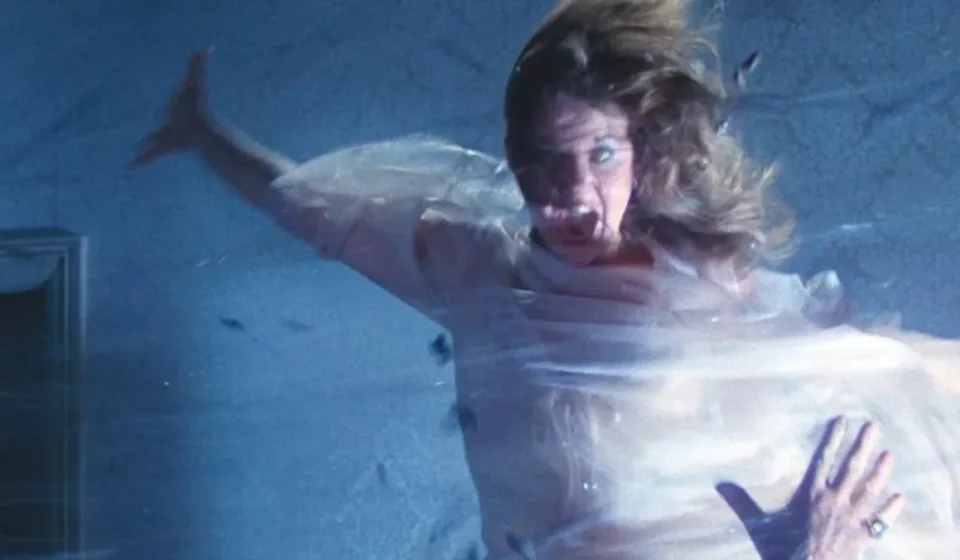
The Anatomy of a Cinematic Disaster: ‘Boorman and the Devil’ and the Legacy of ‘Exorcist II’

Main Facts: The Resurrection of a Legendary Failure
In the annals of Hollywood history, few films carry the infamy of Exorcist II: The Heretic. Released in the summer of 1977, the sequel to William Friedkin’s 1973 masterpiece was not merely a critical disappointment; it was a visceral, public-facing catastrophe. It was a film so spectacularly miscalculated that audiences at early screenings reportedly laughed at the screen, and the director, John Boorman, was forced into a frantic, post-release attempt to recut the ending to stave off total ruin.
Now, decades later, a new documentary titled Boorman and the Devil, written and directed by David Kittredge, provides a comprehensive and "dishy" autopsy of this legendary dud. The documentary, which functions as both a "disaster movie" and a "party," explores how a group of immensely talented individuals—including an Oscar-winning cast and an A-list director—could produce a work that many consider one of the worst films ever made.
At the heart of the documentary is John Boorman himself. Filmed at his country home in Ireland at age 85 (he is now 93), Boorman remains an enigma of cinematic hubris. Despite the half-century of derision aimed at the film, Boorman exudes a "shining belief" in his vision. He maintains that Exorcist II contains some of his best work and suggests that the film’s failure was not due to its own ineptitude, but rather the audience’s inability to accept a "metaphysical meditation" instead of a traditional horror show.
Boorman and the Devil serves as a fascinating case study in the "New Hollywood" era, a time when directors were granted unprecedented carte blanche, leading to some of the industry’s most ambitious and expensive bombs.
Chronology: From Creative Rejection to Public Ridicule
The journey of Exorcist II: The Heretic began with a rejection. Following the massive success of his 1972 thriller Deliverance, John Boorman was the first choice to direct the original The Exorcist. He turned it down, citing a deep-seated repulsion for the source material, which he viewed as a "book about torturing a child."
Three years later, Warner Bros. approached him again for the sequel. This time, Boorman saw an opportunity to subvert the genre. Rather than following the advice of Stanley Kubrick—who famously told Boorman that the only way to succeed with a sequel was to provide "more blood and gore"—Boorman intended to create a philosophical inquiry into the aftermath of possession.
1975–1976: A Visionary’s Divergence
Boorman’s vision was heavily influenced by the French theologian Pierre Teilhard de Chardin and his theories on the "noosphere"—the idea that human consciousness is evolving into a collective, cosmic hive mind. This high-minded approach led to a script (co-written with Rospo Pallenberg) centered on "synchronized hypnosis" and a metaphysical battle against a demon named Pazuzu, now personified by swarms of locusts.
1976: A Production Beset by Calamity
The production was plagued by a series of unfortunate events that combined bad luck with poor judgment:
- Health Crisis: Boorman contracted "valley fever" from inhaling dust on the Ethiopia-themed soundstage, leading to a five-week shutdown.
- Script Turmoil: Constant rewrites occurred throughout filming as the cast and crew struggled to understand the plot.
- Cast Issues: Richard Burton, playing Father Lamont, was reportedly in a state of professional and personal decline, delivering a performance described as "stentorian" and "dour."
Summer 1977: The Pasadena Disaster
The film’s first sneak preview in Pasadena has become a piece of industry lore. As the documentary details, the audience’s initial confusion quickly curdled into derision. By the time the climax arrived—featuring an "orgy of destruction" in a setting that looked like a "discotheque from hell"—the theater was filled with laughter. Warner Bros. executives reportedly fled the theater to avoid the wrath of disgruntled viewers.
Supporting Data: The Financial and Technical Folly
The failure of Exorcist II was not just artistic; it was a massive financial blow to Warner Bros. during an era when the studio system was already reeling from high-risk auteur projects.
| Category | Data/Detail |
|---|---|
| Initial Budget | $10 Million |
| Final Budget | $15 Million (The most expensive WB film at the time) |
| Box Office Trend | 50% decline in attendance by the second weekend |
| Key Cinematic Tech | Early use of the Steadicam for "locust-eye" POV shots |
| Production Scale | Massive re-creation of Ethiopia on a Hollywood soundstage |
The documentary highlights the technical "innovations" that backfired. While Boorman used the newly invented Steadicam to create fluid, buzzing shots intended to represent the demon’s perspective, the result felt more like a low-budget disaster movie than a prestige horror sequel. The film’s aesthetic—characterized by Styrofoam boulders, giant locust costumes worn by James Earl Jones, and "wiry metal headbands" used for hypnosis—created a visual language that felt disconnected from the gritty realism of the original film.
Director Joe Dante, interviewed for the documentary, notes the irony of Boorman’s technical choices: "Many of the techniques that he uses, I’ve never seen repeated again!" This summarizes the film’s legacy—a collection of "firsts" that served as warnings rather than inspirations.
Official Responses: Delusion vs. Critical Revisionism
The official response to Exorcist II has evolved over the decades, moving from universal condemnation to a peculiar form of modern "rehabilitation."
The Director’s Defense
John Boorman’s stance remains largely unchanged. In the documentary, he attributes the film’s failure to "luck" and audience expectation. He argues that the public wanted a repeat of the first film’s visceral shocks and was unprepared for his intellectualized approach. "It was an opportunity to make a film about metaphysics," Boorman explains, seemingly oblivious to the fact that horror audiences rarely buy tickets for metaphysical lectures.
The Critical "Reframing"
Boorman and the Devil features interviews with several prominent modern critics, including Bilge Ebiri and Stephanie Zacharek, who suggest that the film possesses a "loopy grandeur." This perspective echoes the late Pauline Kael’s controversial defense of the film. Kael, who famously loathed the original Exorcist, found a "crazy spellbinding quality" in Boorman’s sequel.
However, the documentary also critiques this trend. It posits that Exorcist II has become a beneficiary of "Movie Disaster Rehabilitation Culture," a movement among hipster cinephiles to rebrand high-budget failures as misunderstood masterpieces. The documentary argues that this reframing often ignores the fundamental lack of "emotional logic and coherence" required for a story to function.
Implications: The High Wire of Auteurism
The story of Boorman and the Devil and Exorcist II offers several profound implications for the film industry and the study of cinematic failure.
The Danger of the "Blank Check"
The film stands as a cautionary tale of the New Hollywood era. When directors like Boorman, Steven Spielberg (1941), and Michael Cimino (Heaven’s Gate) were given total control, the results were often "ambitious bombs." Exorcist II demonstrates that without a grounding force or studio oversight, a director’s "visionary" impulses can easily devolve into "flaky, pretentious indulgence."
Postmodern Criticism and "Malleable Texts"
The documentary raises important questions about how we evaluate art over time. The trend of "reframing" disasters suggests a shift toward viewing movies as "endlessly malleable texts" rather than narrative experiences. If a film is ambitious enough in its failure, it can eventually be celebrated for its "hubris" rather than condemned for its "ineptitude."
The Legacy of Pazuzu
Ultimately, Boorman and the Devil concludes that while ambition is admirable, it is not a substitute for craftsmanship. The documentary honors Boorman’s daring but refuses to ignore the reality of the result. As the narrator notes, treating Exorcist II as an "insane work of artistic daring" is, in the end, a "pile of Pazuzu."
The film remains a singular artifact of a time when Hollywood was willing to bet millions on the "hive mind" theories of French theologians—and a reminder that in the world of cinema, the line between a "visionary masterpiece" and a "spectacular dud" is often drawn by the audience’s laughter.