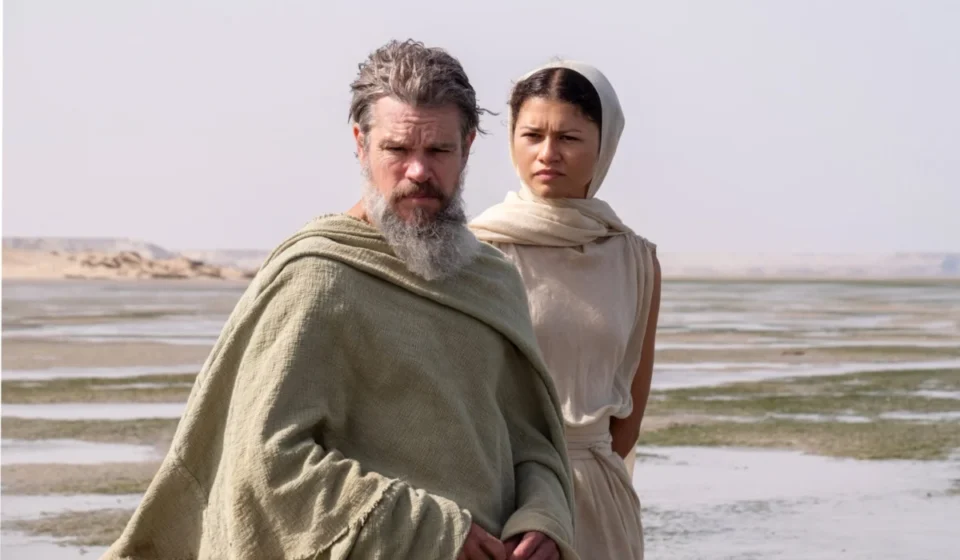
The Winds of Ithaca: Christopher Nolan’s ‘The Odyssey’ Shatters Expectations in Historic Box Office Bow

Sing in me, Muse, of a cinematic odyssey that has finally reached the shores of the domestic box office. A full year after advance tickets first ignited a digital frenzy, Christopher Nolan’s highly anticipated adaptation of Homer’s ancient epic, The Odyssey, has officially arrived in theaters. If the initial returns are any indication, the legendary filmmaker has once again proven that he is the undisputed master of the "event film."
In a spectacular display of audience fervor, The Odyssey has generated a staggering $17.6 million in preview screenings alone. This figure not only marks the highest preview gross of the calendar year, but it also narrowly eclipses the $17.5 million benchmark set by the powerhouse animated hit Toy Story 5. For Nolan, whose previous outing Oppenheimer fundamentally reshaped the landscape of prestige filmmaking, this opening serves as a definitive statement: the appetite for high-concept, ambitious cinema remains insatiable.
The Chronology of a Blockbuster
The road to this weekend’s opening has been as arduous as the journey of Odysseus himself. The project was officially announced in the wake of the 96th Academy Awards, where Oppenheimer swept the major categories, including Best Picture and Best Director. With the industry still reeling from the cultural impact of "Barbenheimer," Nolan’s pivot to the Greek classics was met with a mix of awe and skepticism regarding the feasibility of such an expensive, R-rated venture.
Tickets went on sale a staggering 12 months prior to release, an unconventional strategy that many industry analysts initially viewed as a gamble. However, the move allowed Nolan and Warner Bros. to cultivate a global "cult of anticipation." As the marketing campaign unfolded—highlighting the film’s unique status as the first production shot entirely on custom-built IMAX cameras—the narrative shifted from mere curiosity to mandatory viewing.
By the time the premiere screenings began, the social media discourse had reached a fever pitch. Reports emerged of fans traveling across state lines, coordinating 2 a.m. screenings, and, in a testament to the film’s "must-see" status, even delaying major life events to ensure they were among the first to witness Odysseus’s return to Ithaca.
Supporting Data and Financial Stakes
The financial gravity of The Odyssey cannot be overstated. With a production budget of $250 million and a staggering $125 million marketing spend, the film sits as the most expensive R-rated production in cinematic history. To break even, the film must perform with the longevity that Oppenheimer displayed, which grossed $975 million worldwide despite being released in the middle of a crowded summer season.
Current estimates project an opening weekend haul between $90 million and $100 million. However, data analysts suggest these projections are likely conservative. Should the film hit the higher end of that spectrum, it will become the third film this year to cross the $100 million threshold in its debut, joining Toy Story 5 ($159 million) and The Super Mario Galaxy Movie ($131 million).
Comparatively, the numbers for The Odyssey look remarkably strong. Oppenheimer opened to $10.5 million in previews and an $82 million debut. If The Odyssey maintains its current trajectory, it could mark Nolan’s most successful opening since the 2012 finale of his Batman trilogy, The Dark Knight Rises, which raked in $160 million.
Critical reception has provided the necessary wind in the film’s sails. With a 96% "Certified Fresh" rating on Rotten Tomatoes, the film has been lauded for its visceral, grounded approach to mythology. Critics have specifically pointed to the synergy between Nolan’s direction and the performances of his A-list ensemble, which includes Matt Damon as the weary King of Ithaca, supported by Tom Holland, Anne Hathaway, Zendaya, Lupita Nyong’o, Robert Pattinson, Charlize Theron, and Jon Bernthal.
Official Responses and Industry Sentiment
Studio executives at Warner Bros. have remained cautiously optimistic, though they acknowledge that the "Nolan Factor" is a variable that defies traditional metrics.
"We are witnessing a return to the golden age of the theater-going experience," said a spokesperson for the studio. "Christopher Nolan understands that audiences are not just looking for a movie; they are looking for a transformation. By utilizing IMAX technology to its absolute limit, he has created an environment that simply cannot be replicated at home."
The theater exhibition industry has echoed this sentiment. Chains such as AMC and Regal have reported that IMAX and 70mm screenings are sold out for weeks, with secondary market tickets fetching prices that rival major sporting events. The "Imax-first" strategy, pioneered by Nolan, has effectively forced the hands of other studios, who are now scrambling to secure large-format screen allocations for their upcoming slates.
Implications for the Future of Cinema
The success of The Odyssey carries profound implications for the future of adult-oriented, high-budget filmmaking. For years, the industry has operated under the assumption that only superhero films or established family-friendly franchises could command massive opening weekends. The Odyssey is effectively dismantling this belief.
1. The Death of the "Mid-Budget" Fallacy
For years, studios have been terrified of the $200 million+ R-rated drama. The Odyssey proves that if the vision is clear, the spectacle is authentic, and the brand (in this case, Nolan) is strong, the R-rating is not a ceiling, but a badge of artistic integrity.
2. The Rise of the "Event" Run-Time
At nearly three hours long, The Odyssey defies the current trend toward shorter, more "bingeable" content. It reinforces the idea that audiences are willing to invest time in a narrative if the scale and quality justify the sacrifice.
3. The Power of the Auteur
In an era of AI-generated content and focus-grouped storytelling, Nolan stands as the last true "Brand-Auteur." His name on a poster is currently worth more than the IP of the source material. This shift gives filmmakers significant leverage in future negotiations, potentially ushering in a new era where directors are given the keys to the kingdom to pursue their own "odysseys."
4. Sustaining the Box Office Ecosystem
With the film requiring such a massive financial return to reach profitability, the long-term health of the industry relies on The Odyssey having "legs." Its ability to sustain interest over the next six to eight weeks will determine whether studios continue to fund high-stakes, non-franchise cinema.
Conclusion: A Homeric Achievement
As the dust settles on this opening weekend, one thing is clear: Christopher Nolan has delivered on his promise. By blending the ancient with the cutting-edge, he has transformed a literary staple into a modern cultural landmark. Whether The Odyssey will reach the billion-dollar mark remains to be seen, but the sheer velocity of its arrival suggests that audiences are not merely watching a film—they are participating in a moment of cinematic history.
As Odysseus himself famously said, "There is a time for many words, and there is also a time for sleep." For now, however, the time is for watching. The sirens of the box office are calling, and it seems the world is listening.