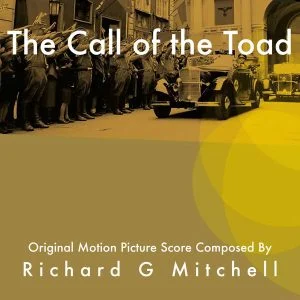
A Musical Resurrection: The Long-Awaited Soundtrack Release of ‘The Call of the Toad’

For over two decades, the evocative musical landscape of Robert Gliński’s 2005 romantic drama The Call of the Toad (Unkenrufe) remained a hidden gem, accessible only through the flickering frames of the film itself. Today, Bucks Records has finally answered the call of film score enthusiasts by releasing the first-ever official soundtrack album for the critically acclaimed German/Polish production. Composed by the prolific Richard G. Mitchell, the score is a poignant exploration of memory, reconciliation, and the lingering shadows of history.
Main Facts: A Sonic Journey Through Memory
The release brings to the digital forefront the lush, orchestral arrangements composed by Richard G. Mitchell, whose extensive filmography includes A Good Woman, Moby Dick, and To Kill a King. The recording features the Warsaw Symphony Orchestra, conducted by the esteemed Tadeusz Karolak, providing a sweeping, melancholic backdrop that mirrors the film’s narrative gravity.
Based on the celebrated 1992 novel by Nobel laureate Günter Grass, The Call of the Toad tells the poignant story of Alexander Reschke, a German art historian, and Aleksandra Piątkowska, a Polish art restorer. Their chance meeting in post-Cold War Gdańsk leads to a profound romance that evolves into a humanitarian mission: the "Polish-German Cemetery Association," an initiative dedicated to returning the remains of displaced persons to their ancestral homelands. Mitchell’s score serves as the emotional glue of this narrative, bridging the cultural divide between the two protagonists through delicate motifs and haunting thematic development.
Chronology: From Novel to Screen to Streaming
To understand the significance of this release, one must look back at the trajectory of the material itself.
The Literary Foundation (1992)
Günter Grass, a titan of 20th-century literature, published Unkenrufe (The Call of the Toad) in 1992. The novel was a masterful reflection on the complexities of post-war identity, focusing on the symbolic return of the dead to their place of origin. The "toad" in the title serves as a recurring omen of impending change and historical reckoning.
The Cinematic Adaptation (2005)
Directed by Robert Gliński, the film adaptation brought a visual richness to the screen that was matched only by the auditory landscape crafted by Mitchell. When the film premiered in 2005, it was lauded for its sensitivity in handling the painful, often buried history of the Polish-German borderlands. However, despite the score’s critical reception, a commercial soundtrack release failed to materialize at the time, leaving fans to rely on the film’s audio mix for years.
The Restoration and Release (2026)
Following months of archival retrieval and digital remastering, Bucks Records has finally secured the rights to issue the soundtrack. The release includes the original 15 tracks recorded with the Warsaw Symphony Orchestra, offering listeners a chance to experience the score in high-fidelity for the first time.
Supporting Data: The Anatomy of the Score
The tracklist provides a roadmap through the film’s emotional geography, moving from the ethereal "Opening Credits" to the somber, reflective "End Credits."
Track Listing Breakdown:
- The Call of the Toad Opening Credits (2:33) – A foundational piece that establishes the film’s melancholy tone.
- Aleksandra’s Theme (1:42) – A lyrical, violin-heavy exploration of the female protagonist’s grace.
- Lovers Under the Spell (2:15) – A composition capturing the fragile nature of their cross-cultural connection.
- Erna’s Mystic Theme (3:26) – A darker, more textured exploration of the film’s thematic undertones.
- Alex’s Youth (0:48) – A brief, nostalgic interlude.
- Hotel Breakfast (1:17) – The mundane punctuated by the intimacy of the couple’s shared life.
- Toad Polonaise (2:56) – A rhythmic, culturally resonant piece that bridges the gap between folklore and reality.
- The First Funeral (1:23) – A somber, brass-heavy track reflecting the weight of their mission.
- Coffins Arriving Off Planes (1:04) – A minimalist piece emphasizing the logistical and emotional burden of the characters.
- Umbrellas in the Park (1:14) – A lighter, albeit dampened, melodic moment.
- The Shipyards (1:38) – Reflecting the industrial and historical backdrop of Gdańsk.
- Alex’s Toad Call (0:33) – A short, experimental motif.
- The Crash and Italian Graves (1:49) – A dramatic pivot in the score.
- End Credits (2:30) – The final resolution of the musical narrative.
- Unused Theme for Harp & Strings (2:31) – A special addition for collectors, providing a glimpse into the cutting-room floor.
Official Responses and Composer Insight
Richard G. Mitchell has spoken briefly about the nature of the project, noting that the challenge was "not to romanticize the tragedy of the past, but to find the melody within the process of healing."
"When we recorded with the Warsaw Symphony," Mitchell stated, "there was a palpable sense of history in the room. Many of the musicians had parents who lived through the era described in the film. That connection wasn’t just technical; it was deeply personal. We weren’t just playing notes; we were playing ghosts."
The production team at Bucks Records emphasized that the goal of this release was "preservation." By making these tracks available on all major streaming platforms—including Amazon—they hope to ensure that the work of both Gliński and Mitchell remains accessible to future generations of film students and music lovers alike.
Implications: The Legacy of Romantic Period Dramas
The release of The Call of the Toad soundtrack serves as a reminder of the enduring power of the mid-2000s European romantic drama. During that period, filmmakers were heavily focused on the "New Europe"—a continent struggling to integrate its past while building a unified future.
Cultural Significance
The story of Alexander and Aleksandra is a microcosm of the German-Polish relationship. By focusing on the act of returning remains, the film—and by extension, the score—asks difficult questions about home, belonging, and the definition of a "native land." Mitchell’s score avoids the pitfalls of nationalist sentimentality, opting instead for a universal language of loss and redemption.
The Future of Archival Film Music
This release is also a win for the preservation of film music. Many scores from the early 2000s are currently locked in licensing limbo or lost in the vaults of defunct production companies. The successful negotiation for The Call of the Toad signals a growing trend where boutique labels are prioritizing the "archaeology" of film music, mining the mid-budget drama category for hidden treasures that hold significant artistic value.
Conclusion: A Timeless Listen
Whether you are a devotee of Richard G. Mitchell’s previous works or a newcomer to the haunting melodies of the Warsaw Symphony Orchestra, The Call of the Toad soundtrack is a vital acquisition. It is not merely a collection of tracks, but a testament to the power of music to translate the unspoken complexities of history.
As the "Toad Polonaise" fades into the final, resonant notes of the "End Credits," listeners are invited to reflect on the nature of reconciliation—a theme as relevant today as it was when Günter Grass first put pen to paper, or when Gliński first called "action" on the set in 2005. The album is now available for streaming and download, offering a long-overdue appreciation of a score that truly deserves its moment in the light.
For those looking to deepen their engagement with the film, the opening credits track is available for immediate listening, providing a hauntingly beautiful entry point into the world of Alexander and Aleksandra. The past, as it turns out, is never truly buried; sometimes, it just waits for the right time to be heard.