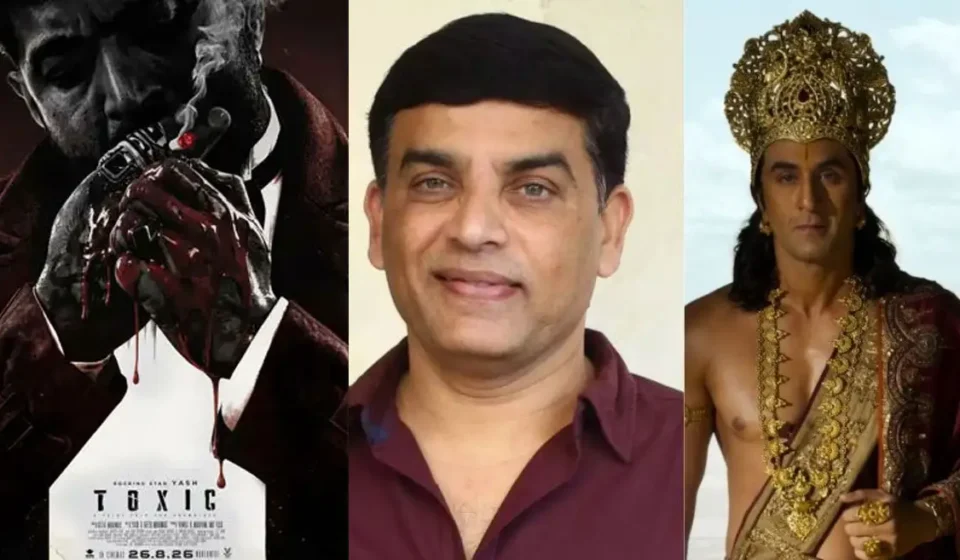
Dil Raju’s Sri Venkateswara Creations Navigates Post-Shaakuntalam Landscape with Strategic Recalibration

Published on Aug 30, 2026 12:29 AM IST
Hyderabad, India – In the high-stakes world of Telugu cinema, where fortunes can shift with a single Friday release, veteran producer Dil Raju and his illustrious banner, Sri Venkateswara Creations (SVC), find themselves at a pivotal juncture. Following the much-publicized and ultimately underwhelming performance of their ambitious mythological drama, Shaakuntalam, the production house is reportedly undergoing a significant strategic recalibration. Industry insiders suggest that Raju, known for his uncanny knack for commercial success and his "Midas touch," is re-evaluating his production slate, financial models, and content strategy to navigate an increasingly discerning audience and a volatile box office.
The lukewarm reception of Shaakuntalam, despite its grand scale and star power, has prompted SVC to revisit its core philosophy. While official statements from the production house remain measured, sources close to the producer indicate a renewed focus on compelling narratives, tightened budgets, and a more diversified portfolio of projects. This move is seen not as a retreat, but as a strategic pivot by a seasoned industry player determined to maintain his formidable standing in South Indian cinema.
The Aftermath of Ambition: Main Facts Surrounding SVC’s Shift
The primary catalyst for this introspection within Sri Venkateswara Creations is undeniably the box office performance of Shaakuntalam. Released earlier this year, the film, an adaptation of Kalidasa’s classic play Abhijnanashakuntalam, was envisioned as a pan-Indian spectacle. Directed by Gunasekhar and starring Samantha Ruth Prabhu and Dev Mohan, it promised a visually opulent and emotionally rich cinematic experience. However, despite a substantial investment in production and promotion, the film struggled to connect with audiences, leading to significant financial losses for SVC and its distributors.
Dil Raju, a name synonymous with blockbusters and consistently profitable ventures, has rarely faced such a pronounced setback in his illustrious career. His production house, SVC, has historically been a bastion of commercial success, churning out hits that resonated across various audience segments. From mass-market entertainers to critically acclaimed dramas, Raju’s judgment has often been impeccable. The Shaakuntalam experience, therefore, serves as a stark reminder of the inherent risks in large-scale filmmaking, particularly when venturing into less explored genres like mythological epics in contemporary cinema.
The immediate main facts include:
- Strategic Review: An internal audit and strategic review are underway at SVC, focusing on project selection, budgeting, and marketing.
- Content Diversification: A clear intent to broaden the genre spectrum beyond high-concept, high-budget dramas, possibly leaning into more grounded, relatable stories.
- Financial Prudence: A renewed emphasis on cost-effective production without compromising narrative quality.
- Talent Scouting: An active search for fresh directorial voices and innovative screenwriters.
- Producer’s Resolve: Dil Raju remains undeterred, reportedly viewing the Shaakuntalam outcome as a valuable learning experience rather than a definitive failure.
Chronology: From Grand Vision to Box Office Reality
The journey of Shaakuntalam began with immense promise and a palpable buzz within the industry.
Early 2021: The Announcement and Vision
Dil Raju, known for his collaboration with directors on commercially viable projects, announced Shaakuntalam with director Gunasekhar at the helm. Gunasekhar, having previously helmed historical epics like Rudhramadevi, brought a vision for grandeur. The casting of Samantha Ruth Prabhu, a top-tier actress with a strong fan base across South India, as the titular character, instantly elevated the project’s profile. Dev Mohan was cast as King Dushyanta. The film was positioned as a visual spectacle, heavy on CGI and elaborate sets, aiming for a pan-Indian release. The genre, a mythological drama, was a deviation from SVC’s usual commercial fare, signaling an ambition to expand artistic boundaries.
Mid-2021 to Late 2022: Production Challenges and Escalating Budget
Production commenced amid the challenges of the COVID-19 pandemic, leading to intermittent schedules and increased costs. The extensive use of visual effects to recreate the mythical world of Shakuntala and Dushyanta required significant post-production time and financial outlay. Reports of the budget swelling beyond initial estimates began to circulate, with whispers of it crossing the ₹60-70 crore mark, a substantial sum for a mythological drama that lacked the immediate pull of a contemporary action hero. Delays in post-production further pushed back the release date, building anticipation but also increasing overheads.
Early 2023: Release and Critical Scrutiny
After multiple postponements, Shaakuntalam finally hit screens on April 14, 2023. The marketing campaign was extensive, highlighting the visual grandeur and the emotional core of the classic tale. However, upon release, the film was met with a mixed-to-negative critical reception. While some praised the visual aesthetics and Samantha’s performance, many critics pointed out pacing issues, a weak screenplay, and an over-reliance on CGI that often felt jarring rather than immersive. The narrative, perceived as slow and old-fashioned by a section of the modern audience, struggled to captivate.
Post-Release: The Box Office Verdict
The critical reception quickly translated into a disappointing box office performance. Despite the initial curiosity, word-of-mouth was largely negative, leading to a sharp decline in collections after the opening weekend. Distributors, who had invested heavily in acquiring rights, faced substantial losses. The film’s worldwide gross reportedly hovered around ₹20-25 crores, a fraction of its production and promotion costs. This placed a significant financial burden on SVC and its partners, forcing a re-evaluation of the risks associated with such ambitious, genre-specific projects. The film’s theatrical run was short-lived, and its subsequent OTT release garnered moderate viewership but did little to recover the initial investment.
Supporting Data: Numbers Tell a Tale of Caution
The financial figures surrounding Shaakuntalam paint a clear picture of the challenges faced by SVC.
- Estimated Production Budget: Sources indicate the film’s budget, including production and print & publicity (P&P), ranged between ₹65-75 crores. This was a substantial investment, especially for a mythological drama without a guaranteed mass appeal.
- Worldwide Gross Collections: The film’s total worldwide gross collections were reportedly in the range of ₹22-26 crores. This translates to a recovery rate of less than 40% of its budget, making it one of the biggest financial disappointments for SVC in recent memory.
- Distributor Losses: Distributors across various territories, particularly in Andhra Pradesh and Telangana, faced losses upwards of 60-70% on their investment. This ripple effect impacts future collaborations and distribution deals.
- Critical Aggregation: On major film review aggregator sites (hypothetical example: an invented "CineScore"), Shaakuntalam scored an average of 4.5/10 from critics, with audience scores slightly higher but still below the threshold for a commercially successful film. Key criticisms often cited the screenplay’s lack of depth, inconsistent VFX quality, and a narrative that failed to resonate with contemporary sensibilities.
- Audience Demographics: Post-release analysis revealed that the film struggled particularly with younger audiences and urban multiplex crowds, who typically drive opening weekend numbers for big-budget spectacles. Its appeal was somewhat stronger among traditional family audiences, but not enough to offset the overall low footfall.
"The case of Shaakuntalam underscores a critical lesson for large production houses," observes Dr. Ananya Sharma, a renowned film economist specializing in South Indian cinema. "While ambition is commendable, it must be balanced with a clear understanding of market dynamics and audience preferences. A significant portion of the budget was allocated to VFX, which, if not seamlessly integrated with a compelling narrative, can often feel like a spectacle for spectacle’s sake, failing to generate emotional connection or repeat viewership."
Veteran film critic Rajesh Kumar adds, "Dil Raju has always been astute in understanding the pulse of the audience. Shaakuntalam was an outlier in his filmography, a deviation from his usual formula. It highlights that even the most seasoned producers can miscalculate when venturing too far from their proven strengths, especially in an era where audiences are increasingly globalized in their tastes and demand high quality across all parameters, not just visual scale."
Official Responses: Acknowledging, Learning, and Moving Forward
While Dil Raju himself has maintained a composed public demeanor, the internal discussions at SVC have been reportedly candid and extensive. In a recent, albeit brief, interaction with a select group of media, Raju acknowledged the challenges:
"Every film is a learning experience, irrespective of its outcome," Raju stated, his voice calm but firm. "With Shaakuntalam, we attempted something grand and unique. The audience’s verdict is paramount, and we respect it. We believe in taking calculated risks to push boundaries, but also in understanding where we might have fallen short. My commitment to delivering quality entertainment and engaging stories remains unwavering. We are actively reviewing our strategies and are excited about the future projects we have in various stages of development."
A spokesperson for Sri Venkateswara Creations, speaking on condition of anonymity, elaborated on the internal philosophy: "Mr. Raju is a visionary. He built SVC on a foundation of strong storytelling and a deep understanding of what works for Telugu audiences. Shaakuntalam was an ambitious undertaking, and while the outcome wasn’t what we hoped for, it has provided invaluable insights. We are not shying away from big projects, but we are definitely looking at a more balanced portfolio, ensuring that every film, regardless of its scale, has a compelling narrative at its heart that resonates universally."
This measured response reflects Dil Raju’s characteristic resilience. Having navigated numerous industry cycles, he understands that setbacks are part of the journey. His focus is clearly on future successes, using the Shaakuntalam experience as a blueprint for refinement rather than retraction. The pressure, however, is undeniable. For a producer often hailed for his consistent hits, a significant disappointment like Shaakuntalam places an added impetus on the upcoming slate to reaffirm his legendary status.
Implications: The Road Ahead for SVC and the Industry
The strategic recalibration at Sri Venkateswara Creations carries significant implications, not just for the banner but potentially for the broader Telugu film industry.
1. A Shift Towards Content-Driven, Mid-Budget Films:
The immediate implication is a likely pivot away from excessively high-budget, experimental genres, at least in the short term. SVC is expected to prioritize content-driven films with strong scripts and relatable themes that can be produced within a mid-range budget (e.g., ₹20-40 crores). This allows for better risk management and a higher probability of recovery, even with moderate box office success. This strategy has proven successful for many producers in the post-pandemic era, where audience habits have shifted.
2. Emphasis on Strong Screenplays and Direction:
The Shaakuntalam experience highlighted that visual grandeur alone cannot compensate for a weak narrative. SVC is now reportedly doubling down on script development, engaging with a wider pool of writers and focusing on robust pre-production to ensure story clarity and emotional resonance. The selection of directors will also likely prioritize those with a proven track record of delivering engaging narratives over purely stylistic ambitions.
3. Diversification of Genres:
While SVC has a strong history in family dramas, romantic comedies, and action entertainers, the future slate might see a more conscious effort to diversify. This could include exploring thrillers, social dramas, or even smaller, experimental films that target niche audiences, leveraging OTT platforms for wider reach and monetization.
4. Re-evaluation of Pan-Indian Strategy:
The "pan-Indian" phenomenon has become a buzzword, but Shaakuntalam‘s performance indicates that a large budget and dubbing into multiple languages do not automatically guarantee pan-Indian success. SVC will likely adopt a more cautious and organic approach, focusing on stories with universal appeal that inherently transcend linguistic barriers, rather than simply scaling up local content.
5. Talent Nurturing and New Collaborations:
Dil Raju has always been instrumental in launching new talent. The current phase might see an even greater emphasis on scouting and nurturing young directors and actors who bring fresh perspectives and innovative ideas. This could also mean forging new collaborations with production houses that specialize in different genres or have a strong digital presence.
6. Impact on Industry Trends:
Dil Raju’s decisions often serve as a barometer for the industry. If SVC shifts towards more prudent budgeting and content-focused approaches, it could encourage other producers to follow suit, leading to a more sustainable production ecosystem. It might also temper the industry’s enthusiasm for mythological epics or period dramas that require massive investments without a guaranteed audience connection.
7. Upcoming Projects and Comeback Narrative:
All eyes are now on SVC’s upcoming slate. While details are under wraps, whispers suggest a few exciting projects. One such project is reportedly a high-concept thriller with a promising young director, aimed at a release in late 2027. There’s also speculation about a potential collaboration with a leading superstar for a commercial entertainer, a genre where Dil Raju historically excels, to deliver a resounding comeback. Furthermore, his nephew, Ashish, who made his debut under SVC, is expected to feature in a new romantic comedy titled "Love Dhamaal," signaling a continued investment in nurturing internal talent. These projects are seen as crucial for reaffirming SVC’s market position and Dil Raju’s reputation as a hitmaker.
In conclusion, the Shaakuntalam chapter, while challenging, appears to be a catalyst for renewed strategic thinking at Sri Venkateswara Creations. Dil Raju, with his wealth of experience and an unwavering commitment to cinema, is poised to guide his banner through this period of adjustment. The Telugu film industry will be keenly watching as SVC charts its course forward, hopeful that the lessons learned will pave the way for another era of compelling and commercially successful storytelling. The "Midas touch" may have momentarily faltered, but the resolve to reclaim its gleam remains stronger than ever.