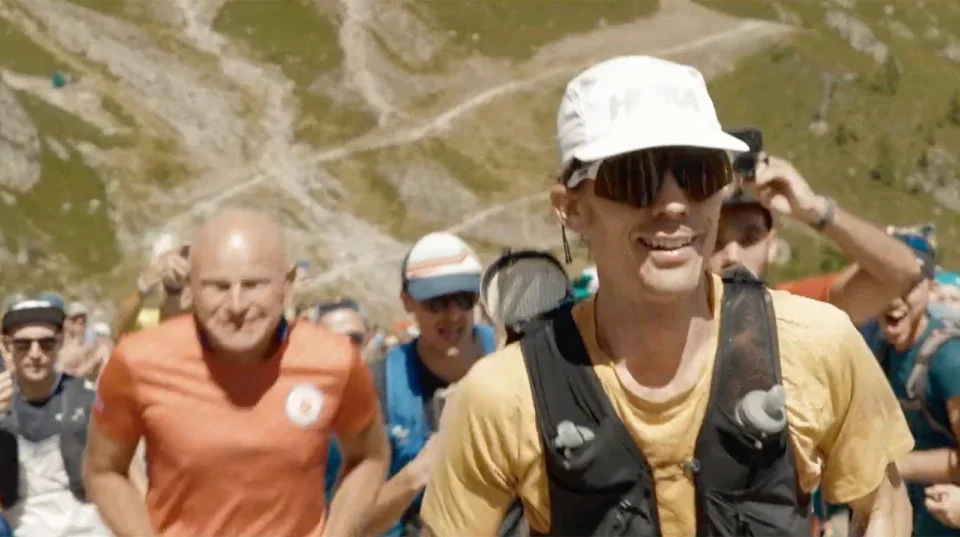
Beyond the Finish Line: Max Lowe’s ‘Learning to Fly’ Explores the Soul of Ultra-Running

By [Your Name/Journalistic Staff]
July 31, 2026
In the quiet, oxygen-deprived air of the world’s most punishing mountain trails, a profound psychological transformation is unfolding. Learning to Fly, the highly anticipated documentary from acclaimed filmmaker Max Lowe (Torn, Camp Courage), is finally set to hit limited theatrical release this August. Distributed by Unreasonable Studios and backed by Chris Hemsworth’s production banner, Wild State, the film serves as both a visceral exploration of the ultra-marathon subculture and an intimate portrait of reconciliation.
At its core, Learning to Fly transcends the traditional "sports documentary" genre. It is not merely a chronicle of speed or endurance; it is a meditation on why human beings choose to subject themselves to the "impossible" and what happens to the spirit when the clock stops ticking.
Main Facts: The Anatomy of an Obsession
Learning to Fly follows Aisha McAdams, a former competitive runner who transitioned into professional photography after a traumatic exit from the sport that once defined her existence. The documentary tracks McAdams as she travels to the world’s most grueling races—including the legendary Western States Endurance Run in California and the formidable Ultra-Trail du Mont-Blanc (UTMB) in the French Alps—to document the titans of the sport.
The film features appearances by ultra-running icons Jim Walmsley and Eszter Csillag. However, the true narrative arc centers on McAdams’ internal journey. As she captures the physical suffering, the hallucinations, and the transcendent highs of the elite athletes she follows, she is forced to confront the "complex past" that drove her away from the starting line years ago.
The film’s central thesis is captured in the haunting trailer line: "Winning a race is far from the point of running one." By documenting the community these athletes build through shared suffering, McAdams begins a process of reclaiming her own identity, moving from a place of painful avoidance to one of renewed belief in her own agency.

Chronology: A Journey from Telluride to Theaters
The development and rollout of Learning to Fly have been a meticulous process, reflecting the patience required of the runners it depicts:
- Pre-Production and Principal Photography (2024–2025): Director Max Lowe and his production team, including producers Katy Chevigny, Evan Hayes, and Ayesha Rokadia, spent months embedded with the ultra-running circuit. The goal was to capture the raw, unfiltered reality of the sport, moving beyond the polished aesthetic of typical athletic documentaries.
- Telluride Film Festival Premiere (September 2025): The film made its world premiere at the 2025 Telluride Film Festival. It was met with critical acclaim, specifically for its "cinematic intimacy" and its ability to capture the psychological toll of long-distance exertion.
- The "Wild State" Partnership (Early 2026): Following the festival circuit, Chris Hemsworth’s Wild State production company identified the project as a key acquisition, providing the necessary infrastructure to bring the film to a wider audience.
- The 2026 Trailer Drop (July 31, 2026): With the release date finalized, Unreasonable Studios unveiled the definitive official trailer, emphasizing the emotional stakes of the film rather than just the athletic spectacle.
- Theatrical Release (August 21, 2026): The film is scheduled to begin its limited theatrical run across the United States, providing a platform for the growing community of trail runners and documentary enthusiasts alike.
Supporting Data: The Rise of Ultra-Endurance Culture
To understand the significance of Learning to Fly, one must look at the meteoric rise of the sport it documents. Ultra-running—defined as any race longer than the traditional 26.2-mile marathon—has shifted from a niche, counter-culture pursuit to a mainstream global phenomenon.
According to industry data, ultra-marathon participation has grown by over 300% in the last decade. The races depicted in the film, such as the UTMB, attract thousands of applicants from across the globe, with the sport’s "elite" tier now commanding significant sponsorships and media attention.
However, the "data" of the sport—the finish times, the elevation gains, and the drop-out rates—rarely capture the "why." Learning to Fly provides the qualitative data that the sport’s quantitative metrics lack. By exploring the psychological profiles of athletes like Walmsley and Csillag, the film provides a rare, academic-adjacent look into the "Flow State"—a mental condition where the brain enters a state of hyper-focus that allows athletes to endure physical pain that would normally trigger a flight response.
Official Responses and Creative Intent
Max Lowe has been vocal about the documentary’s departure from the typical "sports hero" narrative. In recent press statements, the director highlighted the importance of the photographer’s lens in this project:
"Aisha isn’t just a cinematographer; she is a participant observer," Lowe stated. "When we started this project, we didn’t want to show people running fast. We wanted to show people running away from things, and what happens when they finally stop running. The mountains are a mirror. When you’re at mile 80, there is no place left to hide from your own thoughts."

The production team at Unreasonable Studios noted that the partnership with Chris Hemsworth’s Wild State was instrumental in ensuring the film reached a broad audience. "We needed a partner who understood that this wasn’t just a film about sports; it’s a film about the human condition," said producer Katy Chevigny. "Wild State recognized that the story of reclaiming one’s joy—even after a devastating loss—is a universal narrative that resonates far beyond the running community."
Implications: The Legacy of ‘Learning to Fly’
The implications of Learning to Fly are twofold: for the filmmaking industry and for the endurance sports community.
For the Documentary Genre
Max Lowe is cementing his reputation as a master of the "intimate epic." By balancing the massive scale of the Alps and the Sierra Nevada with the quiet, internal struggles of the protagonist, Lowe is setting a new bar for how we document extreme sports. The film suggests that the "documentary" is no longer about the subject; it is about the relationship between the filmmaker and the subject.
For the Running Community
For the millions of runners worldwide, Learning to Fly arrives at a pivotal moment. As the sport of ultra-running becomes increasingly commercialized, the film serves as a grounding force. It reminds viewers that the community is built on "the process of pushing the unknown."
The film challenges the spectator to redefine "success." In a world obsessed with rankings, podiums, and personal bests, Learning to Fly argues that the most important distance traveled is the one that takes you back to yourself.
As we approach the August 21st release, the industry is watching closely. If Learning to Fly performs well in its limited theatrical run, it could signal a shift in audience appetite—moving away from the hyper-competitive, fast-paced sports narratives and toward more introspective, character-driven storytelling.

Final Thoughts: A Call to the Starting Line
Whether you are a seasoned ultra-runner who has spent nights shivering at a mountain aid station or someone who has never laced up a pair of running shoes, Learning to Fly offers a mirror. It asks the uncomfortable questions: What are you running from? And what will you find if you stop?
As the film prepares to hit screens this August, it stands as a testament to the idea that the hardest part of any journey is not the physical climb, but the decision to start again.
For more information on theater locations, exclusive interviews with the cast, or to view the latest trailers, visit the official Learning to Fly website.
References:
- Lowe, M. (Director). (2026). Learning to Fly [Film]. Unreasonable Studios.
- Telluride Film Festival Archives (2025).
- Industry Report: The Evolution of Ultra-Endurance Sports (2026).