From Hollywood Aspirations to Industry Mastery: The Evolving Legacy of The Los Angeles Film School

The entertainment industry remains one of the most competitive and alluring landscapes in the modern global economy. For millions of aspiring creators, the dream of helming a major motion picture, penning an award-winning screenplay, or producing the next cultural phenomenon is a driving force. However, the chasm between raw talent and professional success is often defined by access—access to industry-standard technology, seasoned mentorship, and the collaborative networks that power Hollywood.
Since its inception in 1999, The Los Angeles (L.A.) Film School has occupied a unique space at the intersection of creative education and professional workforce development. By situating itself in the heart of the entertainment capital, the institution has spent over two decades refining a pedagogical model that favors immersion over traditional academic theory.
Main Facts: A Hub for Cinematic Education
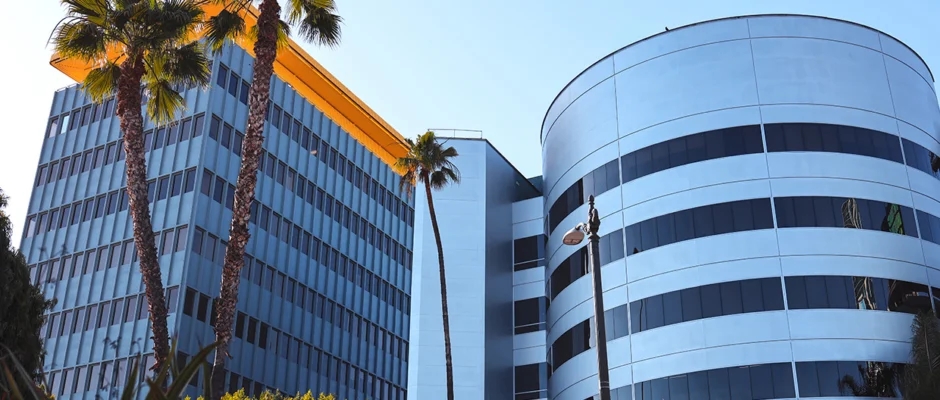
Located in the historic district of Hollywood, California, The L.A. Film School is more than a traditional college; it functions as a bridge between the classroom and the soundstage. The core mission of the institution is centered on fostering creativity, collaboration, and rigorous exploration of the arts.
The school provides a comprehensive suite of Bachelor of Science and Associate of Science programs designed to address the multifaceted nature of modern media. Whether a student is interested in the technical precision of cinematography, the strategic nuances of entertainment business, or the narrative craft of screenwriting, the school utilizes a curriculum that mirrors the fast-paced, high-stakes environment of real-world production sets.
Chronology: Two Decades of Industry Evolution
The history of The L.A. Film School is intrinsically linked to the rapid technological shifts within the film industry.
- 1999: The Foundation: The institution opens its doors, founded on the principle that the best way to learn film is to work within the environment where films are actually produced.
- Early 2000s: The Digital Transition: As the industry began moving from celluloid film to digital capture and non-linear editing, the school invested heavily in hardware, ensuring students were not learning on obsolete equipment.
- 2010s: The Expansion of Online Learning: Recognizing the global demand for film education, the school launched robust online degree programs, utilizing proprietary learning management systems to ensure that remote students received a level of technical training comparable to on-campus learners.
- 2020s: The Era of Immersive Media: The current curriculum has evolved to integrate high-end animation, digital communication, and new media strategies, reflecting the reality that modern filmmakers must be proficient in multi-platform content distribution.
Supporting Data: The Curriculum Portfolio
The L.A. Film School’s academic structure is built to cater to specific career paths, ensuring that students graduate with specialized skills. The current catalog includes:
Film and Television Production
- Bachelor of Science in Film Production: A cornerstone program focused on visual storytelling. Students select concentrations in cinematography, directing, production, or producing, gaining mastery over cameras, lighting, and workflow management.
- Bachelor of Science in Digital Filmmaking (Online): Designed for the remote learner, this program covers the end-to-end process, from screenwriting and directing to editing and post-production.
- Associate of Science in Film (On-Campus): An intensive, hands-on program that serves as a boot camp for every stage of the production cycle.
The Business and Narrative Core
- Bachelor of Science in Entertainment Business: Available both online and on-campus, this program demystifies the "business" side of show business, covering contracts, talent management, marketing, and distribution.
- Bachelor of Science in Writing for Film & TV (Online): Focused on character-driven narratives, this program prepares students to write for television, streaming services, and immersive media platforms.
- Bachelor of Science in Media Communications (Online): A modern essential, this program bridges the gap between traditional media and the digital age, covering social media management, digital content strategy, and new media advertising.
Animation and Technical Arts
- Bachelor of Science in Animation: A deep dive into the professional techniques used in modern CGI, teaching the pipeline from modeling and rigging to final render.
- Bachelor of Science in Animation (Online): Similar to its on-campus counterpart, this program emphasizes computer-generated art, character animation, and digital sculpting, tailored for students who require flexibility.
Official Perspective: The Philosophy of Immersive Learning
The L.A. Film School’s leadership frequently emphasizes that the traditional "lecture hall" model is insufficient for the arts. According to institutional documentation, the school’s pedagogical approach is predicated on "learning by doing."
When a student enters a classroom at The L.A. Film School, they are not merely listening to a professor discuss a lens; they are handling that lens under the guidance of industry veterans who have worked on major studio productions. This professional mentorship is intended to lower the barrier of entry into the industry by replacing "fear of the unknown" with "familiarity with the workflow." By providing students with industry-standard gear, the school ensures that upon graduation, students face no learning curve when they land their first job on a professional set.
![Craft your story, leave a legacy [Sponsored]Filmmaker Magazine](https://cdn.filmmakermagazine.com/uploads/2026/07/LAFS_building-1240x698.jpg-628x348.png)
Implications for the Future of Entertainment
The implications of this training model are significant. As the entertainment landscape shifts toward decentralized content creation, independent streaming, and global digital distribution, the demand for "set-ready" professionals has never been higher.
The traditional apprenticeship model of Hollywood is being replaced by educational institutions that can simulate high-pressure environments. Graduates of The L.A. Film School enter the workforce not just with a degree, but with a portfolio and a network. The ability to collaborate—a skill prioritized in every one of the school’s programs—is perhaps the most vital asset in an industry where no project is a solo endeavor.
The Digital Shift and Global Reach
The school’s aggressive expansion into online education has had a profound effect on the accessibility of high-level film training. By leveraging advanced software and digital collaboration tools, the school has effectively democratized access to the "Hollywood experience." A student in a rural town can now engage with the same animation workflows as a student living three blocks from the Sunset Strip. This shift is crucial for the future of the industry, as it brings diverse voices and perspectives into the creative pool, unconstrained by geography.
Preparing for a Multi-Platform World
The integration of Media Communications and Writing for Film & TV indicates that the school understands the future of media is not just "film." It is cross-platform. The modern creator must understand how a narrative lives on television, how it is promoted on social media, and how it is monetized through digital advertising. The L.A. Film School’s curriculum appears to be evolving in lockstep with these trends, ensuring that its graduates are prepared to pivot as the industry continues to move toward a more integrated, tech-heavy future.
Conclusion: Starting the Journey
For those standing at the precipice of a career in entertainment, the question is often not about whether they have the drive, but whether they have the map. The L.A. Film School provides that map, coupled with the tools required to traverse the terrain.
Whether through the intensive, on-campus experiences that mirror the frenetic energy of a Hollywood backlot or the flexible, high-rigor online programs that cater to the modern digital nomad, the institution continues to serve as a vital incubator for the next generation of storytellers. By maintaining a focus on technical competence, collaborative spirit, and professional industry standards, The L.A. Film School remains a cornerstone for those determined to turn their creative aspirations into a lifelong profession.
For prospective students looking to align their talents with the needs of the modern entertainment industry, further information regarding admissions, curriculum specifics, and industry partnerships can be found by visiting lafilm.edu. The path to a professional career in film is rarely a straight line, but for those equipped with the right foundation, it is a journey that begins in the classroom and ends on the screen.