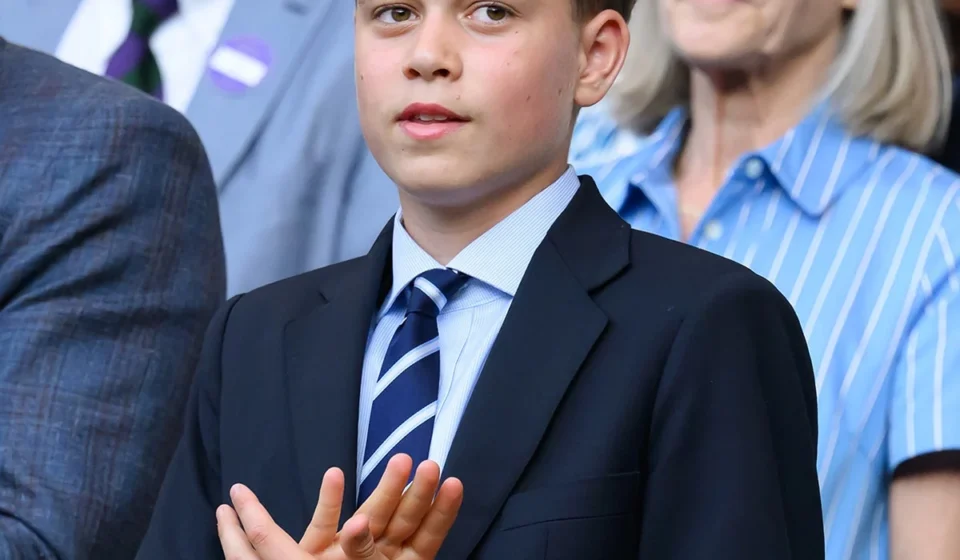

As the British Royal Family navigates an ever-evolving public landscape, the milestone birthdays of its youngest members offer a rare, intimate glimpse into the future of the monarchy. On July 22, Prince George, the eldest son of the Prince and Princess of Wales, officially crossed the threshold into his teenage years. The release of a sophisticated, mature portrait to mark his 13th birthday has reignited public fascination with the heir apparent, signaling that the "little prince" of years past is rapidly transitioning into his role as a central figure of the House of Windsor.
The Portrait of a Future King
The official photograph released to commemorate Prince George’s 13th birthday is more than a standard royal keepsake; it is a stylistic statement. Captured in a moment of quiet poise, George is seen leaning against steps in front of a window, exuding a sense of calm confidence. Dressed in a sharp, understated black suit paired with a crisp white button-down shirt—notably sans tie—the young royal strikes a balance between formality and the ease of a modern teenager.
Observers were quick to note the striking resemblance between the young prince and his father, Prince William. With his strawberry-blonde hair styled in a manner evocative of the Prince of Wales’s own signature look during the mid-1990s, the portrait serves as a visual bridge between the generations. It is a subtle acknowledgment of his lineage and the weight of the destiny that awaits him, yet presented with the gentle, soft-spoken smile of a boy stepping into his own identity.
A Chronology of Growth: From Childhood to Adolescence
Prince George’s journey to his teenage years has been marked by a series of public milestones that track his maturation.
- The Early Years: Born in 2013, George spent his early childhood largely shielded from the public eye, appearing only on select balcony moments at Buckingham Palace or during carefully managed official tours.
- The Height Milestone: Public perception of his growth shifted drastically last month during an outing to the Royal Air Force Coningsby. Alongside his mother, Kate Middleton, the 12-year-old was observed standing at nearly the same height as the Princess, who stands at 5-foot-9. The visual contrast between the "youngster" of recent memory and the towering young man of today was a stark reminder of the passage of time.
- The Educational Transition: As he approaches the autumn, George is slated to begin his secondary education at Eton College. This move is historically significant, as it follows in the footsteps of his father, Prince William, and his uncle, Prince Harry. Eton represents the traditional path for royal heirs, but for George, it will likely be a crucible for his own personal development outside the direct glare of the palace.
- The Digital Threshold: Perhaps the most relatable milestone of his new age is the conversation surrounding technology. Prince William has been vocal about the complexities of parenting in the digital age, particularly regarding social media and internet access for his children.
The Digital Dilemma: Official Responses on Technology
In a candid interview last November, Prince William shared his philosophy regarding the integration of technology into the lives of his children—George, 13; Charlotte, 11; and Louis, 8. The Prince of Wales expressed a pragmatic, protective stance that resonates with many modern parents.
"When George moves on to secondary school, then maybe he will have a phone then that has no internet access," William stated. "It’s the internet access that I have a problem with. I think children can access too much stuff they don’t need to see online."
This measured approach highlights the royal couple’s commitment to providing their children with a sense of normalcy while acknowledging the immense security and mental health risks inherent in the digital age. By favoring an "old-school" brick phone for texting purposes, the royals are attempting to navigate the balance between the necessity of communication and the dangers of unfettered connectivity.
Royal Parallels: Princess Charlotte’s Rising Stature
While the spotlight has been firmly on George this July, his sister, Princess Charlotte, has also captured public attention. Her 11th birthday portrait, released in May, showcased a young woman who possesses the same poised, regal aura as her mother. Captured in a sun-drenched field of flowers, Charlotte’s portrait was widely praised for its warmth and the evident maturity in her expression. As she continues to grow, her role within the royal family—often described as the "anchor" of the trio of siblings—becomes increasingly significant.
Implications for the Monarchy
The maturation of Prince George carries profound implications for the British monarchy. As the institution seeks to remain relevant in the 21st century, the public’s perception of the next generation is vital.
- Continuity and Stability: George’s transition into his teenage years reinforces the narrative of continuity. In a volatile world, the sight of a growing, stable, and well-adjusted heir apparent provides a sense of long-term security for the institution.
- Modernizing the Image: By allowing for portraits that capture genuine emotion and individuality—rather than strictly formal, stiff regalia—the Prince and Princess of Wales are successfully humanizing the monarchy. This is a deliberate shift from the traditions of the 20th century toward a more approachable, modern image.
- Educational Autonomy: The decision to send George to Eton and to limit his internet access suggests that the royals are prioritizing his character development over the pressure of constant digital visibility. This autonomy is essential for a future king who will need a strong sense of self to navigate the challenges of his future reign.
The Broader Royal Landscape
The milestones of the young royals are occurring against a backdrop of significant shifts within the broader royal family. The past year has been one of both personal triumphs and systemic challenges.
Legal and Social Challenges
The family continues to grapple with the fallout of various high-profile legal battles. On July 7, Justice Matthew Nicklin ruled against a group of prominent figures, including Prince Harry, in their lawsuit against Associated Newspapers. The case, which alleged unlawful information gathering and phone hacking, underscored the ongoing friction between the royal family and the British tabloid press.
Furthermore, the legal issues surrounding Prince Andrew, including his February arrest on suspicion of misconduct in public office, remain a dark cloud over the family. The Duke and Duchess of Wales have been forced to navigate these public controversies while maintaining their focus on their own charitable work, including their public support for the victims of the late Jeffrey Epstein.
A Period of Healing
Amidst the turbulence, the Princess of Wales has been a beacon of resilience. Following her cancer diagnosis, her return to public life—marked by a surprise appearance at Charing Cross Hospital with Prince William—was met with widespread relief and support. Her January birthday message, which focused on the "power of nature to heal," reflected a deep, introspective turn that has resonated with the public.
International Connections and Legacies
The royal family’s international reach remains significant. From the passing of Princess Irene of Greece, which touched the wider European royal network, to the ongoing successes of Meghan Markle—who recently earned her first Daytime Emmy nomination for her Netflix series With Love, Meghan—the family remains a subject of global scrutiny.
Even in the case of Marius Borg Høiby, the son of Norway’s Crown Princess Mette-Marit, the public is reminded that royal families across Europe are facing the same complexities of raising children in an era of intense media scrutiny and social responsibility.
Conclusion: The Path Ahead
Prince George’s 13th birthday is more than a celebration of age; it is a marker of the slow, steady transformation of the British monarchy. As he steps into his teenage years, the world watches with both interest and expectation. He is a boy growing up in an era defined by rapid technological change, complex legal battles for his relatives, and a shifting global perception of what it means to be "royal."
If his recent portrait is any indication, he is approaching this new chapter with the grace and composure expected of his position. The House of Windsor, led by the steadfast example of the Prince and Princess of Wales, continues to place its hope in the next generation, preparing them not just for the throne, but for the modern world they will one day lead. For now, however, the Prince is simply a teenager, standing on the precipice of his future, one carefully managed, thoughtful step at a time.