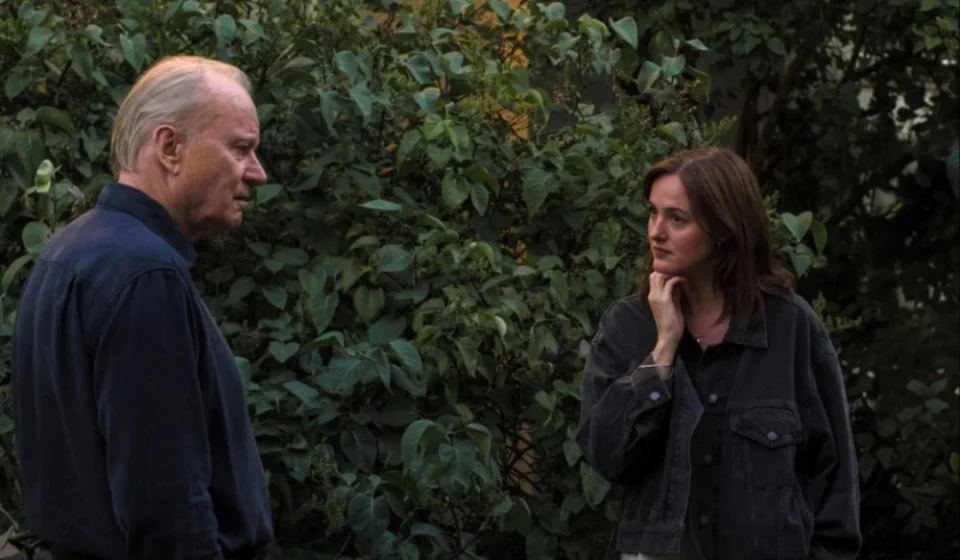
A New Nordic Wave: The 2026 Nordic Council Film Prize Nominations Reveal a Diverse Cinematic Landscape

The prestigious Nordic Council Film Prize, one of the most significant honors in European cinema, has unveiled its highly anticipated shortlist for 2026. This year’s selection, announced at the esteemed Norwegian International Film Festival in Haugesund, features a powerful collection of five narrative feature films and one documentary. Each nominee has been recognized for its artistic excellence and its contribution to the vibrant cultural dialogue of the Nordic region.
The prize, which carries a monetary award of 300,000 Danish kroner, is uniquely structured to recognize the collaborative nature of filmmaking. The funds are divided equally between the winning film’s director, screenwriter, and producer, underscoring the Council’s belief that great cinema is the result of a seamless synergy between these three creative pillars. As the industry looks toward the winner’s announcement on October 20, the conversation has already shifted to what these films say about the current state of Nordic storytelling.
The Nominated Works: A Snapshot of Nordic Depth
The 2026 slate is a blend of established auteurs and bold emerging voices. The list includes:
- "Sentimental Value" – Directed by Oscar-winner Joachim Trier.
- "The Love That Remains" – Directed by Hlynur Pálmason.
- "Beginnings" – Directed by Jeanette Nordahl.
- "Birita" – Directed by Búi Dam.
- "A Light That Never Goes Out" – Directed by Lauri-Matti Parppei.
- "Kevlar Soul" – Directed by Maria Eriksson-Hecht.
This year’s jury—comprising Jacob Ludvigsen, Jan Berg Jørgensen, Marjo Pipinen, Jóna Finnsdóttir, Anne Gjelsvik, and Jonas Holmberg—faced the daunting task of narrowing down a field of high-caliber entries. While some inclusions were expected given their previous festival success, the jury’s choices highlight a thematic preoccupation with family dynamics, identity, and the struggle for personal autonomy within the constraints of society.
Chronology: From Concept to Recognition
The road to the 2026 nominations began long before the announcement in Haugesund. For filmmakers like Joachim Trier and Hlynur Pálmason, the nomination serves as a continuation of a trajectory that began on the international festival circuit. Their respective works, "Sentimental Value" and "The Love That Remains," have been fixtures of global discourse since their premieres, building a reputation for technical precision and emotional resonance.
Conversely, for directors such as Maria Eriksson-Hecht and Lauri-Matti Parppei, the nomination represents a pivotal career milestone. Parppei, whose film "A Light That Never Goes Out" began its life in the underground music scene of Finland, noted that the transition from DIY enthusiast to a nationally recognized filmmaker has been an unexpected journey.
The process of selection by the Nordic Council jury involves a rigorous viewing of films that have already secured theatrical distribution, ensuring that the prize remains grounded in the tangible reality of the audience experience. By prioritizing films that have already reached the public, the Council validates the bridge between high art and the cinematic experience of the average moviegoer.

Deep Dive: Thematic Threads and Artistic Intent
Family Dynamics and the Trauma of Control
Two films, in particular, stand out for their raw examination of the family unit. "Kevlar Soul," directed by Maria Eriksson-Hecht, offers a harrowing look at the lives of two brothers struggling to survive the shadow of an alcoholic, abusive father. It is a film that balances the fragility of childhood with the resilience required to outrun generational trauma.
Similarly, Jeanette Nordahl’s "Beginnings" tackles the breakdown of the domestic sphere through the lens of a middle-aged couple facing divorce, only to be interrupted by a medical crisis—a stroke—that leaves the family reeling. Nordahl’s directorial intent was to eschew melodrama in favor of "simple, everyday situations that might feel familiar." She noted, "We wanted to explore the absolute loss of control… what happens when illness strikes, and how do we relate to each other when everything has changed?"
The Political Rebelliousness of "Birita"
The sole documentary in this year’s selection, "Birita," directed by Búi Dam, is perhaps the most politically charged entry. By focusing on his own mother—an actress—Dam has created a work that is simultaneously an intimate portrait and a statement on national identity.
The Faroe Islands, often seen as a satellite of the Danish realm, have been navigating a complex political landscape for years. Dam views his film as a contribution to the conversation regarding Faroese independence, drawing a line from the artistic rebellion of his mother to the broader cultural movement toward autonomy. "It feels important that we carve out a clear place for our own voice, our language, and our culture within the Nordic community," Dam explained. "In that sense, this film is rebellious—just like my mother."
The Finnish Underground: "A Light That Never Goes Out"
Lauri-Matti Parppei’s work serves as a reminder of the power of the DIY ethic. His film depicts a group of misfits forming a "paramilitary noise art collective," an experimental band that reflects his own background in the Finnish underground music scene. The film’s success at the Jussi Awards and its premiere at Cannes ACID indicate a universal appeal that belies its specific cultural roots. Parppei’s candid admission—that he once felt "inferior" to the long history of Swedish and Danish giants—speaks to the evolving confidence of the Finnish film industry on the global stage.
Supporting Data: The Value of Collaboration
The Nordic Council Film Prize is distinct in its emphasis on the collaborative nature of the medium. By distributing the 300,000 Danish kroner equally between the writer, director, and producer, the prize actively promotes the idea that a film is an ecosystem.
This structure is a direct response to the industry-wide trend of auteur-centric marketing, which often overlooks the essential contributions of those who secure funding and craft the narrative structure. By highlighting the names of the producers and writers alongside the directors, the Council is signaling a shift toward recognizing the logistical and creative architecture required to bring a vision to life.

Official Responses and Industry Impact
The industry response to the 2026 nominations has been overwhelmingly positive, with many critics pointing to the diversity of the genres represented. While the omission of a submission from Greenland remains a notable gap, the inclusion of the Faroe Islands provides a necessary counterpoint to the more established film industries of Norway, Sweden, and Finland.
Maria Eriksson-Hecht expressed the sentiment felt by many of the nominees: "Being selected as Sweden’s entry for the Nordic Council Film Prize means a great deal to everyone involved, both in front of and behind the camera. We hope this recognition will help more people discover and see the film."
For the audience, these nominations serve as a curated guide to the most essential viewing of the year. The films are not merely entertainment; they are windows into the soul of the Nordic region, reflecting its shifting political allegiances, its internal social struggles, and its enduring artistic spirit.
Implications: The Future of Nordic Cinema
As the October 20 announcement date approaches, the implications for the winning production are significant. Beyond the cash prize, the Nordic Council Film Prize is a powerful marketing tool that historically propels films into wider international distribution.
The 2026 nominations suggest a maturing industry that is becoming more comfortable with its own contradictions. There is a willingness to look at the darker side of domestic life, a desire to explore the peripheries of the Nordic community, and a continued commitment to high-concept, experimental storytelling.
The Nordic Council has successfully fostered an environment where the "paramilitary noise art collective" of a Finnish director can sit comfortably on the same stage as the refined, Oscar-winning narrative style of a filmmaker like Joachim Trier. This breadth of vision is perhaps the greatest achievement of the prize. It does not look for a single "Nordic style" but rather celebrates the noise, the struggle, the rebellion, and the quiet intimacy that defines the modern Nordic experience.
In the final assessment, these six films stand as a testament to the fact that, despite the vast geographical and cultural differences within the region, the desire to tell stories—to hold up a mirror to the human condition—remains the unifying force of the North. Whether through the lens of a documentary camera or a scripted drama, these filmmakers are defining the next chapter of Nordic cinema, ensuring that their voices will continue to resonate far beyond their own borders.