The Art of the Hustle: How ‘The Only Living Pickpocket in New York’ Captured the City’s Soul

In the landscape of modern independent cinema, it is a well-worn cliché to label a film’s setting as a “character.” However, in writer-director Noah Segan’s latest feature, The Only Living Pickpocket in New York, the streets of the Five Boroughs are not merely a backdrop; they are a pulse. The film, anchored by a career-best performance from John Turturro, serves as a poignant love letter to the grit, complexity, and kinetic energy of the city.
By grounding the narrative in the authentic, unpredictable chaos of New York, Segan has crafted a work that invites comparison to the atmospheric masterpieces of Martin Scorsese, Spike Lee, and Nicole Holofcener. Yet, the film’s most compelling story may not be the one unfolding on screen, but rather the guerrilla-style production odyssey that brought it to life.
The Battle for the Boroughs: A Production Mandate
Before the first frame was captured, the project faced a fundamental existential crisis. As producer Leopold Hughes reveals, the film’s title was almost a misnomer. During the early stages of development, the production team engaged in heated debates regarding tax rebates and the financial feasibility of shooting in New York City.
“It’s called The Only Living Pickpocket in New York, and we had this huge debate about rebates and maybe going to Serbia or Bosnia or whatever,” Hughes told IndieWire. “I was really proud that we stuck to our guns on that and made them shoot in New York.”
For Hughes, a British producer accustomed to different regulatory environments, the decision to remain in the city was as much a creative imperative as it was a logistical challenge. He quickly discovered that filming in New York—with its unique blend of indifference and intensity—is an experience unlike any other in the world.
Chronology of a Guerilla Shoot
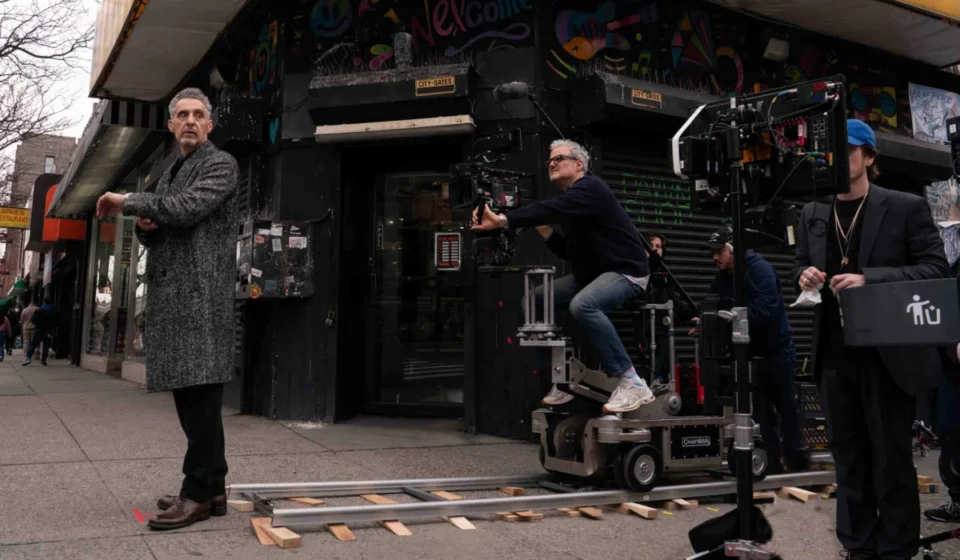
The production was classified as a “Tier One” project under IATSE guidelines, a designation reserved for low-budget, independent films. This meant that the luxury of a closed set or a massive, shielded “video village” was never an option.

The “No-Permission” Strategy
The team adopted a philosophy of “forgiveness over permission.” As the shoot progressed, the production became increasingly agile. The filmmakers realized that the city’s bureaucracy was not necessarily an adversary, but a hurdle that could be bypassed with the right approach—and the right leading man.
The 25-day primary schedule was rigorous, but the creative team felt that the film’s visual scale was lacking. They opted to add a 26th day—a final, high-stakes sprint to capture the iconic, unvarnished imagery of the city’s infrastructure.
“We knew there were certain shots we wanted to get that were going to add a lot of scale to the film,” producer Katie McNeill explained. “But if we tried to get them early in our shoot, we would run into the possibility that if we got in trouble, all of our permits would be pulled.”
This final day became a masterclass in independent filmmaking. By avoiding the rigid structure of permits, the crew was able to film in locations that are traditionally off-limits to professional productions, most notably the New York City subway system.
Supporting Data: The Human Element
The success of such an unconventional shoot relied heavily on the “no-jerk” policy, which Director Noah Segan expanded into a “we are having a great time” policy.
- The Cost of Scrappiness: Rather than allocating budget to expansive, remote trailers—which often go unused due to the distance from set—the team reinvested those funds into the on-screen product.
- The Power of Presence: The production relied on a minimal crew of approximately 10 people for their most ambitious, “stolen” shots. This small footprint allowed them to navigate public spaces without drawing the ire of local authorities.
- The "John Turturro" Effect: Perhaps the most significant asset was the presence of John Turturro. His stature as a quintessential New York actor provided a level of social capital that often defused potential conflicts with police and public officials.
Official Responses and Behind-the-Scenes Anecdotes
The anecdotes from the set read like scenes from a classic screwball comedy. Hughes recalls the shock of his first New York production experience: “I’ve never had a video village just in a live road where there are trucks, and then a guy comes up saying, ‘I’m gonna shoot everybody.’ And I’m like, ‘Okay, should we do something about this?’ And everyone’s like, ‘Don’t worry about that guy.’”

The most telling incident involved a moment of genuine tension on the subway. The crew was filming without a permit when two police officers entered the train car. The production team, anticipating that their shoot was about to be shut down, braced for the worst.
“They walk toward us, and the train stops, and they get out and they leave,” Segan recalled. “As the doors are closing, one turns to the other and says, ‘Yeah, I told you it was him.’”
Similarly, when the production needed to film outside a police station, they were initially denied access. John Turturro simply walked into the station, charmed the officers, and secured their cooperation. “John just walked in and said, ‘Hey guys, we’re gonna shoot something. We’re gonna come in and out,’” Hughes said. “The cops were like, ‘Oh yeah, get in here. Sign the book.’”
Implications for Independent Filmmaking
The success of The Only Living Pickpocket in New York challenges the prevailing wisdom of the modern industry, which often prioritizes large-scale, tax-incentivized location shoots over narrative authenticity. By prioritizing the spirit of the city, the production team proved that creativity can often overcome budgetary constraints.
The Philosophy of "What Does Everyone Need?"
Segan’s leadership style during production was granular and highly personal. He emphasized that the role of a director in such a high-pressure environment is not just to dictate, but to support. “You just want to create an environment where people want to show up for work the next day,” Segan noted. “You get sort of granular and ask, what does this person need? And you just start running around as a unit to try to accomplish that.”
This collaborative, almost communal atmosphere allowed the film to bypass the usual friction points of professional sets. It transformed the production into an “exhilarating” experience for the actors, particularly for Turturro, who embraced the opportunity to work in a way that felt like a return to the roots of independent, uninhibited filmmaking.

A Legacy of Grit
As The Only Living Pickpocket in New York continues its theatrical run via Sony Pictures Classics, it serves as a testament to the power of artistic conviction. It stands as a reminder that the most compelling cinema is often born from the friction between the filmmaker’s vision and the reality of the world around them.
The film has succeeded in capturing the fleeting, intangible essence of a city that rarely sits still for cameras. By embracing the chaos, the crew didn’t just film a story about a pickpocket in New York—they captured the very art of the hustle that makes the city tick. Whether it was navigating the subway tunnels or charming police officers into providing a backdrop, the team proved that when you have a great cast, a clear vision, and a refusal to be deterred by the lack of a fancy trailer, you can create something that feels truly alive.
In an era of CGI-heavy blockbusters and sterile soundstages, Segan’s work is a breath of fresh, albeit occasionally smoggy, New York air. It is a film that demands to be seen—if only to witness the triumph of a crew that chose the hard way, the scrappy way, and ultimately, the best way to tell their story.