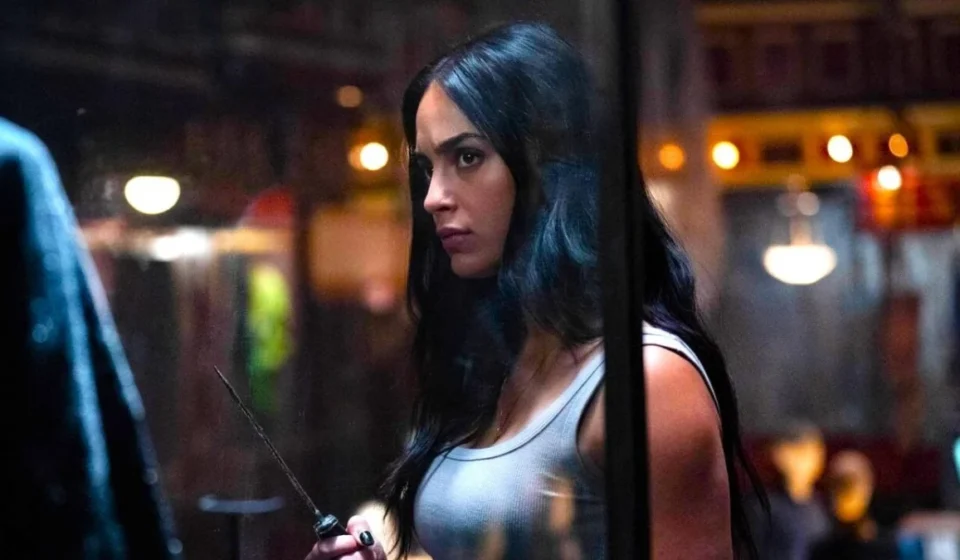
The Sam Carpenter Dilemma: Melissa Barrera, Spyglass, and the Future of the ‘Scream’ Franchise

In the ever-evolving landscape of Hollywood horror, few fractures have been as public or as polarizing as the separation between actress Melissa Barrera and the Scream franchise. Once the central anchor of the series’ modern revival, Barrera’s abrupt departure from the role of Sam Carpenter sparked a firestorm of industry debate, fan-led boycotts, and a re-examination of the intersection between political expression and studio employment.
While the Scream franchise has moved forward under the stewardship of Spyglass Media Group, bringing back legacy star Neve Campbell to fill the void, the discourse surrounding Barrera’s exit remains as charged as ever. Recently, in a candid interview with JustWatch, Barrera addressed the possibility of a return to the series that made her a household name—setting a definitive, high-stakes condition that highlights the deep-seated rift between the star and the studio.
The Chronology of a Controversy
To understand the current impasse, one must look back at the trajectory of the Scream revival. When Scream (2022) hit theaters, it was hailed as a triumphant return to form for the meta-slasher series. Barrera’s character, Sam Carpenter, provided a new, gritty focal point, particularly with the shocking revelation that she was the daughter of the original Ghostface, Billy Loomis. The narrative potential was immense: a "final girl" constantly battling the hereditary urge to kill, a psychological tension that added a fresh layer to the franchise’s DNA.
Scream VI only deepened this intrigue, ending on a cliffhanger that left fans speculating whether Sam would eventually succumb to her dark heritage. However, the momentum was abruptly halted in late 2023. Following a series of social media posts in which Barrera expressed support for Palestinian civilians during the escalating Israel-Hamas conflict, Spyglass Media Group moved to terminate her contract.
The studio’s decision—which they characterized as a response to what they deemed anti-Semitic tropes—was met with immediate and fierce backlash from fans, industry peers, and human rights advocates. The move was widely viewed by critics of the studio as an overreach, silencing a prominent voice in the industry for her political views. The fallout saw not only the exit of Barrera but also the departure of director Christopher Landon, who eventually stepped away from the project, citing the "dream job" turning into a "nightmare."
Official Stances: The Divide Widens
The tension between the artist and the corporation has not dissipated with the passage of time. Barrera’s recent comments offer a scathing indictment of the environment that led to her departure. Speaking to JustWatch, the actress was unequivocal regarding the terms of a potential return to the Scream universe.

"Not with the company that currently holds the rights," Barrera stated. "I love the franchise. I had an amazing time making those movies. But a lot of the hate and the difficulty that I’ve faced in the last years is because the leadership of that company made it a point to label me something that I’m not, and they never apologized, even when I was proven right."
Barrera’s statement underscores a fundamental lack of trust. She articulated that even a hypothetical apology from Spyglass would not be sufficient to bridge the gap. "I don’t think they have that ability," she added. Her vision for a return is tied strictly to a change in ownership or management—specifically, someone who would "honor Wes Craven’s legacy more."
For its part, Spyglass has largely maintained a policy of silence regarding the specifics of the firing, choosing to pivot toward the production of Scream 7 and subsequent sequels. By bringing back Neve Campbell and leaning into the established lore of the original films, the studio has attempted to distance itself from the controversy. However, the lack of a public resolution or acknowledgement of the backlash suggests that the studio remains firmly committed to its original decision, regardless of the public relations cost.
Supporting Data: Box Office Resilience vs. Fan Sentiment
The "Scream" saga serves as a fascinating case study in the modern disconnect between social media activism and box office performance. Following the announcement of Barrera’s firing, a massive social media campaign #BoycottScream emerged, with thousands of fans pledging to skip the seventh installment.
Despite the intense scrutiny and the vocal protests that followed the film to the Paramount Studios lot during its premiere, the franchise proved to be remarkably resilient. Scream 7 ultimately performed well at the global box office, validating, in the eyes of the studio, their decision to move forward without their former lead. The success was significant enough to greenlight Scream 8, with the Zuckerman sisters tapped to write the script.
However, statistics and revenue figures only tell half the story. The qualitative reception of Scream 7—which included mixed reviews and criticism regarding the film’s "lack of spark"—suggests that while the franchise remains profitable, it has lost a degree of its narrative urgency. The loss of the Sam Carpenter storyline, which was arguably the most compelling development in the series since the 90s, has left a void that even the return of franchise staples cannot fully fill.

The Implications for Hollywood Talent
The Melissa Barrera case is symptomatic of a broader, more uncomfortable reality in the entertainment industry: the tightening leash on talent and the erosion of the "political-free" workplace. As studios consolidate and risk-averse corporate structures dominate, actors find themselves in increasingly precarious positions.
Barrera’s situation highlights several key implications for the future of film production:
- The Rise of the "Political Liability" Clause: Studios are increasingly viewing the personal brand and social media activity of their leads as a corporate asset. This creates a chilling effect on political discourse among stars, who must now weigh their humanitarian convictions against multi-million dollar contracts.
- The Fragility of Intellectual Property: The Scream franchise has proven that while intellectual property is a powerful draw, the audience is deeply invested in the humanity of the characters. When a studio breaks that connection through a perceived injustice, the brand equity is irrevocably altered, even if the financial bottom line remains stable.
- The Demand for Ethical Stewardship: Barrera’s condition for return—that the rights be moved to "hands that honor Wes Craven’s legacy"—speaks to a growing demand for ethical stewardship in film. Fans and actors alike are increasingly looking at not just the quality of the product, but the values of the entity producing it.
Conclusion: A Lingering Question
As Scream 8 moves into development, the ghost of Sam Carpenter looms over the production. While Spyglass has secured the future of the franchise for the time being, they have done so at the cost of a significant creative bridge.
Melissa Barrera’s refusal to return under the current leadership is not just a personal boundary; it is a statement on the power dynamics of modern Hollywood. For the audience, the question remains: Can a franchise survive the loss of its heart? The box office numbers say yes, but the spirit of the series—a series that always prided itself on being smarter, sharper, and more self-aware than its contemporaries—might suggest otherwise.
For now, the story of Sam Carpenter remains an unfinished chapter. Whether a change in corporate ownership will ever allow for a reunion between the actress and the role that redefined her career is a matter of pure speculation. Until then, the Scream franchise continues to slash its way forward, leaving behind a trail of unanswered questions and a fandom that remains, in large part, still mourning what could have been.