A Cinematic Rebellion: Sun Xun’s ‘Magic Atlas’ and the Resurgence of Tactile Animation

In an era where the animation industry is increasingly dominated by the sterile precision of artificial intelligence and hyper-realistic CGI, a profound counter-movement is beginning to take root. Audiences and critics alike are expressing a growing "hunger for the hand-crafted"—a desire for animation that bears the physical imprint of its creator. At the forefront of this movement is Chinese artist and director Sun Xun, whose latest feature, Magic Atlas, stands as a monumental achievement in tactile storytelling. Produced over the course of a decade, the film serves as both a political allegory and a technical masterclass, challenging the "anaesthetizing" trends of modern digital media.
Main Facts: The Genesis of a Surrealist Epic
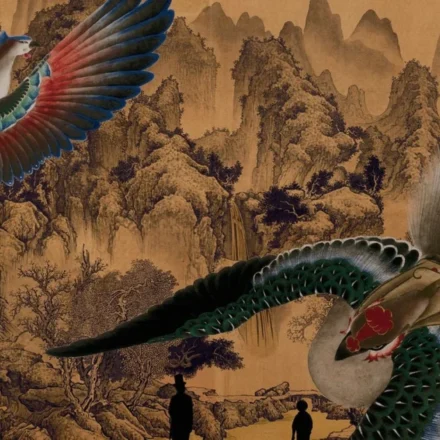
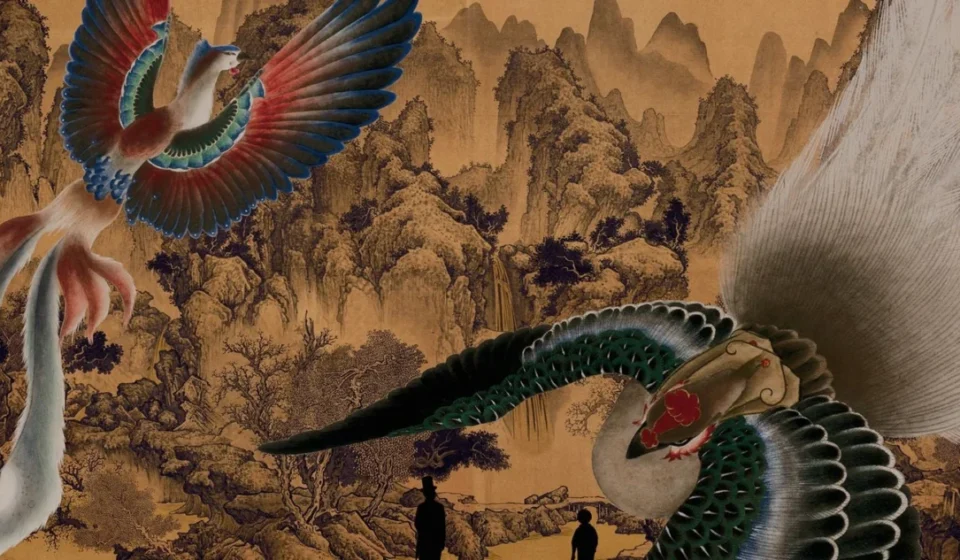
Magic Atlas is not merely a film; it is a sprawling, multimedia odyssey produced by Singapore’s Pi Animation Studio. Directed by Sun Xun, a world-renowned contemporary artist known for his ink-and-wash paintings and woodcut animations, the film represents ten years of labor-intensive production. Unlike traditional animated features that rely on a unified aesthetic, Magic Atlas utilizes a "refreshingly unrestrained" range of materials, including oil paint, pen and ink on paper, canvas, woodcuts, and even newsprint.
The narrative centers on the coal empire of Luocha, a dystopian landscape ruled by industrialist despots. The story is filtered through the eyes of Xiao Zhi, an orphan who discovers the dark secrets of the regime via an imprisoned magician. This magician was incarcerated for a singular, revolutionary act: returning the memories that the government had systematically stolen from the populace. While the plot provides a framework, the film is frequently described as a "surrealist fever dream," where the atmosphere and visual texture often supersede traditional narrative progression.
Key Production Details:
- Director: Sun Xun
- Production Studio: Pi Animation Studio (Singapore)
- Production Timeline: 2014–2024
- Primary Techniques: Woodcut, ink wash, charcoal, oil painting, and mixed media.
- Thematic Core: Memory, authoritarianism, Buddhist philosophy, and the intersection of nature and industry.
Chronology: A Decade-Long Evolution
The journey of Magic Atlas began in the mid-2010s, stemming from Sun Xun’s desire to bridge the gap between fine art and narrative cinema. Over the ten years of its creation, the film evolved alongside the global political and social climate.
The Formative Years (2014–2018)
In the early stages of production, Sun Xun and his team at Pi Animation Studio focused on establishing the world of Luocha. The visual language was rooted in Sun’s signature style—heavy, inky black shading and intricate line work. During this period, thousands of individual woodcuts and ink drawings were created. The director’s intent was to move away from the "smoothness" of digital animation, opting instead for a style that highlighted the friction of the materials.
The Pandemic Shift (2020–2022)
The Covid-19 pandemic served as a pivotal moment for the project. Isolation forced a change in the production workflow, leading to an international collaboration of artists working remotely. According to a message from the director featured toward the end of the film, one of the movie’s most standout sequences—a kaleidoscopic explosion of color and style—was a direct response to the pandemic’s isolation. This period saw the film transition from its initial monochrome palette into more vibrant, "Western" painting styles, symbolizing a breaking free from the "oppressive obsidian lines" of the film’s authoritarian setting.
Completion and Release (2023–2024)
As the film neared completion, it integrated complex metaphysical themes, moving beyond the story of Xiao Zhi to explore broader philosophical questions. The final cut, while brief in running time, reflects a decade of stylistic shifts, ranging from the influence of the Avatamsaka Sutra to homages to Northern Renaissance master Pieter Bruegel.
Supporting Data: The Visual and Technical Architecture
The technical merits of Magic Atlas are central to its appeal. The film is a collage of artistic eras and techniques, creating a "curious mix" that defies easy categorization.
A Multidisciplinary Palette
The film’s aesthetic is constantly in flux. It begins with a monochrome palette characterized by broad, impressionistic brushstrokes and white outlines against black backgrounds. However, this is frequently interrupted by:
- Surreal Hybrid Imagery: A horse with a camera for a head and a mass surveillance system composed of giant, mechanical mosquitoes.
- Historical Homages: Sequences that mimic the density and detail of 16th-century European paintings (specifically Bruegel), juxtaposed against traditional Chinese ink aesthetics.
- Material Diversity: The use of aged newspapers as a backdrop for animation serves as a meta-commentary on the recording of history and the fleeting nature of truth.
The Dissonant Score
The auditory experience of Magic Atlas is as fragmented as its visuals. The score utilizes abstract electronic tones to create a sense of unease and "dissonance." This auditory choice reinforces the film’s surrealist nature, ensuring that the viewer remains in a state of heightened awareness, much like the protagonist Xiao Zhi as he navigates the deceptive world of Luocha.
Narrative Fragmentation
Data from early screenings suggest that while the film is visually arresting, its storytelling is "opaque and fragmented." The character of Xiao Zhi often disappears for long stretches, replaced by a narrator (voiced by Sun Xun himself) who claims to be "everywhere, with no beginning and no end." This non-linear approach is rooted in the Avatamsaka Sutra, a Buddhist scripture that posits the past, present, and future all exist simultaneously within the present moment.
Official Responses: The Director’s Philosophy
Sun Xun has been vocal about his rejection of traditional cinematic clarity. In various statements regarding the film’s reception, he has emphasized that he is "not particularly concerned if everyone understands everything in the film." This perspective is a hallmark of his artistic philosophy: art should be experienced as a sensory and spiritual journey rather than a puzzle to be solved.
On AI and Tactility
While not a direct response to specific AI tools, Sun’s work is widely interpreted by critics as a rebuttal to the "anaesthetizing" effect of AI-generated imagery. By foregrounding "materials imprinted with genuine human feeling," Sun argues for the necessity of the artist’s hand. The "imperfections" of woodcut and ink—the slight jitters in the frame, the texture of the paper—are presented as virtues that AI cannot authentically replicate.
On Political Allegory
The director has also addressed the Orwellian themes of the film. The generals of Luocha, who charge a child with the "possession of false memories," reflect a blatant suppression of truth that Sun suggests is an "easy theme to relate to in the present moment." However, he balances this bleakness with the idea of art as a tool for liberation, symbolized by the magician who returns memories to the people.
Implications: The Future of Independent Animation
The release of Magic Atlas carries significant implications for the future of the animation medium and its role in political discourse.
A Blueprint for "Slow Cinema" in Animation
The decade-long production cycle of Magic Atlas challenges the industry’s obsession with rapid turnover. It suggests that there is a viable, albeit niche, market for "slow animation"—works that prioritize artistic depth and technical experimentation over commercial speed. Sun Xun’s success in securing production through Pi Animation Studio in Singapore indicates a growing infrastructure for high-concept, artist-driven animation in Southeast Asia.
The Critique of Globalized Culture
The film contains subtle critiques of cultural pacification. One notable sequence features a man in a mouse costume with a silhouette strikingly similar to Mickey Mouse. Critics suggest this is a commentary on the "co-option of art and entertainment" by global corporations to pacify the masses. By placing this symbol within the oppressive regime of Luocha, Sun Xun questions the role of Western pop culture in the suppression of authentic, regional expression.
Restoring the "Human Feeling"
Ultimately, the most significant implication of Magic Atlas is its reaffirmation of the human element in art. As the discourse around animation becomes increasingly absorbed by technological debates, Sun Xun provides a reminder that the most compelling stories are often those that are "malleable" and "surreal."
The film’s ability to approach "the divine" through technical mastery and emotional fragmentation sets a new benchmark for what independent animation can achieve. It serves as a reminder that even in an age of digital automation, the most powerful tool an artist possesses is the ability to leave a physical, tactile mark on the world—a "Magic Atlas" that maps the complexities of the human soul.