Behind the Lens of Conflict: MK2 Films Boards Explosive Documentary "NAZA" Ahead of Venice Premiere

In a major development for international documentary cinema, the prestigious French sales company MK2 Films has acquired the worldwide rights to NAZA, an unflinching and high-stakes documentary directed by Yuval Abraham and Rachel Szor. The film, which was added to the official competition lineup of the 83rd Venice Film Festival this past Monday, promises to be one of the most significant and polarizing entries at the prestigious event, which runs from September 2 to 12.
As the sole documentary feature selected for the main competition, NAZA arrives with significant industry pedigree. Produced by The Guardian and James Wilson of JW Films—the Oscar-winning team behind the harrowing Holocaust drama The Zone of Interest—the film also counts Jonathan Glazer as an executive producer. Its premiere, scheduled for September 10, is expected to draw global attention, given the gravity of its subject matter and the reputation of its creators.
The Anatomy of a Military Euphemism
The title of the film, NAZA, is far more than a mere identifier; it is a chilling window into the bureaucracy of modern warfare. According to official statements released by MK2 Films, the term is a military acronym utilized by Israeli intelligence. It functions as a grim euphemism used to quantify the number of civilians that military command anticipates will be killed during a specific airstrike.
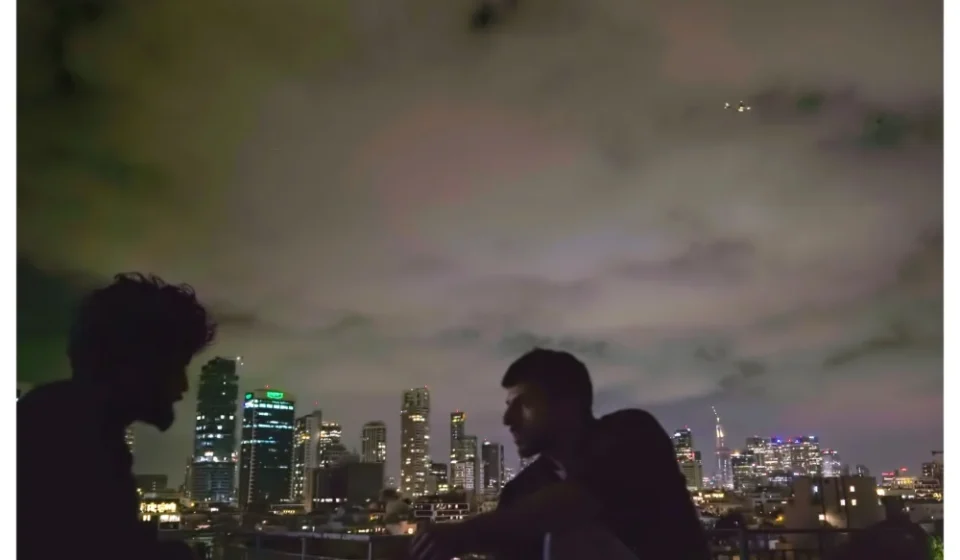
The documentary itself is a product of intense, clandestine investigation. Shot largely under the cover of darkness on the rooftops of Tel Aviv, the film aims to expose the mechanics of destruction. Its official synopsis describes a narrative that delineates "the systems behind Israel’s calculated mass killing of Palestinian civilians in Gaza." By focusing on the administrative and algorithmic nature of these military decisions, the directors move beyond the immediate imagery of conflict to interrogate the institutional logic that sustains it.
Chronology: From Investigative Journalism to Cinematic Powerhouse
The genesis of NAZA is deeply rooted in the collaborative work of independent investigative journalists. The film serves as a visual and narrative expansion of reporting first unveiled between 2023 and 2025 by the Israeli-Palestinian publication +972 Magazine, the Hebrew-language outlet Local Call, and The Guardian.
These journalistic inquiries, which brought to light the existence of automated targeting systems and the high civilian casualty thresholds accepted by military planners, served as the bedrock for Abraham and Szor’s cinematic vision.
The directors are no strangers to documenting the complexities of the Israeli-Palestinian conflict. Abraham and Szor previously co-directed the acclaimed documentary No Other Land alongside Palestinian collaborators Hamdan Ballal and Basel Adra. That project, which premiered at the Berlin Film Festival and secured the 2025 Academy Award for Best Documentary Feature, provided a visceral look at the systemic demolition of Palestinian villages in the Masafer Yatta region of the West Bank. While No Other Land focused on the slow, grinding displacement of communities via military bulldozers, NAZA shifts the lens to the high-tech, remote-controlled lethality of aerial warfare in Gaza.
Supporting Data and Collaborative Production
The production of NAZA is a testament to the intersection of traditional investigative reporting and high-end independent cinema. By aligning with The Guardian—a publication known for its long-form investigative rigor—and James Wilson, who demonstrated with The Zone of Interest that he possesses the capability to render the "banality of evil" into a profound cinematic experience, the filmmakers have ensured that the project maintains a high degree of artistic and ethical scrutiny.
The production structure includes:
- Production Entities: The Guardian and JW Films.
- Associated Partners: Placeholder Films and Unseen Hand.
- Executive Production: Jonathan Glazer.
This team represents a convergence of media and film, designed to give the revelations regarding NAZA a reach that transcends the standard documentary audience. By choosing a festival as prominent as Venice for its world premiere, the team signals an intention to place the film squarely in the center of the global political discourse.
Official Responses and Industry Reception
The acquisition of the film by MK2 Films, a powerhouse in the European cinematic landscape, underlines the perceived importance of the documentary. Nathanaël Karmitz, CEO of MK2, and Fionnuala Jamison, managing director, released a joint statement that emphasized the firm’s commitment to "cinema as a tool for truth."
"Beyond the power of its testimonies and the rigor of its journalistic approach, the film by Yuval Abraham and Rachel Szor struck us for the cinematic excellence of its form," the executives stated. "The intelligence of its direction resonates deeply with MK2’s history as a film company whose mission has always included giving audiences, through cinema, the keys and tools to confront the truth of the world we live in, however difficult that truth may be."
This endorsement from one of the industry’s most respected sales houses suggests that NAZA is not merely an "issue-based" documentary, but a work of high formal sophistication. The filmmakers have clearly sought to marry the cold data of military intelligence with a sensory, cinematic experience that demands the audience confront the reality of the civilian cost of war.
Implications: Cinema as a Catalyst for Accountability
The implications of NAZA being selected for the main competition at Venice are significant. Usually, documentary films are relegated to sidebar categories or out-of-competition screenings. By placing NAZA in the competition alongside major narrative features, the Venice Film Festival is making a statement about the urgency and artistic merit of the work.
1. Challenging the Narrative of "Collateral Damage"
By exposing the "NAZA" acronym and the logic behind it, the film directly challenges the discourse of "collateral damage." It argues that civilian death is not an unfortunate byproduct of war, but a calculated variable in a military equation. This shift in framing—from "accidental" to "calculated"—is likely to spark intense international debate.
2. The Intersection of Art and Activism
The partnership between Israeli directors and a British news outlet reflects a growing trend of collaborative, transnational investigative filmmaking. In an era of disinformation, NAZA attempts to provide a clear, evidence-based account of events that are often obscured by state-sponsored narratives. The involvement of Jonathan Glazer, whose previous work has focused heavily on the psychology of those who ignore or facilitate mass violence, suggests that NAZA will likely explore the ethical numbness that allows such systems to function.
3. The Future of War Reporting
As modern warfare becomes increasingly automated and distanced—conducted through drones, algorithms, and remote-controlled precision strikes—the role of the filmmaker in "bearing witness" becomes more difficult. NAZA represents a new frontier in documentary filmmaking: the "forensic documentary." By mapping the architecture of violence, the film serves as a digital archive of accountability, one that can be used by human rights organizations and legal bodies long after the film’s festival run has concluded.
A Moment of Reckoning in Venice
As the festival prepares for the premiere on September 10, the atmosphere in Venice is already beginning to shift. The inclusion of NAZA ensures that the 83rd edition of the festival will be defined not just by its red carpets and star power, but by a rigorous engagement with one of the most devastating humanitarian crises of the 21st century.
For Yuval Abraham and Rachel Szor, the film is the culmination of years of navigating the dangerous terrain of conflict reporting. For MK2 Films, it is a flagship project that embodies their legacy of political and intellectual engagement. For the audience, the film promises to be an uncomfortable, essential, and transformative experience. As the industry turns its eyes toward the Lido, the question remains: when the screen fades to black, what will the world do with the "truth of the world" that NAZA is poised to deliver?