The Desert Architect: How Vince Gilligan’s Two-Decade Love Affair with Albuquerque Shapes the Future of Television

If you were to hop into a time machine and travel back two decades to present a younger Vince Gilligan with a glimpse of his own future, he likely wouldn’t believe his eyes. He wouldn’t be shocked by the accolades, the Emmy nominations, or the global cultural phenomenon that became Breaking Bad. Instead, he would likely be most incredulous about the sheer scale of his production footprint: three distinct, critically acclaimed television series and a feature film, all anchored in the rugged, sun-drenched landscape of Albuquerque, New Mexico.
For a creator who has redefined the boundaries of modern television, the desert city has become more than just a backdrop—it is a foundational character. As Gilligan prepares for the second season of his latest venture, the high-concept, sci-fi thriller Pluribus, he finds himself reflecting on a career built on the bedrock of the American Southwest.
The Evolution of an ABQ Empire
The trajectory of Gilligan’s career in Albuquerque is nothing short of legendary. What began in 2008 with the pilot of Breaking Bad—a show that would eventually be cited as one of the greatest television dramas in history—evolved into a creative ecosystem. The success of Breaking Bad paved the way for the spin-off Better Call Saul, and eventually, the cinematic conclusion of the Breaking Bad universe in El Camino.
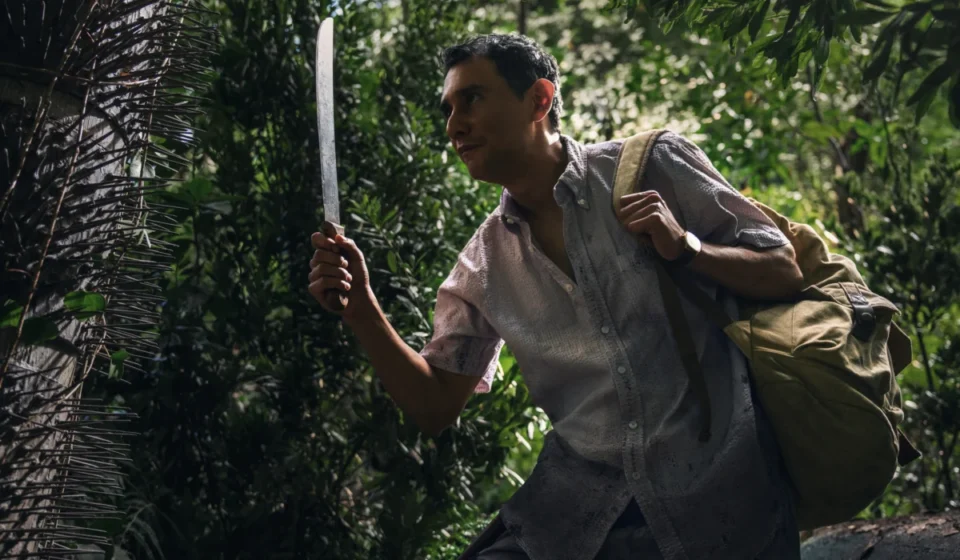
Now, with Pluribus, starring the powerhouse Rhea Seehorn as the prickly, enigmatic author Carol Sturka, Gilligan has proven that his creative alchemy remains as potent as ever. While Pluribus explores the terrifying, celestial scope of an alien virus turning humanity into a blissed-out, global hivemind, it remains firmly rooted in the geography that Gilligan has mastered.
The Art of Location: A Tactical Advantage
The decision to keep Pluribus in Albuquerque was not born of convenience, but of strategic creative philosophy. During a recent appearance on the Filmmaker Toolkit Podcast, Gilligan was quick to credit the unsung heroes of his production: the location department.

“It’s in large part because of Christian Diaz de Bedoya, our location manager,” Gilligan noted. “He and his wonderful team of location scouts and various folks in his department continue to find new places to shoot in this medium-sized city. We’ve been doing it for 20 years now. You might worry about how it’s going to double for all these different places we want to use, and lo and behold, it does.”
For Gilligan, the city serves as a canvas that is simultaneously familiar and infinitely malleable. While Pluribus could have theoretically been set in any number of urban centers, Gilligan insists that relocating would have been a tactical error.
“If you’re going to climb Mount Everest, it’s better not to do it with an anvil on your back,” he quipped. “I love this crew so much, so we could have shot the show [in Albuquerque] but set it, story-wise, in another city. But that would’ve been a mistake. Don’t make it harder for yourself than you have to. Call Albuquerque, Albuquerque. That helps us out a lot.”
Building Worlds: The Craft Behind the Concept
The production design of Pluribus represents a masterclass in grounding high-concept sci-fi in physical reality. To capture the internal and external world of Carol Sturka, production designer Denise Pizzini undertook the monumental task of constructing nearly the entire home of the protagonist—twice.
By building the sets rather than relying solely on existing locations, Gilligan and his directing team created a "felt visual sense" of the character. This architectural precision allows the camera to inhabit the space alongside Carol, capturing both her moments of profound isolation and her bursts of inventive defiance against an overwhelming alien threat.

This meticulous attention to detail extends beyond the walls of a house. The visual language of Pluribus is one of stark contrasts—the vibrant, stubborn life of the desert versus the sterile, unnerving uniformity of the alien hivemind. It is a visual metaphor that perfectly mirrors Carol’s own internal conflict: a woman who is cantankerous, self-loathing, and deeply flawed, yet inherently resilient.
Expanding Horizons: International Collaboration
While Albuquerque remains the heart of the Gilligan production machine, Pluribus marks a significant evolution in his career: international expansion. The series demands a sense of global scale, requiring the production to travel to Spain and the Canary Islands.
For a creator who has spent two decades largely within the orbit of a single city, this transition was eye-opening. “It was nice to learn that this film community that I’m lucky enough to be a part of, it feels like a fellowship that stretches across oceans,” Gilligan remarked.
This global fellowship was essential for the show’s most ambitious sequences. From complex montages depicting the rapid spread of the alien virus across continents, to the high-octane, Last of Us-esque mayhem that concludes the pilot, the production utilized its international reach to elevate the stakes of the narrative.
The Philosophy of Silent Cinema
Perhaps the most striking aspect of Gilligan’s creative evolution is his deepening commitment to visual storytelling over traditional dialogue. He has long been a proponent of the "show, don’t tell" mantra, but with Pluribus, he is pushing the boundaries of what television can achieve without a single word of spoken text.

“There are writers who love writing dialogue and, to me, that’s great for plays. But then there’s cinema,” Gilligan explained. “When you can tell a story without dialogue, when you can practically read a character’s mind, or conversely when in their silence they’re more of a mystery, and that is intriguing and pulls you in deeper as a viewer? That’s what I love about cinema. Some of my proudest moments are whole scenes, page after page going by, without a word of dialogue in it. To me, that’s cinema.”
This philosophy is on full display in the process montages of Pluribus. While his former UPM Stu Lyons famously joked that “montage is French for over budget,” Gilligan views these sequences as the show’s most potent statements of purpose. They are the moments where the story transcends the individual and captures the collective struggle of a species under siege.
Looking Toward the Future: Season 2 and Beyond
As the production gears up for the second season of Pluribus, the stakes are higher than ever. Following the critical acclaim of the first season—which saw Rhea Seehorn deliver a performance that solidified her status as one of the most versatile actors working today—the pressure is naturally mounting.
Gilligan remains characteristically humble and intensely focused. Regarding the Emmy nominations that recognized the show’s craft, he is appreciative but clear-eyed. “All these Emmy nominations, they were just the cherry on top. And I’m so happy for Rhea,” he said. “And I hope we don’t disappoint in Season 2. I have no intention of doing that; I’m very excited about Season 2. I’m sorry for the long wait, but we’re so excited about the stories we’ve got coming up.”
Implications for the Industry
The success of Pluribus serves as a powerful reminder of the importance of consistency in an industry obsessed with constant change. By maintaining a core team, a consistent base of operations, and a clear, evolving visual language, Gilligan has managed to do what many creators struggle to: he has built a sustainable, high-quality creative engine.

The implication for the broader television industry is clear: the "showrunner as architect" model, where the creator is deeply involved in every facet of the production—from the logistics of location management to the silence between lines of dialogue—remains the gold standard for prestige television.
As Pluribus continues to unfold, it stands as a testament to the idea that, no matter how wild or high-concept the story becomes, the strongest foundations are built on the relationships, the locations, and the quiet, visual truths that are cultivated over decades. Vince Gilligan may not have a time machine, but through his work in Albuquerque, he has effectively built something just as enduring: a legacy that continues to resonate across the cultural landscape, one frame at a time.