
The Insidious franchise has long stood as a pillar of modern supernatural horror, defining an era of jump-scare mastery and atmospheric dread. With its sixth installment, Insidious: Out of the Further, now terrifying audiences in theaters, the series continues to explore the boundaries of "The Further"—the dark, spectral purgatory that has become the franchise’s signature landscape. While the series is often celebrated for its terrifying entities and narrative twists, the true backbone of its enduring success lies in its meticulous production design.
At the helm of this latest descent into darkness is production designer Nick Bassett, a veteran of the genre whose resume reads like a roadmap of modern horror’s most visceral hits, including Evil Dead Rise, Fear Street: Prom Queen, and Ash vs Evil Dead. In a recent conversation, Bassett pulled back the curtain on the labor-intensive, highly collaborative, and deeply experimental process of bringing the latest Insidious chapter to life.
The Architecture of Fear: Why Practicality Prevails
For Bassett, the appeal of horror lies in the intense, interdisciplinary nature of the work. Unlike standard dramas, which may operate in silos, horror production demands a symphony of departments working in perfect, claustrophobic harmony.
"In horror, every department is so critical," Bassett explains. "The lighting, the camerawork, the art department, the costumes, the creature designs—you’re always being asked to collaborate. It’s an addictive challenge."
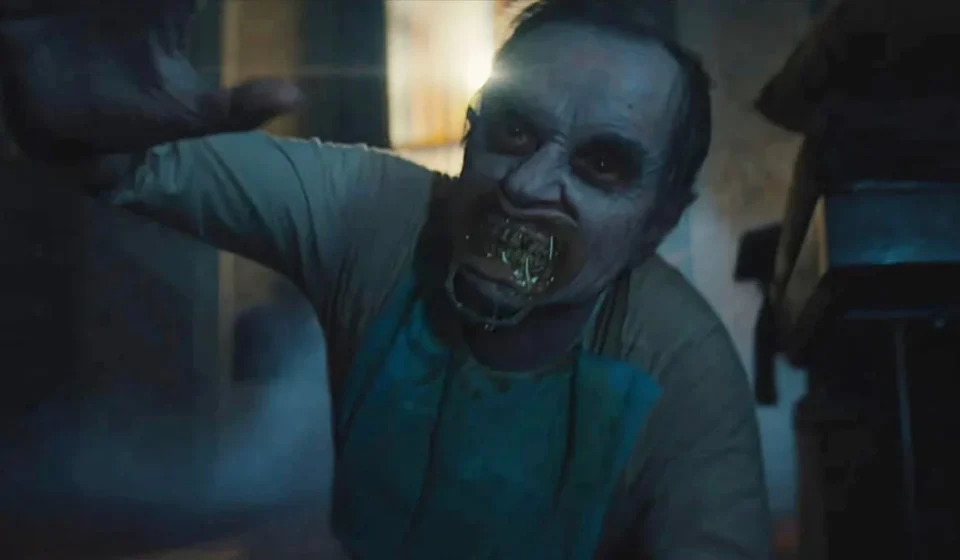
![Rotting Teeth, Pillow Forts, & Demonic Acolytes: ‘Insidious: Out of the Further’s’ Production Designer On Conquering The Further [Interview]](https://www.dreadcentral.com/wp-content/uploads/2026/08/Insidious-Out-Of-The-Further-Retainer-Demon-Advances-1200x675.jpg)
This philosophy of integration is on full display in Insidious: Out of the Further. By prioritizing in-camera practical effects over reliance on digital wizardry, Bassett and director Jacob Chase have crafted a film that feels tactile and grounded, even when exploring the ethereal realms of the dead. This approach is not merely an aesthetic choice; it is a psychological one. When an audience can sense the physical weight of a set or the genuine claustrophobia of a prop, the terror lands with a far more potent impact.
Chronology of a Nightmare: The Creative Process
The development of Insidious: Out of the Further was a journey of careful balancing. The production team faced the unique challenge of honoring the established visual language of the previous five films while simultaneously expanding the world to accommodate a new family and a fresh set of supernatural stakes.
Bassett credits director Jacob Chase with setting the tone from the outset. "Jacob is a really detailed director," Bassett notes. "He wouldn’t leave anything to chance." The collaboration began with long-term script development, followed by intensive location scouting that sought to ground the film’s "American" setting within the realities of shooting in Melbourne.
One of the most striking instances of "happy accidents" in the production was the discovery of a specific street lined with unique, veiny, specimen trees. These natural elements provided a graphic, unsettling backdrop that the production could never have manufactured with the same level of authenticity. This set the stage for the film’s primary challenge: the infamous "pillow fort" sequence.
![Rotting Teeth, Pillow Forts, & Demonic Acolytes: ‘Insidious: Out of the Further’s’ Production Designer On Conquering The Further [Interview]](https://www.dreadcentral.com/cdn-cgi/image/width=788%2Cheight=444%2Cfit=crop%2Cquality=75%2Cgravity=auto%2Csharpen=1%2Cmetadata=none%2Cformat=auto%2Conerror=redirect/wp-content/uploads/2026/08/Insidious-Out-Of-The-Further-Retainer-Demon-Advances.jpg)
Supporting Data: The Logistics of the Pillow Fort
If the film has a centerpiece, it is the labyrinthine pillow fort sequence—a moment that has already been hailed as a franchise highlight. On paper, it was a simple plot point; in practice, it became a massive technical undertaking.
"It ended up being this huge set piece," Bassett recalls. "We knew it was going to be complicated. We needed someone really focused on it, taking it from a cardboard mock-up to completion." The construction required hundreds of meters of fabric sourced globally, with the goal of creating a space that felt like a "padded cell"—an ordinary object turned into a source of infinite, claustrophobic dread.
The technical execution was even more daunting. The sequence required a complex, choreographed camera movement where the space physically shifts, trapping the character within a shifting fabric maze. It was a high-stakes, in-camera trick that initially faltered, requiring ten takes before the team achieved the seamless, terrifying result audiences see on screen. The physical reality of the set was so oppressive that even the camera operators reported feeling genuinely disoriented by the stifling, sound-baffled environment.
Official Perspectives: The Philosophy of the "Jump Scare"
Despite the sophisticated production design, the film remains, at its heart, an Insidious movie—a franchise famous for its jump scares. Rather than viewing this as a limitation, Bassett embraces it as a fundamental tool of the genre.
![Rotting Teeth, Pillow Forts, & Demonic Acolytes: ‘Insidious: Out of the Further’s’ Production Designer On Conquering The Further [Interview]](https://www.dreadcentral.com/cdn-cgi/image/width=788%2Cheight=443%2Cfit=crop%2Cquality=75%2Cgravity=auto%2Csharpen=1%2Cmetadata=none%2Cformat=auto%2Conerror=redirect/wp-content/uploads/2026/07/insidious-e1785256612380.jpg)
"People in horror sometimes talk about jump-scares like they’re bad," Bassett observes. "But Insidious is a jump-scare movie, and it’s fun! I think they’re great."
This perspective highlights the symbiotic relationship between the art department and the director’s vision. By creating an environment that feels clinical, normal, or mundane—such as a dental office or a child’s bedroom—Bassett creates a "safe" baseline that makes the eventual subversion into horror feel jarringly sudden. The dental sequence, for example, utilized detailed, period-appropriate tools and a sterile palette to lull the audience into a false sense of security before the supernatural elements intruded.
Implications for the Future of the Franchise
The success of Insidious: Out of the Further raises an inevitable question: where can the franchise go from here? For Bassett, the answer lies in the simplicity of the core concept. The "Further" is, essentially, a gateway—a portal that offers infinite possibilities for exploration.
"There’s no end to what you can do with that," he says. The potential for future sequels is immense, provided the production maintains its commitment to director-driven storytelling. Bassett is clear that his participation in future projects would hinge on the vision of the next director. "If the director is really a great director who is excited about a project, then it’s really hard for me not to come on board."
![Rotting Teeth, Pillow Forts, & Demonic Acolytes: ‘Insidious: Out of the Further’s’ Production Designer On Conquering The Further [Interview]](https://www.dreadcentral.com/cdn-cgi/image/width=788%2Cheight=526%2Cfit=crop%2Cquality=75%2Cgravity=auto%2Csharpen=1%2Cmetadata=none%2Cformat=auto%2Conerror=redirect/wp-content/uploads/2026/07/DF-03840_r.jpeg)
Conclusion: A Legacy of Practical Craft
As the horror genre continues to evolve, the work of designers like Nick Bassett serves as a reminder that the most effective scares are often the ones rooted in the physical world. By obsessing over the texture of a fabric, the placement of a mirror, or the specific decay of a set, the Insidious team has proven that high-concept supernatural storytelling requires a foundation of high-concept craftsmanship.
Insidious: Out of the Further is not just a sequel; it is a masterclass in how to treat an audience with respect by providing them with a world that feels as real as it is terrifying. Whether the franchise chooses to descend further into the abyss or find new ways to haunt the living, it is clear that the production design will remain the vital, pulsing heart of the series.
For fans of the series, the takeaway is simple: the horror isn’t just in the ghosts—it’s in the walls, the fabric, and the very architecture of the rooms they inhabit. And as long as there are directors who value that level of detail, the Insidious franchise will continue to hold its place at the top of the genre’s hierarchy.