The Final Chapter: Murray Gold Returns to Score the Conclusion of the ‘Susan Ryeland’ Trilogy, Marble Hall Murders

By Industry Desk
September 5, 2026
The long-anticipated conclusion to one of television’s most sophisticated literary mysteries is finally upon us. As the BBC and PBS Masterpiece prepare to unveil the final installment of the Susan Ryeland trilogy, Marble Hall Murders, industry insiders and fans alike are buzzing about a familiar, signature sound returning to the screen. Award-winning composer Murray Gold, whose career has been defined by his evocative work on Doctor Who, It’s a Sin, and Gentleman Jack, has been confirmed to score the six-part drama, cementing his role as the sonic architect of Anthony Horowitz’s complex, meta-fictional universe.
Main Facts: The Sound of Suspense
The Marble Hall Murders serves as the climactic conclusion to a saga that began with the breakout hit Magpie Murders (2022) and continued with Moonflower Murders (2024). Once again, the production sees the creative reunion of novelist and screenwriter Anthony Horowitz and composer Murray Gold.
The series, which consists of six hour-long episodes, maintains the high-caliber production values audiences have come to expect from the collaboration between Eleventh Hour Films, the BBC, and PBS Masterpiece. With a U.S. premiere slated for Sunday, September 6, on PBS, and a forthcoming release on BBC One and BBC iPlayer, the series is expected to be one of the most-watched dramatic events of the autumn season.
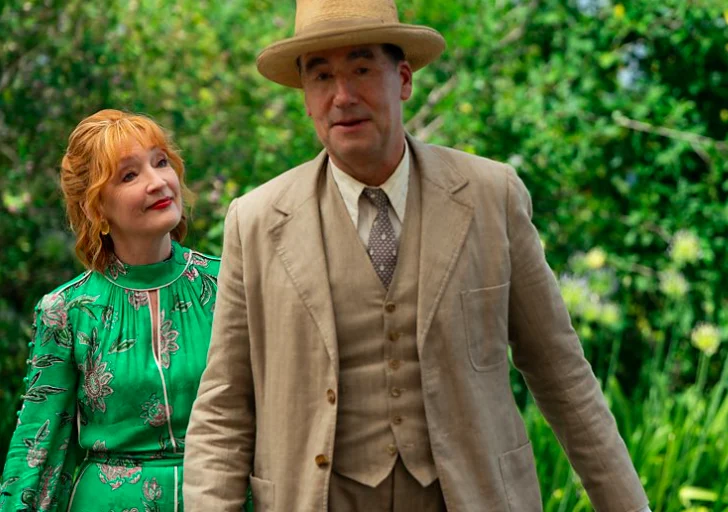
The narrative follows the return of Lesley Manville as the intrepid editor-turned-sleuth Susan Ryeland and Timothy McMullan as the cerebral, fictional detective Atticus Pünd. As the story shifts between the real world and the fictional pages of Pünd’s latest investigation, Gold’s score serves as the essential bridge, guiding the audience through the intricate layers of Horowitz’s "story-within-a-story" structure.
A Chronological Evolution: The Susan Ryeland Saga
To understand the significance of Marble Hall Murders, one must look at the trajectory of the series since its inception.
The Genesis: Magpie Murders (2022)
When Magpie Murders premiered in 2022, it was hailed as a revolutionary take on the classic whodunit. By interweaving the modern-day life of Susan Ryeland with the 1950s-era mystery written by the fictional author Alan Conway, the show challenged the audience to pay attention to two distinct timelines. Murray Gold was brought on to distinguish these worlds; he utilized a lush, orchestral palette for the 1950s sequences and a more urgent, contemporary, and often jittery electronic-inflected soundscape for the modern segments.
The Expansion: Moonflower Murders (2024)
By 2024, Moonflower Murders proved that the format had staying power. The second chapter deepened the relationship between Ryeland and Pünd, with the fictional detective becoming an almost ghostly presence in Susan’s real-life investigations. Gold’s score matured alongside the characters, moving away from pastiche and into a more somber, reflective tone that explored the loneliness of the investigator and the heavy burden of truth.
The Conclusion: Marble Hall Murders (2026)
Now, with the release of Marble Hall Murders, the trilogy reaches its zenith. The series promises to tie up the loose ends of the Ryeland-Pünd dynamic. Production notes suggest that the "Marble Hall" setting—a location steeped in history and secrets—demands a score that is both gothic and grand, a challenge Gold has famously relished throughout his storied career.
Supporting Data: The Talent Behind the Lens
The production of Marble Hall Murders is a masterclass in collaboration. Directed by Rebecca Gatward, whose ability to manage the delicate pacing of mystery thrillers is well-regarded, the series features a formidable ensemble cast.
- The Leads: Lesley Manville and Timothy McMullan return to anchor the emotional core of the show.
- The Supporting Cast: The series features a wealth of talent including Jamie Blackley, Mark Bonnar, Daniel Cerqueira, Patricia Hodge, Rupert Penry-Jones, Harry Lloyd, Anneika Rose, Danny Sapani, and Zubin Varla.
- The Production Team: Produced by Suzanne McAuley (Innocent) and executive produced by Jill Green (The American, Nine Bodies in a Mexican Morgue), the series is backed by the production powerhouse Eleventh Hour Films, a company known for elevating the standard of British drama.
Official Responses and Creative Vision
While the creative team has kept plot details under tight wraps to avoid spoilers for the novel’s readers, official statements from the production emphasize the "finality" and "emotional depth" of this season.
"Working with Murray Gold is never just about writing music for scenes; it’s about writing the heartbeat of the show," says executive producer Jill Green. "For Marble Hall Murders, we wanted to ensure that the conclusion felt earned. Murray understood immediately that this wasn’t just another mystery—it was a farewell to a character journey that has spanned years."
Anthony Horowitz, who has been intimately involved in every stage of the adaptation, has frequently praised the symbiotic relationship between his prose and Gold’s composition. In previous interviews, Horowitz noted that Gold possesses an uncanny ability to "read between the lines," finding the melancholy in a scene that might otherwise appear strictly plot-driven. For the finale, the composer reportedly spent months developing a recurring leitmotif that ties the entire trilogy together, serving as a musical thread that follows Susan Ryeland from the very first episode of Magpie Murders to the final frame of Marble Hall Murders.
Implications for the Industry
The success of the Susan Ryeland trilogy has significant implications for how high-concept literary adaptations are handled on television.
1. The Rise of the "Prestige Mystery"
The Ryeland series has proven that audiences are hungry for "meta-narratives." By treating the audience as intelligent partners who can track dual timelines and literary allusions, shows like Marble Hall Murders are shifting the industry away from simple procedural dramas and toward more intellectually demanding territory.
2. The Power of Composer Continuity
In an era where many TV series change composers mid-run, the decision to retain Murray Gold for the entirety of the trilogy has provided a sonic consistency that has become a brand in its own right. Viewers recognize the "Gold sound"—a blend of intellectual curiosity and emotional vulnerability—as a hallmark of the Ryeland franchise. This suggests that for streaming and broadcast platforms, maintaining a consistent musical identity is just as important as maintaining a consistent cast.
3. The Future of the "Whodunit"
As Marble Hall Murders concludes, it leaves behind a blueprint for how to adapt multi-volume book series. By keeping the core creative team together—Horowitz for the script, Gatward for the direction, and Gold for the score—the producers have managed to maintain a level of quality that is rarely sustained over three seasons.
Conclusion: A Legacy in Six Acts
As the premiere of Marble Hall Murders approaches, the anticipation is palpable. It is a rare occurrence in television for a mystery series to be granted the time and resources to tell a complete, three-part story from beginning to end without compromise.
With Murray Gold returning to provide the final musical brushstrokes, the series promises to be more than just a detective story. It is a meditation on the nature of authorship, the reality of fiction, and the enduring mystery of the human heart. Whether the series provides the definitive answers that fans of Susan Ryeland are clamoring for remains to be seen, but one thing is certain: when the final note of the finale fades out this coming Sunday, it will mark the end of one of the most successful collaborative efforts in contemporary television history.
For those tuning in to PBS this Sunday, the experience will be a masterclass in atmosphere. As the credits roll on the final installment, the audience will be left not just with the solution to the "Marble Hall" mystery, but with the lingering resonance of a musical journey that has defined the very landscape of modern mystery television.