From Childhood Nightmare to Streaming Titan: Nick Antosca’s Deconstruction of ‘Cape Fear’

For many, the defining images of 20th-century suspense are etched in black and white: a silhouette in the shadows, the relentless ticking of a clock, and the creeping, unshakable realization that an innocent family is being hunted. For showrunner and screenwriter Nick Antosca, these images were not just cinematic staples; they were his earliest introduction to the visceral language of fear.
In an exclusive appearance on the Filmmaker Toolkit podcast, Antosca reflected on a formative moment from his youth, where he stumbled upon his parents watching the 1962 version of Cape Fear. That encounter—watching a young child being chased down a dark, narrow hallway—did more than just scare him; it planted the seeds for his career-long fascination with the intersection of dreams, nightmares, and human vulnerability.
Now, decades later, Antosca has translated that childhood trauma into a sprawling, 10-hour limited series for Apple TV+. By reimagining the iconic tale for the age of digital instability, Antosca has crafted a psychological thriller that shifts the genre from "acute fear" to "ambient dread."
The Genesis of an Obsession: A Cinematic Legacy
The story of Cape Fear is one of Hollywood’s most resilient pieces of intellectual property. The original 1962 film, directed by J. Lee Thompson, featured Robert Mitchum as the sadistic, vengeful Max Cady and Gregory Peck as his moralizing target, Sam Bowden. It was a taut, black-and-white exercise in anxiety that defined the stalking subgenre for a generation.
Antosca’s fascination only deepened when he discovered Martin Scorsese’s 1991 remake. Featuring Robert De Niro’s transformative, terrifying performance as Cady and Nick Nolte’s portrayal of a morally compromised Sam Bowden, the film expanded the canvas to include the psychological disintegration of the Bowden family, led by Jessica Lange and Juliette Lewis.
"I didn’t know this at the time, but where I would go in terms of what I wanted to write was stories that captured the feeling of nightmares and dreams," Antosca explained. "Those two movies had a big effect on me because they do that. They feel like nightmares. The movies are blunt force trauma. Cady is just a machine coming for them. He’s going to bludgeon this family to death."

Chronology of the Reimagining
The journey to the 2026 series was not a simple task of updating the technology. Antosca understood early on that a modern iteration could not rely on the same tropes that governed the 1962 or 1991 versions.
The "Respectfully Unfaithful" Approach
Antosca’s philosophy for the Apple TV+ series centered on a concept he calls being "respectfully unfaithful." He argues that adapting a classic requires more than just replacing landline telephones with smartphones. To justify the existence of a new version, one must interrogate the underlying anxieties of the current era.
"You don’t want to adapt something and just do it again with cell phones," Antosca noted. "You want to bring something new to it while honoring the original."
Shaping the 2026 Vision
As the production moved into development, the team prioritized:
- Modernizing the Anxiety: Transitioning from the external threat of a stalker to an internal, pervasive sense of uncertainty.
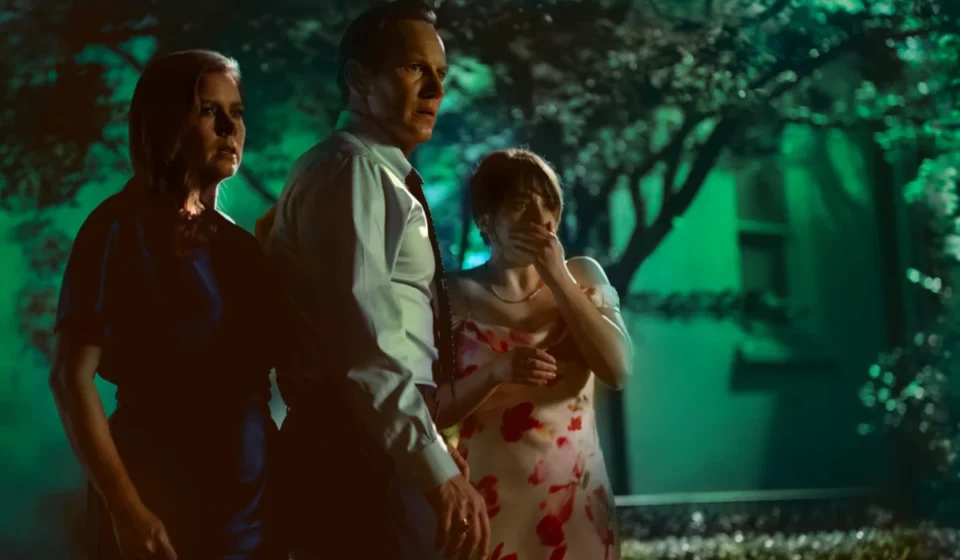
- Moral Ambiguity: Elevating the culpability of the protagonists. In this version, Patrick Wilson’s Sam Bowden and Amy Adams’ Anna Bowden are not merely victims; they are active, flawed participants in the narrative of their own undoing.
- The "Ambient Dread" Shift: Utilizing the extended format of a 10-hour series to sustain a slow-burn tension that movies, by their nature, cannot replicate.
Supporting Data: Why Now?
The shift from a two-hour film to a ten-hour series is supported by the changing nature of audience engagement with "prestige television." While the 1991 film was a masterclass in explosive, confrontational tension, the 2026 series focuses on the erosion of truth.
In our current media landscape, dominated by AI, misinformation, and the constant digital surveillance of social media, the concept of "knowing what is true" has become a central societal anxiety. Antosca leaned into this by making it increasingly difficult for the audience to discern whether Max Cady—portrayed with chilling nuance by Javier Bardem—is truly the architect of the family’s terror, or if the Bowdens’ own past actions are finally collapsing in on them.

The show, therefore, acts as a mirror to modern society. By increasing the Bowdens’ culpability in Cady’s original wrongful imprisonment, the narrative becomes more "slippery." The horror is no longer just about survival; it is about the inability to escape the consequences of one’s own history.
Official Responses and Creative Philosophy
Antosca credits his formative years in the writers’ rooms of Teen Wolf and, most notably, Hannibal, for teaching him how to navigate the "appetites of the marketplace" while maintaining an artistic vision.
Working with Bryan Fuller on Hannibal provided a crucial blueprint. "‘Silence of the Lambs’ is perfect," Antosca admitted. "But I watched Bryan Fuller make it his own and do a really strange, surprising art project on network TV. That was very formative for me in terms of how to do idiosyncratic personal things using IP."
This experience taught him that a property’s "iconic" status should not be a cage, but a launchpad. His goal was to create a version of Cape Fear that feels essential in 2026, just as the previous versions were essential in their respective decades. He highlights the performance of Javier Bardem as the cornerstone of this effort, noting that the actor brings a weight and complexity to the character that demands a long-form narrative to fully explore.
Implications: The Future of the Thriller Genre
The success of the Cape Fear series suggests a shift in how audiences consume legacy thrillers. By moving away from the "acute" shock of the films and into the "ambient" dread of the series format, Antosca is tapping into a deeper, more existential psychological space.
1. The Death of the "Pure Victim"
The series marks a departure from the clear-cut protagonist-antagonist dynamics of the past. The implication for future thrillers is clear: audiences are increasingly interested in morally grey characters. The idea that a family is "not the villain" but still "complicated" allows for a more nuanced exploration of trauma.

2. The Expansion of Narrative Time
Ten hours of television allows for the "fragmentation" of a family unit that Antosca admired in the 1991 film. By stretching this process over multiple episodes, the show is able to explore the domestic fallout of terror in a way that feels more grounded and, ultimately, more disturbing.
3. The Role of the Showrunner as Curator
Antosca’s work demonstrates that the role of the modern showrunner is akin to a curator of cultural anxiety. By identifying what scares a 2026 audience—the loss of reality, the digital footprint, the secrets we keep—he has elevated the source material into a contemporary tragedy.
Conclusion
Nick Antosca’s Cape Fear is more than a remake; it is a profound expansion of a narrative universe. By honoring the "blunt force trauma" of the films he grew up watching while injecting the sophisticated, hallucinatory dread of modern psychological thrillers, he has successfully carved out a new space in the pantheon of suspense.
Whether you are a fan of the 1962 original or the 1991 Scorsese classic, the new series demands to be judged on its own merits. It is a testament to the idea that if you go deep enough into the "feeling of nightmares," you can find something that is not just frightening, but deeply, painfully human.
The full conversation with Nick Antosca will be available on the upcoming episode of the Filmmaker Toolkit podcast. Listeners can subscribe via Apple Podcasts, Spotify, or their preferred podcast platform to hear more about the production, the cinematography, and the creative challenges of reinventing a classic.