A New Voice in Cinema: How Tessa Blake’s “If I Tell You” Redefines the Coming-of-Age Drama

In an era dominated by sprawling franchises and high-concept spectacles, the arrival of a quiet, character-driven feature can feel like a cinematic event in its own right. Director Tessa Blake’s If I Tell You is precisely that—a rare, assured debut that eschews the bombast of modern cinema in favor of a profound, intimate exploration of trauma, perspective, and the resilience of the human spirit. Featuring a powerhouse performance from young actor Etienne Kellici, the film stands as one of the most meticulously crafted dramas of the decade, proving that the most powerful stories are often those told through the most restricted lenses.
The Core Narrative: A Child’s Unfiltered Reality
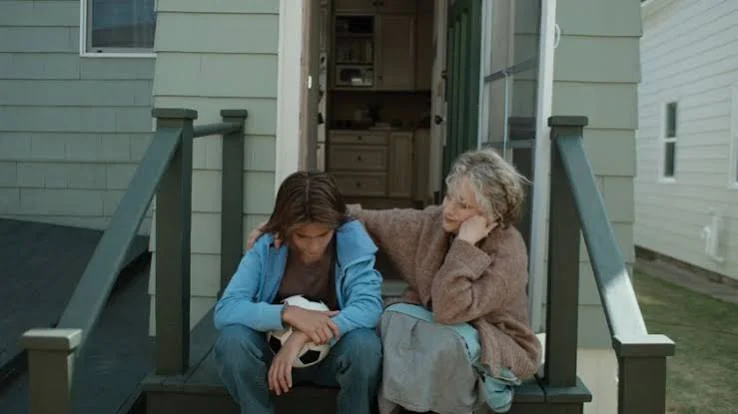
At the heart of If I Tell You is a 12-year-old boy, played by Etienne Kellici, who finds himself the involuntary witness to—and eventual investigator of—an assault he cannot fully comprehend. The film’s brilliance lies in its commitment to its protagonist’s worldview. By tethering the camera and the narrative strictly to the boy’s perspective, Blake transforms a narrative of violence into a haunting, absorbing study of innocence lost and the quiet persistence of hope.
The film does not attempt to explain the assault through the objective, omniscient lens often found in police procedurals. Instead, it forces the audience to grapple with the mystery and confusion of a child who understands that something is wrong but lacks the tools to categorize it. This "narrowed perspective" is not a limitation but a deliberate stylistic choice that makes the experience of watching the film feel immediate, visceral, and deeply uncomfortable in the most profound way.
From Episodic Architect to Feature Filmmaker: The Evolution of Tessa Blake
To understand the precision of If I Tell You, one must look at the rigorous training ground that preceded it. While this marks Blake’s theatrical debut, she is far from a novice. As the current producing director on the hit series Matlock, Blake has spent years operating within the high-pressure, fast-paced environment of episodic television. Her resume reads like a masterclass in genre versatility, spanning the eerie psychological corridors of American Horror Story, the tactical intensity of NCIS: Hawai’i, and the nuanced emotional beats of A Million Little Things.
"One of the great things about working in episodic is that you become a cinematic linguist," Blake explained in an interview with IndieWire. "You speak in all different styles and genres, with different visual storytelling opportunities." This "cinematic vocabulary," as she calls it, allowed her to walk onto her film set with a clear understanding of exactly which tools were necessary to tell her story—and which were unnecessary.

The Aesthetic of Intimacy: Stripping Down the Toolkit
For If I Tell You, Blake consciously chose to dismantle the expansive, polished visual language common in network television. She and her crew opted for a "small footprint" approach, utilizing handheld camerawork and a restricted selection of lenses to maintain a claustrophobic, authentic intimacy.
"We were really trying to capture intimacy," Blake noted. "We really narrowed our perspective and narrowed our lens choices to share the main character’s perspective. This is a sadly familiar story, but it’s not familiar when told from the point of view of a 12-year-old."
This discipline extended to the script, which she co-authored with Jennifer Manocherian. The writing process involved a constant, rigorous interrogation of the narrative: if a piece of information was essential for the audience but unknown to the 12-year-old protagonist, it was excised. With only two intentional exceptions, the audience knows only what the boy knows, feels only what he feels, and fears only what he sees.
Challenging Genre Conventions: Withholding the Villain
Perhaps the most radical departure in If I Tell You is the complete abandonment of the traditional third-act reveal or the standard focus on the antagonist. In most procedurals, the narrative momentum is built on the pursuit, capture, or psychological breakdown of the perpetrator. Blake, however, flips this trope on its head.
"It was very intentional to withhold the expected third act, which is to say we don’t really spend time on the bad guy here," Blake said. By stripping away the focus on the perpetrator, the film creates a vacuum that is filled by the victims—the human beings left in the wake of the event. The film shifts from a crime story to a study of communal healing, family dynamics, and the quiet, persistent resilience of those trying to recover from the unthinkable. It is a bold, humanistic pivot that elevates the film above the standard crime drama.

The Distribution Struggle: Bridging the Gap to Audiences
Despite the critical acclaim, If I Tell You faces the perennial challenge confronting independent cinema today: the difficulty of reaching an audience in a marketplace cluttered by blockbusters and streaming content. Blake is acutely aware of the disconnect between the ease of television consumption and the intentional act required to see an independent film in a theater.
"The amazing thing about television is that it just comes to the audience," Blake remarked. "They don’t have to go anywhere for it; in fact, it just comes at you from everywhere—it’s hard to avoid it. But it’s so hard to get an independent film into theaters, which is where you want people to see it."
To combat this, Blake has been working closely with exhibitors like AMC and her distributor, Suncatcher, to facilitate a grassroots theatrical release. While the post-pandemic landscape has been notoriously difficult for mid-budget and independent features, the 2026 release cycle has provided a glimmer of hope. Blake has noted a genuine "hankering" among audiences for the communal experience of the cinema, a desire to sit in a dark room and engage with challenging, human stories that demand attention.
Future Implications: The Search for the Next "Coda"
Blake’s vision for the future of independent film is one of cautious optimism. She sees a clear, untapped market of viewers who are either burned out on the relentless cycle of blockbuster tentpoles or simply hungry for something more grounded. She views films like CODA and Lady Bird as benchmarks—not just in terms of quality, but in their ability to penetrate the cultural zeitgeist through sheer emotional honesty.
"There are people who have seen all the blockbusters, or aren’t interested in the blockbusters, who want to know: ‘Where’s the next CODA? Where’s the next Lady Bird?’" she said. "I hope there’s beginning to be a trend toward a wave of those kinds of movies coming back to theaters, and that we’re a little part of that."

Conclusion: A Testament to Human Resilience
If I Tell You is a triumph of restraint. By refusing to give in to the common impulse to over-explain, over-dramatize, or focus on the mechanics of crime, Tessa Blake has crafted a film that feels remarkably honest. It is a testament to the idea that, even in our darkest moments, the most compelling drama is found in the way we look at the world, the ways we protect our children, and the ways we rebuild after the foundation has been shaken.
As the industry continues to navigate the shifting tides of exhibition and production, the success of a project like If I Tell You rests on the shoulders of the audience. It is a reminder that the "cinematic linguists" of our time are not just working in television, but are waiting for the opportunity to use the big screen to tell stories that linger, haunt, and, ultimately, heal.
For more information on upcoming screenings, ticketing details, and to support the theatrical run of "If I Tell You," visit the official website at ifitellyoufilm.com.