
The global cinematic community is in mourning following the death of Sam Neill, the New Zealand acting titan whose career spanned over five decades, traversing the delicate line between high-art introspection and blockbuster spectacle. Neill, who passed away last week at the age of 78, leaves behind a legacy defined not just by the iconic roles he inhabited, but by the quiet, grounded humanity he projected both on and off the screen. Whether he was staring down prehistoric terrors, navigating the psychological disintegration of horror masterpieces, or simply sharing a candid, lighthearted moment with the livestock at his Central Otago vineyard, Neill was a figure of rare, unforced charisma.
A Chronology of a Storied Career
Sam Neill’s trajectory was never that of a conventional Hollywood star. Born in Northern Ireland and raised in New Zealand, his early career was defined by a distinct, cerebral approach to acting that favored nuance over vanity.
The Breakthrough and the Arthouse Roots
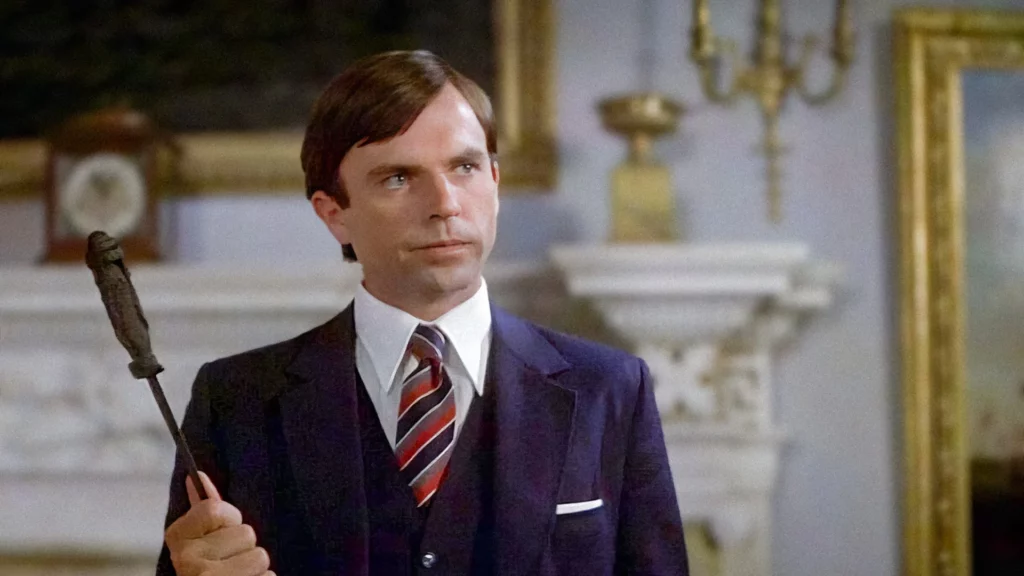
Neill’s ascent began in the late 1970s, firmly rooted in the burgeoning Australian and New Zealand film industries. His breakout performance in Gillian Armstrong’s 1979 film My Brilliant Career showcased a leading man capable of evoking the romantic vulnerability of a Montgomery Clift. It was this performance that caught the eye of industry legends like James Mason, effectively setting Neill on a path toward international acclaim.

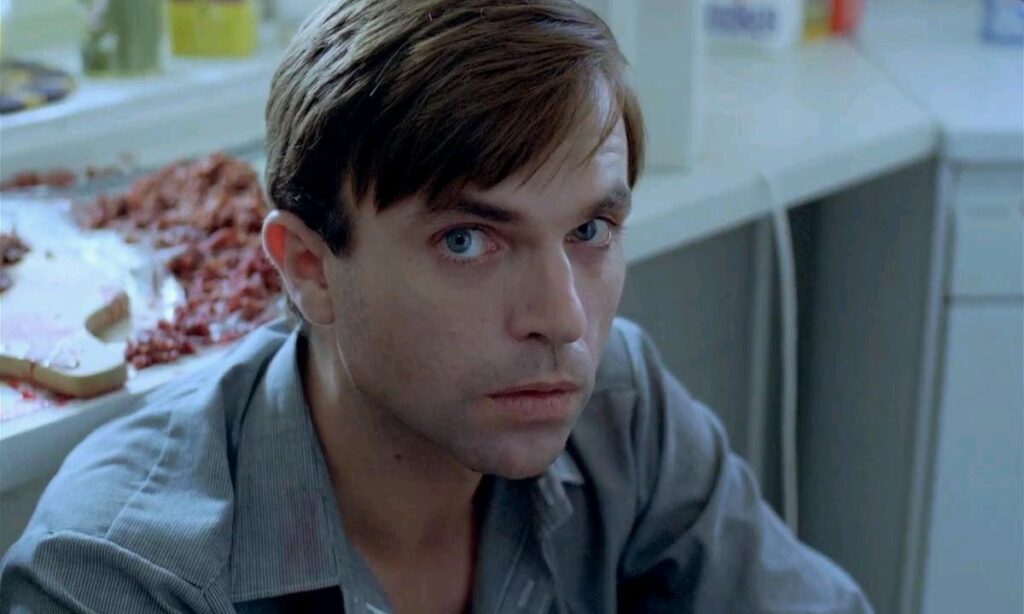
The early 1980s saw him exploring the darker fringes of the medium. His performance in Andrzej Żuławski’s Possession (1981) remains a benchmark for psychological horror, where he played a spy descending into a surreal, violent madness. This was followed by his turn as the Antichrist in The Omen III: The Final Conflict, cementing his reputation as an actor who could lend gravity to even the most lurid genre exercises.
The Jurassic Pivot
By the early 1990s, Neill had become a fixture of international prestige cinema, working with directors like Meryl Streep in A Cry in the Dark and alongside Holly Hunter in Jane Campion’s The Piano. However, it was Steven Spielberg’s Jurassic Park (1993) that catapulted him into the global stratosphere. As Dr. Alan Grant, Neill provided the emotional anchor for a film that redefined visual effects. He embodied the "rationalist daredevil"—a character archetype that allowed him to serve as the audience’s surrogate, moving from scientific skepticism to profound, wide-eyed wonder.
Genre Mastery and Later Years
Throughout the mid-90s and 2000s, Neill moved fluidly between massive studio franchises and cult-classic horror. His collaboration with John Carpenter on In the Mouth of Madness (1994) and his terrifying turn in Event Horizon (1997) highlighted his ability to ground cosmic, existential dread in human pathos. Even in his later years, he remained a tireless worker, returning to the Jurassic franchise with Jurassic World Dominion (2022) and maintaining an active, beloved presence on social media.

Supporting Data: The "Two Paddocks" Philosophy
To define Neill solely by his filmography would be to ignore the "farmer" persona that Carpenter so affectionately referenced in his tribute. Neill’s life was inextricably linked to his estate in Central Otago, New Zealand, known as Two Paddocks.
His social media presence—specifically his Instagram and Twitter accounts under the @TwoPaddocks handle—became a cultural phenomenon in its own right. In an era where celebrity branding is often sterile and managed, Neill’s feed was a sanctuary of authenticity. He posted about his sheep, his pigs, and his ducks, often framing his simple rural life as an antidote to the "pear-shaped" nature of the world.
His commitment to his craft was matched only by his commitment to his values. In 2023, he notably walked away from Twitter following its acquisition by Elon Musk, stating, "I’m not happy to be in a place that is so angry and divisive." This quiet, principled exit was a hallmark of the man: he possessed the internal fortitude to walk away from systems that no longer aligned with his moral compass.
Official Responses and Industry Impact
The outpouring of grief from the film industry has been extensive and deeply personal. John Carpenter, who directed Neill in In the Mouth of Madness, took to Facebook to express his heartbreak, noting that "every day on set" with Neill was a reminder of his professionalism and warmth.
Director Gillian Armstrong, reflecting on their time together on My Brilliant Career, noted how Neill unconsciously became a "lust object" for audiences, yet he handled that status with a self-effacing humor that never curdled into arrogance. Even in the face of his 2023 non-Hodgkin lymphoma diagnosis, Neill remained characteristically transparent, telling the BBC, "I’m not afraid of dying… What I don’t want to do is to stop living, because I really enjoy living."
Implications: The Enduring Legacy of the "Everyman"
Sam Neill’s death forces a reevaluation of what we demand from our modern movie stars. In an age of digital de-aging, high-concept spectacle, and performative fame, Neill stood as a bridge to a previous generation of acting—one where the actor’s primary duty was to serve the material, however strange, and to do so with an unwavering, human-centric soul.
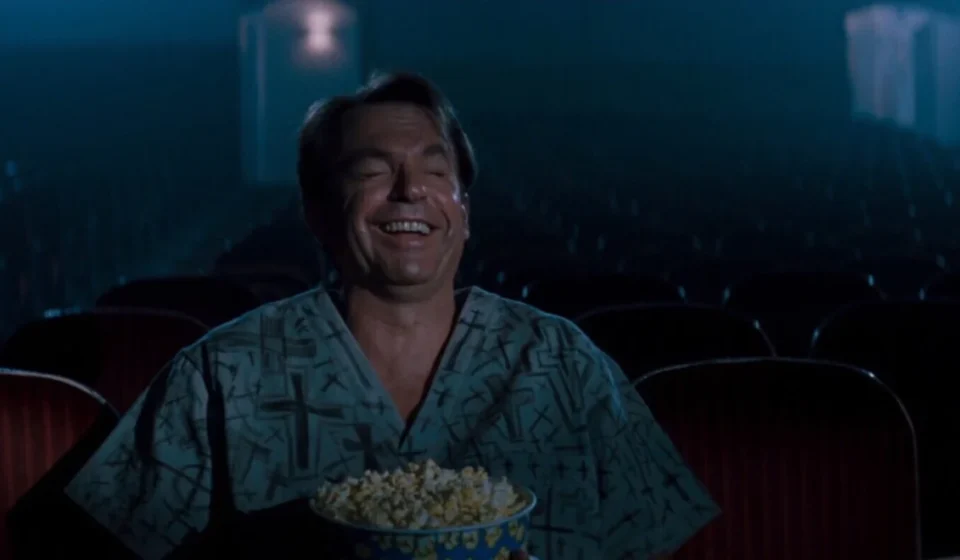
His work in In the Mouth of Madness, where he ends the film laughing at the apocalypse from a movie theater seat, serves as a poignant, accidental epitaph. It reflects a man who understood the artificiality of the medium yet loved it deeply nonetheless. He refused to condescend to the "B-movie" elements of his career; instead, he inhabited them, elevating them with a wounded, weary, and ultimately joyful humanity.
As the industry moves forward, the "Neill archetype"—the actor who is equally comfortable in a blockbuster, an arthouse drama, or a quiet field in New Zealand—feels increasingly rare. His influence lives on in the countless collaborators he inspired and the audiences who found comfort in his presence. Whether he was battling prehistoric beasts or simply sharing a selfie with a duck, Sam Neill taught us that the most important thing is not the scale of the stage you stand on, but the grace and humor you bring to it.
In his 2023 memoir, Did I Ever Tell You This?, Neill invited the world into his private reflections. He documented his struggle with illness, his love for his family, and his career as an organic winemaker. The book serves as a final, intimate piece of storytelling from a man who spent his life telling the stories of others. He exits the stage as he lived: with his chin held high, his humor intact, and his gaze fixed firmly on the simple, beautiful reality of the world he leaves behind.