The Twilight of Imperialism and the Wit of Despair: Martin McDonagh’s "Wild Horse Nine"

Introduction: The Anatomy of a McDonagh Setup
In the landscape of contemporary cinema, few voices are as distinct or as consistently provocative as that of Martin McDonagh. More often than not, a McDonagh script begins with the deceptive simplicity of a pub joke. Two hitmen are sent to a picturesque Belgian city; a grieving mother rents three billboards on the edge of town; two lifelong friends on a remote Irish island suddenly stop speaking. These setups are designed to lure the audience in with the promise of dark comedy and sharp, rhythmic dialogue, only to pivot toward the visceral, the tragic, and the profoundly uncomfortable.
His latest offering, Wild Horse Nine, continues this tradition of the "sour punchline." The premise feels almost like a parody of his own loglines: two CIA agents go on holiday to Easter Island. Yet, beneath this puckish exterior lies a film that is perhaps McDonagh’s most overtly political and existentially weary work to date. Starring John Malkovich and Sam Rockwell, Wild Horse Nine is a drolly melancholic exploration of the "ugly American" archetype, set against the backdrop of the 1973 Chilean coup d’état. It is a film that balances the vulgarity of its characters with a surprising, lump-in-the-throat grace, anchored by a career-best performance from Malkovich.
Main Facts: A Convergence of Talent and History
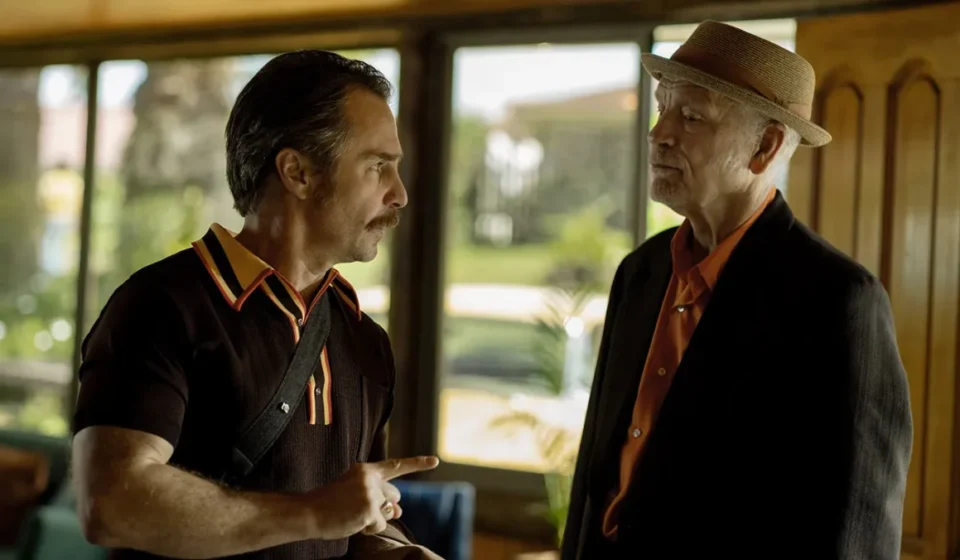
Wild Horse Nine marks the first collaboration between Martin McDonagh and the legendary John Malkovich, a pairing that critics have noted feels overdue. Malkovich portrays Chris Carlisle, a 72-year-old veteran of the Central Intelligence Agency whose career serves as a bloody roadmap of mid-century American interventionism. Opposite him is Sam Rockwell as Lee Chesterfield, a younger, more reactive agent who serves as Carlisle’s only friend and moral sounding board.
The film is set in 1973, primarily divided between the tense, smoke-filled offices of Santiago and the windswept, volcanic isolation of Easter Island (Rapa Nui). While the narrative follows the standard "buddy movie" beats, it subverts them by layering in themes of terminal illness and cognitive decline. Carlisle is dying of late-stage cancer and grappling with the early onsets of dementia, making his "holiday" less of a vacation and more of a final, desperate inventory of a life spent in the shadows.
Supporting performances include Steve Buscemi as M.J., a high-strung CIA handler; Parker Posey as Lee’s estranged, hedonistic wife; and Mariana Di Girolamo as a Chilean student whose presence challenges the agents’ imperialistic worldview.
Chronology: From the Embassy to the Moai
The Santiago Prelude
The film opens in the claustrophobic atmosphere of Santiago, Chile, during the early months of 1973. The air is thick with the scent of tobacco and the looming threat of military insurrection. Chris Carlisle is introduced through his dictaphone—a device he uses to record his memoirs, though his recollections are increasingly fractured. He lists his "successes" with a chillingly deadpan delivery: the overthrow of the Arbenz government in Guatemala and the operations in the Congo. When he mentions the Bay of Pigs, he dryly labels it "less successful."
As the Nixon administration maneuvers to destabilize the democratically elected socialist president Salvador Allende, Carlisle realizes his time—both professional and biological—is running out. He convinces his partner, Lee Chesterfield, to abandon their posts for a week to visit Easter Island, a territory Carlisle has long obsessed over.
The Rapa Nui "Holiday"
The second act shifts to the sweeping, sunset-filtered landscapes of Easter Island. The transition from the urban tension of Santiago to the "big heads" (as Carlisle dismissively calls the Moai statues) provides a visual reprieve, though the psychological tension only heightens. Here, the film becomes a series of "conversational drifts." Carlisle and Chesterfield wander the island, surrounded by wild horses and ancient monoliths, debating the merits of their profession and the morality of their past actions.
The arrival of Monica (Mariana Di Girolamo) and her friend Alicia (Ailín Salas) introduces a generational and political clash. Monica, a left-wing activist, represents the future that Carlisle’s work has sought to suppress. Their interactions are sharp and often unpleasant, as Carlisle uses his wit as a shield against the changing world.
The Final Reckoning
The third act focuses on Carlisle’s rapid physical and mental decline. The notes in his pocket—reminders of who to trust and where he is—become a recurring motif of his fading agency. The brewing coup in Santiago serves as a distant but persistent thunder, reminding the audience that while these men are playing out their personal dramas on a remote island, the machinery of fascism they helped build is grinding forward. The film concludes not with a grand explosion or a traditional climax, but with an elegiac, open-ended shrug, leaving the characters to face an uncertain and unearned future.
Supporting Data: Performance and Directorial Style
The Malkovich Renaissance
Critics have hailed Wild Horse Nine as a vital reminder of John Malkovich’s range. For years, the actor has been frequently relegated to "rent-a-villain" roles or eccentric cameos in ensemble pieces. In Carlisle, he finds a character perfectly tailored to his weary, wary onscreen demeanor. Malkovich utilizes his trademark eye-rolling impatience to both comic and tragic effect. His performance is described as "hoarsely wounded," providing a necessary "untidiness" to a script that occasionally risks becoming too structurally neat.
The Rockwell Dynamic
Sam Rockwell, a McDonagh regular since Seven Psychopaths and Three Billboards Outside Ebbing, Missouri, provides the warmth necessary to balance Malkovich’s coldness. As Lee Chesterfield, Rockwell plays the "offbeat straight man." His chemistry with Malkovich mirrors the central pairings in In Bruges and The Banshees of Inisherin, probing the "fault lines of male friendship" with equal parts vulgarity and grace.
Technical Craft
While the cinematography of Easter Island is undeniably beautiful, the film maintains what some critics call a "prosaic" cinematic style. McDonagh prioritizes the "snarling brute poetry" of the dialogue over visual experimentation. The use of 1970s aesthetics—tobacco-stained palettes and kaftan-clad supporting characters—grounds the film in a specific historical moment: the "last gasp" of an unapologetically patriarchal and imperialistic era.
Official Responses and Critical Reception
The reception of Wild Horse Nine has been largely positive, though not without caveats regarding McDonagh’s penchant for provocation.
- Critical Consensus: Early reviews from trade publications like Variety suggest the film is a "clever, bittersweet trick." Critics have praised the "soulful eccentricity" that Malkovich brings to the role, noting that the film’s poignancy lies in its recognition that its "ostensible heroes are on the way out."
- The "Edgelord" Debate: Some reviewers have pointed out that the script occasionally strains for "edgelord provocation." Scenes where Carlisle riffs in poor taste on the death of Patrice Lumumba or vents against indigenous renaming have been described as "angling for applause" from a specific subset of the audience. However, many argue that these moments are essential to portraying the "unapologetic dinosaur" that Carlisle represents.
- Production Statements: In a brief press statement, McDonagh described the film as an "open-ended political allegory." He noted that while the film is set in 1973, the themes of "cyclical world history" and the "shrugging solution" to political violence are intended to feel contemporary.
Implications: The Legacy of the "Ugly American"
The release of Wild Horse Nine carries significant implications for how cinema handles the intersection of personal mortality and political culpability.
The Deconstruction of the Spy Genre
Unlike traditional espionage thrillers, Wild Horse Nine refuses to grant its protagonists the dignity of a "final mission." By focusing on dementia and cancer, McDonagh strips away the glamour of the CIA operative, leaving behind only a "sad, soulful" man who realized too late that the world is passing him by. It suggests that the "generation of men that once ran the world" will not be missed, even as it "raises a glass" to their passing.
Political Cynicism in Modern Film
The film’s "jaded, slightly downhearted" tone reflects a growing trend in political cinema—a move away from didacticism toward a more "mordant gesturing" at the state of the world. By refusing to offer a solution to the "cyclical way of the world," McDonagh places the burden of interpretation on the audience.
Conclusion: A Wounded Masterpiece
Wild Horse Nine is a film of contradictions. It is funny yet mournful, cynical yet deeply human. While it may not "surprise" those familiar with McDonagh’s previous work, it deepens his exploration of male friendship and historical guilt. Through Malkovich’s "seen-it-all" performance, the film achieves a rare kind of "bittersweet trick"—leaving the audience not with a laugh, but with a profound, lingering discomfort. It is a cinematic toast to a dying breed, delivered with the wind in its hair and a lump in its throat.