Logic in the Midst of Chaos: The Resurgence of Kal-toh in ‘Star Trek: Strange New Worlds’

The Star Trek universe has always been defined by more than just its warp drives and phaser arrays; it is a tapestry of cultural world-building, where the minutiae of daily life—what characters eat, how they relax, and the games they play—provide the connective tissue that makes the galaxy feel lived-in. In the most recent episode of Star Trek: Strange New Worlds, titled "Like Chronitons Through the Hourglass," fans were treated to a delightful, if fleeting, nod to a legacy piece of Vulcan lore: the return of the complex, holographic game known as Kal-toh.
As the franchise continues to bridge the gap between its various iterations, the reappearance of this "Vulcan version of Pick-Up-Sticks" serves as a poignant reminder of Star Trek’s commitment to internal consistency and the enduring legacy of the Voyager era.
The Narrative Context: A Soap Opera in Space
The episode "Like Chronitons Through the Hourglass" finds the crew of the USS Enterprise subjected to an experiment by a whimsical, god-like entity portrayed by Rhys Darby. In a classic "deity-gone-mad" trope, this being forces the crew to navigate a series of hyper-emotional scenarios reminiscent of Earth-bound soap operas. Amidst this turmoil, the plot centers on a dire medical crisis: Spock (Ethan Peck) suffers a catastrophic injury necessitating a heart transplant.
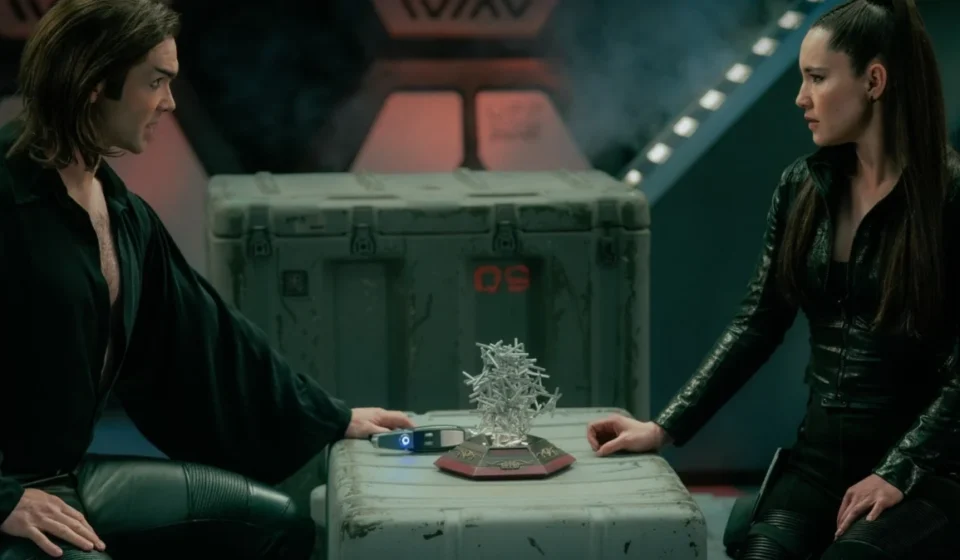
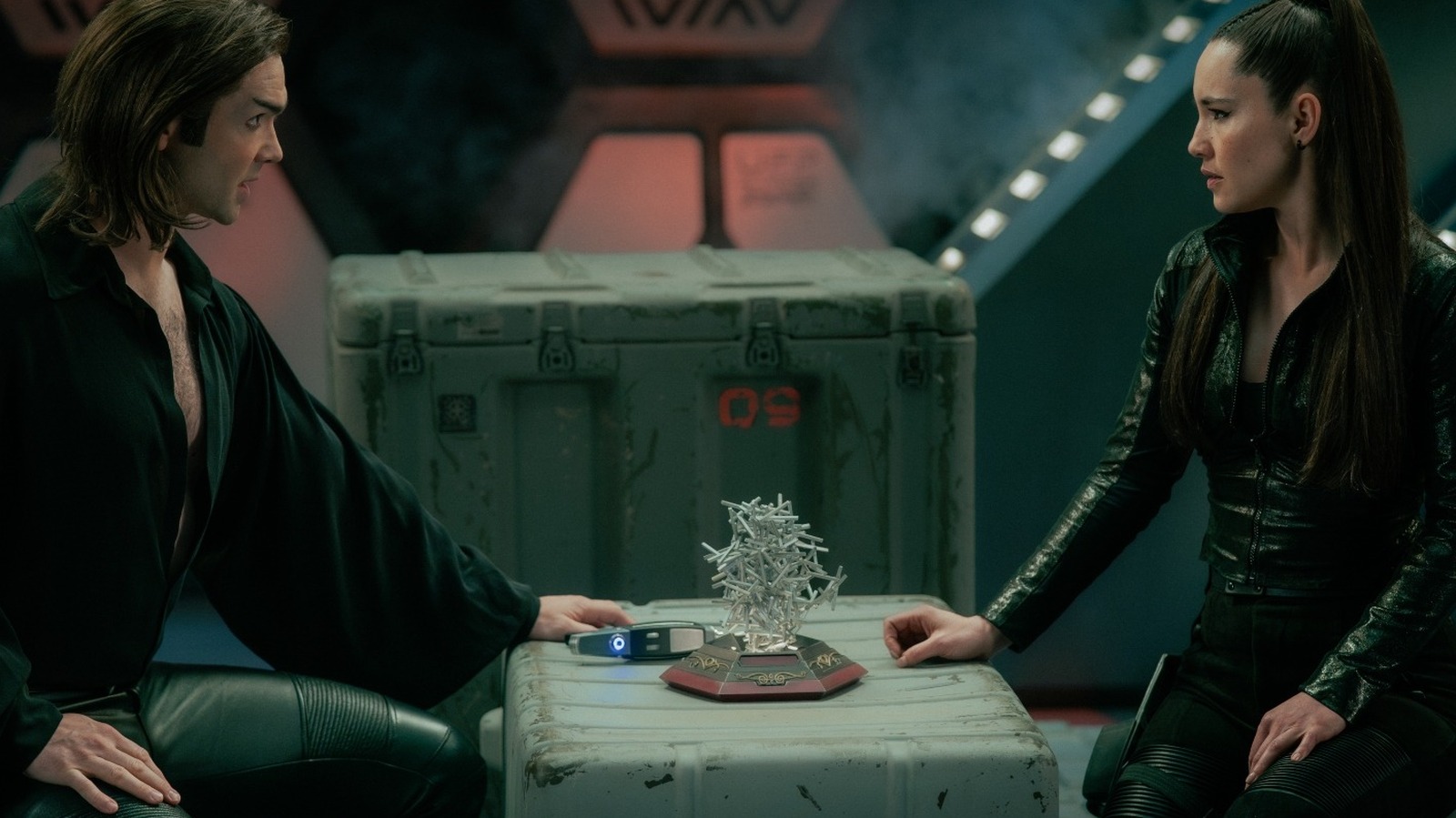
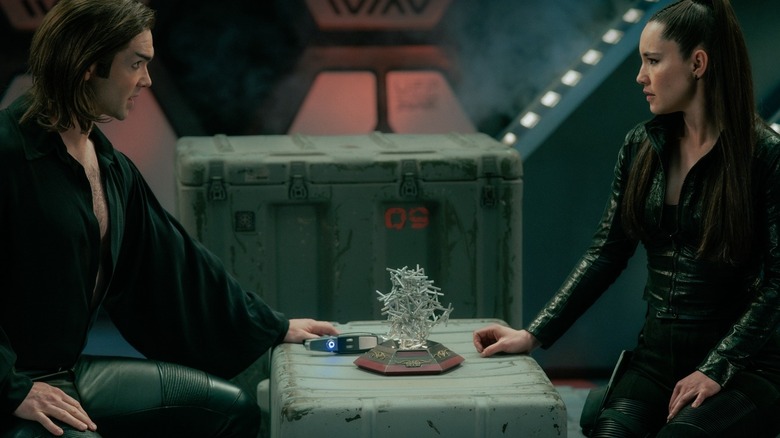
The only compatible donor is his estranged, imprisoned brother, Sybok. The narrative tension escalates as La’an (Christina Chong) is tasked with extracting the prisoner. During their journey back to the Enterprise, the writers utilize the downtime to peel back the layers of these characters. It is here that we see the return of Kal-toh. The game serves as a vessel for the interaction between La’an and a snarling, seductive version of Sybok, transforming a simple tabletop match into a high-stakes psychological chess game.
A History of Kal-toh: From Voyager to the Enterprise
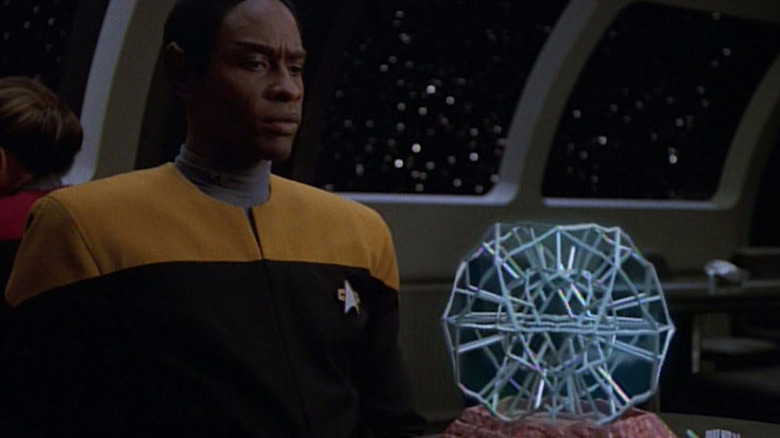
For those who may have forgotten, Kal-toh is not a new invention for Strange New Worlds. It made its debut in the third season of Star Trek: Voyager, specifically in the episode "Alter Ego." It became a recurring motif, most famously associated with Tuvok (Tim Russ), the ship’s stoic tactical officer and a paragon of Vulcan logic.
The Rules of the Unplayable
Unlike Three-Dimensional Chess, which has been physically manufactured and sold to fans for decades, Kal-toh remains a conceptual mystery. Within the Star Trek canon, the game is depicted as a chaotic cluster of metal rods that, through energy-altering technology and holographic projection, reorganize into a complex dodecahedral figure.
Tuvok famously defined the philosophy of the game by stating, "It is not about striving for balance but about finding the seeds of order even in the midst of profound chaos." Because the game relies on the manipulation of spatial harmonics and energy, it appears impossible to replicate with 21st-century technology, cementing its status as an exclusively high-concept alien pastime.
Notable Players and Legacy
Throughout Voyager, the game served as a tool for character development. While Tuvok was the master, he found an unexpected peer in Seven of Nine (Jeri Ryan). Her Borg upbringing, which afforded her an innate understanding of spatial geometry, allowed her to grasp the nuances of the game almost immediately. Conversely, Harry Kim (Garrett Wang) was often shown as an enthusiastic, if perpetually defeated, amateur. The fact that an older Captain Harry Kim still kept a Kal-toh set in his quarters during the Voyager series finale suggests that the game was more than just a hobby—it was a meditative practice that transcended borders and species.
Expanding the Galactic Gaming Canon
The presence of Kal-toh in Strange New Worlds is a testament to the "galactic ubiquity" of Star Trek pastimes. Much like how modern humans play Go, Chess, or Hi-Q, the residents of the 23rd and 24th centuries have their own cultural staples.
The Spectrum of Play
Star Trek has long teased fans with games that we never fully see, which only serves to deepen the immersion.
- Parrises Squares: Frequently mentioned in The Next Generation, this violent, contact-heavy sport is often cited as a favorite of Captain Picard and Dr. Crusher, yet it has never been depicted on screen, allowing the audience’s imagination to fill in the brutal details.
- Anbyo-jyutsu: A blind martial art that combines physical prowess with sensory deprivation, appearing as a high-stakes display of discipline and raw power.
- Three-Dimensional Chess: Perhaps the most iconic game in the franchise, it has transitioned from a mere prop in the Original Series to a legitimate hobby for dedicated fans who have actually learned its notoriously difficult rules.
By reintroducing Kal-toh, Strange New Worlds isn’t just dropping an Easter egg; it is validating the "lived-in" feeling of the franchise. It tells the viewer that these characters have lives outside of the bridge, and that their cultures are rich with history, mathematics, and philosophy.
Implications for Future Storytelling
Why does the return of a board game matter? In the context of modern television, these "legacy details" are the primary mechanism for maintaining fan engagement. When a show like Strange New Worlds references Voyager, it acknowledges the continuity of the Star Trek timeline.
Furthermore, the game’s presence in this specific episode—played by a villainous Sybok—serves a thematic purpose. If Kal-toh is about "finding order in chaos," then the game acts as a mirror for the episode’s plot. Sybok, a man of intense, often dangerous emotion, engaging in a game of pure logic is a visual representation of his own internal struggle. The game becomes a metaphor for the suppression of his Vulcan heritage against his chaotic, revolutionary impulses.
Conclusion: The Endurance of Tradition
As Star Trek marches forward into new eras, the creators remain cognizant of the small, quiet moments that built the foundation of the franchise. Whether it is the tactical precision of Tuvok or the manipulative banter between La’an and Sybok, the presence of Kal-toh reminds us that even in a universe of warp speed and galactic diplomacy, the most profound conflicts are often resolved through the simple, patient application of logic.
For fans, the inclusion of such details is a welcome reward. It encourages a closer look at the screen, a deeper dive into the lore, and a reminder that while the ships and the uniforms may change, the soul of Star Trek—a galaxy filled with diverse, intellectual, and culturally rich inhabitants—remains exactly the same. Should you ever find yourself aboard a Starfleet vessel in the 24th century, take a seat at the table. Just don’t expect to win against a Vulcan.