The Architecture of Auteurism: Inside the Monumental ‘Complete Kubrick’ Criterion Collection

For decades, the name Stanley Kubrick has been synonymous with total creative control. From the sprawling, meticulous set designs of 2001: A Space Odyssey to the haunting, intimate psychological corridors of Eyes Wide Shut, Kubrick treated every frame of his filmography as a sacred artifact. When the Criterion Collection announced "The Complete Kubrick" in 2024, the industry faced a daunting, meta-cinematic question: How does one curate the work of a director who, in life, acted as his own curator?
For archivist Michael Chaiken, the project—which hit shelves and mailboxes last week—was not merely a restoration job; it was an exercise in archival medium-ship. "What would Stanley do?" became the guiding mantra for a team tasked with digitizing a career that spanned five decades, utilizing modern 4K, HDR, and Dolby Atmos standards that were beyond the horizon of the filmmaker’s lifetime.
The Mandate of Completeness
The definition of "complete" is rarely straightforward in the world of high-end home video. A box set retailing at $599.95 carries an implicit promise of definitive status. However, as Chaiken discovered, the "early stuff" proved to be the most elusive. While Warner Bros. has maintained pristine custody of Kubrick’s final five features, his independent roots required a detective’s tenacity.

"It almost didn’t happen; it was really at the 11th hour that it came together," Chaiken admitted. The process involved untangling complex legal webs, such as the rights to The Seafarers (1953), a 30-minute documentary commissioned by the Seafarers International Union. "We thought we knew who owned the rights, and then somebody said, ‘Hey, by the way, I’m actually the rights holder,’" Chaiken recalled. Despite its origins as a work-for-hire, the film is now recognized as a vital, "Kubrickian" touchstone in color.
Chronology of a Master’s Development
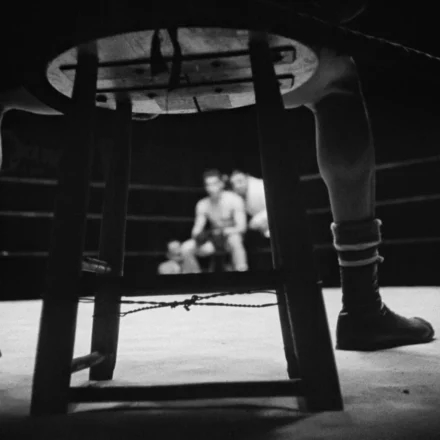
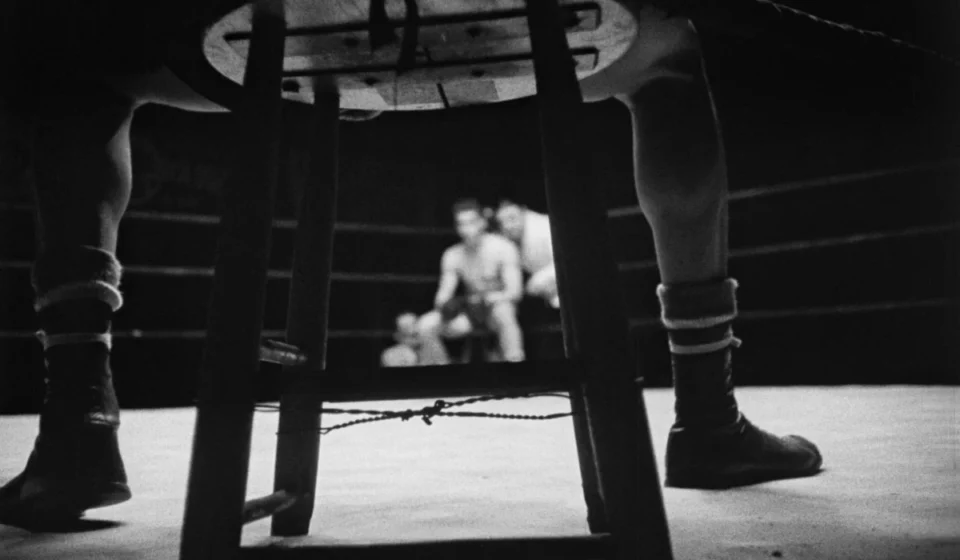
The box set’s structure serves as a masterclass in film history, tracking Kubrick’s evolution from an independent photographer for Look magazine to a titan of studio cinema. A significant addition to this collection is the original 12-minute version of Day of the Fight (1951).
Historically, the version available for decades was an RKO Pictures re-edit, which included extraneous footage and a modified soundtrack. By restoring the original version—which Kubrick personally financed and edited—the Criterion team has finally provided the public with the true starting point of the director’s visual language. At four minutes shorter than the RKO version, the original cut is sharper, more focused, and serves as a vital piece of the puzzle for scholars of the director’s formative years.

The Dual-Version Dilemma: The Shining
Perhaps the most contentious inclusion in the set is the international version of The Shining. When the film premiered domestically in May 1980, it was met with lukewarm critical reception. Kubrick subsequently spent three months re-editing the film, removing 25 minutes for the international release.
"The international version is a different experience," Chaiken noted. "It does leave open the possibility that none of this is happening, and it’s all happening in Jack’s head." By including both versions, Criterion forces a reckoning with Kubrick’s own shifting vision. To bridge the gap for American audiences accustomed to the longer cut, the box set features a new commentary track by Pixar director Lee Unkrich. Unkrich, who spent years documenting the production through a two-volume, 1,396-page deep dive into the Kubrick Archive, provides a "master-class" perspective that validates the shorter, more claustrophobic international cut.
Technical Fidelity: The Mono Question
In an era of increasingly aggressive surround-sound remixes, Kubrick’s commitment to mono remains a point of reverence. "He stuck with mono until the end," Chaiken said. "He truly felt, ‘I would rather have good mono than bad stereo.’"

Working with audio supervisor Ryan Hullings, the team faced a specific challenge with Full Metal Jacket. During the restoration, they discovered that the final, iconic use of The Rolling Stones’ "Paint It Black" over the end credits had been played at 25 frames per second in the original theatrical run—a technical "screw-up" that Kubrick opted to keep. By consulting with original editors Martin Hunter and Nigel Galt, the team confirmed this detail, ensuring the new 4K master preserves that four-percent speed increase. It is a level of forensic detail that defines the Criterion approach.
The Limits of Modern Technology
"It’s never going to be a one-to-one correlation between film and video," Chaiken stated, reflecting on the bridge between analog celluloid and digital 4K. During the remastering of Eyes Wide Shut, working alongside cinematographer Larry Smith, the team grappled with the "dreamy quality" of the film’s unique exposure and development.
The danger of 4K is, paradoxically, that it can be too revealing. "You could go very hardcore into the 4K, and you could see details in the shadows and things that Kubrick would never have wanted you to see," Chaiken explained. The solution was a collaborative effort to dial back HDR and lean into a "warmer, more filmic curve," ensuring the digital experience felt like a projection rather than a clinical spreadsheet of data.

Official Perspectives: The Myth of Obsession
One of the most revealing aspects of Chaiken’s research was debunking the myth that Kubrick was an impossible collaborator during the home video era. He interviewed Maria Palazzola, the legendary restoration supervisor who worked on the Criterion laser discs of the 80s and 90s.
"I had heard the stories that Kubrick had made her re-transfer films countless times," Chaiken said. However, Palazzola clarified that Kubrick was not a tyrant of the process; he was simply a pragmatist who understood the technical limitations of the time. For 2001: A Space Odyssey, he was only concerned with two specific elements: ensuring the front-projection backgrounds didn’t reflect in the apes’ eyes, and keeping the lighting in the final "French boudoir" sequence from becoming too bright. These anecdotes provided the Criterion team with a roadmap for when to push for perfection and when to accept the medium’s inherent constraints.
The Archival Aesthetic
The physical presentation of the box set, designed by visual artist Drusilla Adeline (Sister Hyde), mirrors the theme of "Kubrick at work." Drawing inspiration from the Library of America series, the set is organized not just as a collection of discs, but as a compendium of a career. Each film is separated by tabs and original posters, providing a sense of order that matches the filmmaker’s own legendary organizational skills.

"In my mind, I was thinking about the Library of America—what would a Library of America compendium of Stanley Kubrick look like?" Chaiken said. The result is a package that feels less like a consumer product and more like a permanent entry in a cinematic archive.
Implications for the Future of Film Preservation
The release of The Complete Kubrick sets a new benchmark for the industry. It asserts that "completeness" is not merely the accumulation of all titles, but the accurate, context-aware preservation of intent. By choosing to include original mono mixes, multiple cuts of the same film, and rigorous commentary, the project moves the needle from "home media" toward "historical preservation."
As cinema continues to migrate into the digital ether, the tension between the original celluloid intention and the sharpening resolution of modern displays will only increase. By treating the archive as a living, breathing entity rather than a static library, Criterion has ensured that Kubrick’s fingerprints remain visible, even in an age of pixels and algorithms. For the dedicated cinephile, the set is not just a purchase; it is an invitation to engage with the director’s process—a journey into the mind of a man who, until his final days, was still trying to perfect the art of the image.