The Paradox of Justice: Elegance Bratton’s By Any Means Reimagines a Dark Chapter of American History

In the annals of the American Civil Rights Movement, few figures stand as tall—or as tragically silenced—as Vernon Dahmer. A self-made businessman, community pillar, and unwavering advocate for voting rights in Hattiesburg, Mississippi, Dahmer’s life was defined by his radical insistence on democratic participation. He famously pledged to cover the poll taxes for any Black citizen barred from the ballot box by the state’s unconstitutional barriers. This defiance made him a primary target for white supremacists, culminating in his brutal murder by the Ku Klux Klan in 1966.
Now, filmmaker Elegance Bratton, following his acclaimed debut The Inspection, has returned with By Any Means, a film that uses the haunting shadow of Dahmer’s death as a springboard for a gritty, high-octane exploration of historical injustice. By pairing a fictional Black FBI agent with the real-life, notorious Colombo crime family hitman Gregory Scarpa, Bratton constructs a narrative that is as much a buddy-cop thriller as it is a meditation on the moral compromises of justice.
The Foundation: A History of Blood and Bureaucracy
To understand the weight of By Any Means, one must first reconcile the reality of its subjects. Vernon Dahmer was not merely a victim; he was a leader who understood that the machinery of Jim Crow was designed to erode the spirit as much as it was meant to suppress the vote. His assassination in a KKK firebombing was a seismic event that forced the federal government to look, if only briefly, into the abyss of Southern domestic terror.
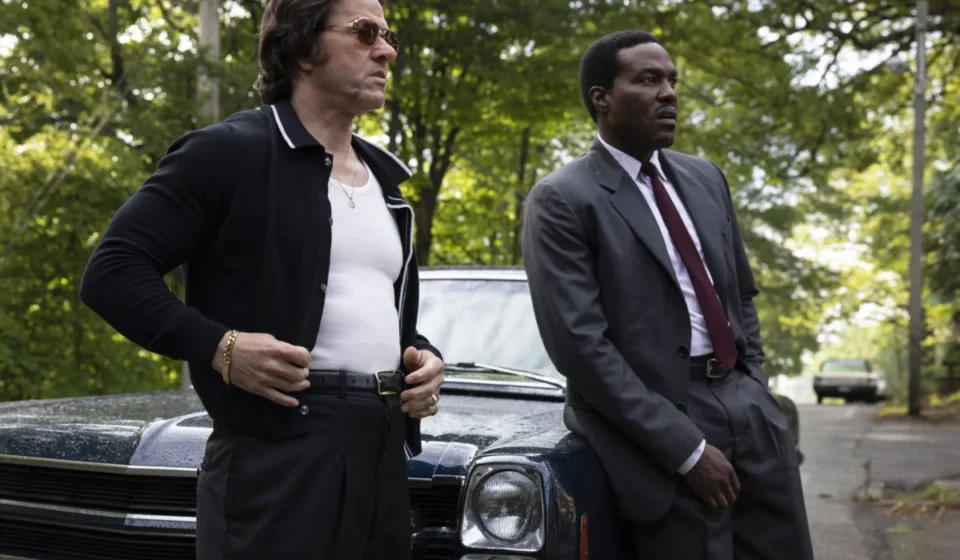
Enter Gregory Scarpa. A man who allegedly claimed more than 60 kills as an enforcer for the Colombo crime family, Scarpa occupied a singular, repulsive space in the American underworld. He was also a long-term FBI informant. While the Bureau has historically maintained a veil of silence regarding the full extent of its relationship with the mobster, sworn witness testimony and archival investigative work confirm that the FBI utilized such "assets" to do their dirty work in the South during the 1960s and 70s. In the world of By Any Means, Scarpa—played with restrained menace by Mark Wahlberg—becomes an unlikely partner to an agent seeking truth in a system designed to bury it.
Chronology of a Collision: The Bureau and the Hitman
The film’s narrative engine is the dynamic between the real-life enigma of Scarpa and the fictional Wayne Strider, portrayed by Yahya Abdul-Mateen II. Strider is a character built from the frustrations of the era: a Black FBI agent working in a landscape where he is frequently mistaken for a suspect, belittled by local law enforcement, and ignored by his own superiors.
The chronology of their partnership begins in the wake of the Dahmer tragedy. Strider, having looked up to Dahmer as a mentor, views the investigation not just as an assignment, but as a crusade. However, his idealism is immediately met with the cynicism of the "system." When he arrives at a Mobile, Alabama, hotel to rendezvous with his new partner, he finds Scarpa engaged in the debauchery that defined his personal life.
The friction is immediate. Strider represents the belief in the law; Scarpa represents the reality that the law is often a suggestion, easily discarded when it interferes with survival. The film follows the pair as they navigate a series of encounters, each more violent than the last, culminating in a highway confrontation with a racist police officer that serves as the film’s moral turning point.

Supporting Data: The Friction of Character
Bratton and screenwriter Sascha Penn make no apologies for the film’s tonal shift. While it draws from the historical gravity of the 1960s, it functions primarily as a piece of revenge-driven cinema. The film effectively utilizes the "buddy-cop" structure to highlight the disparate realities of the two men.
Yahya Abdul-Mateen II’s performance is the anchor of the film. His internal struggle—the constant calculation of how much indignity he can absorb to maintain his position within the FBI—is palpable. He plays a man who genuinely believes in the promise of America’s founding principles, even as he realizes those principles were never meant to apply to him.
Conversely, Wahlberg’s Scarpa is a study in "black-and-white" morality. He is a criminal who thrives in the grey, yet he remains entirely unburdened by the ideological struggles of the state. The brilliance of the film’s characterization lies in the moments where the two men realize they are both outcasts, albeit for vastly different reasons. Their partnership is an uncomfortable alliance, born of the realization that in a corrupt environment, justice is not something one waits for; it is something one takes.
Official Responses and Historical Silence
One of the most compelling aspects of By Any Means is its commentary on the FBI’s historical reliance on unsavory characters to achieve "order." The film avoids the trap of glorifying the Bureau. Instead, it highlights the hypocrisy of a government that uses a murderer to investigate a civil rights leader’s death.
Historically, the FBI’s relationship with figures like Scarpa remains a dark footnote in American criminal history. By bringing this to the screen, Bratton forces the audience to confront the "dirty" nature of historical truth. The Bureau has never formally acknowledged the extent to which it sanctioned or ignored the activities of its informants in the South, making the film a provocative, if fictionalized, indictment of institutional complicity.
Implications: The Catharsis of Violence
Critics may argue that By Any Means sacrifices the nuanced historical accuracy of a documentary for the visceral satisfaction of a revenge thriller. However, in doing so, the film achieves a rare form of emotional catharsis. By portraying the white antagonists as uniformly bigoted and the Black protagonists as individuals with profound interior lives, Bratton leans into a form of cinematic justice that the real-life victims were denied in the courts of the 1960s.
The implication is clear: when the state refuses to act against the terrorizing of its citizens, the vacuum is filled by those willing to act "by any means necessary." It is a dangerous, thrilling, and ultimately mournful message.

The film succeeds because it knows exactly what it is. It is not a dry academic exercise; it is a film designed to stir the blood. It acknowledges that while the fight for civil rights was a noble, intellectual, and spiritual endeavor, it was also a physical, violent, and messy war against those who sought to maintain the status quo through fear.
Conclusion: A Masterful Middle Ground
By Any Means represents a pivot for Elegance Bratton. While it may lack the quiet, intimate artistry of The Inspection, it makes up for that loss with a bold, unflinching spectacle that is difficult to ignore. It is a film that balances the weight of its historical subject matter with the pacing of a modern thriller, proving that it is possible to entertain while simultaneously educating.
For those already familiar with the legacy of Vernon Dahmer, the film serves as a somber tribute. For those uninitiated, it serves as a gateway into a history that is often sanitized for the classroom. By wrapping the truth in the packaging of a high-stakes genre film, Bratton has ensured that the name Vernon Dahmer will reach an audience that might otherwise never have encountered it.
As we move further away from the 1960s, the temptation to simplify the Civil Rights era increases. By Any Means refuses to yield to that temptation, choosing instead to lean into the chaos, the irony, and the hard-fought, bloody reality of the quest for equality.
Grade: B+
A Paramount release, "By Any Means" opens in theaters on Friday, September 4.